Zapata-Pérez Rubén, Gil-Ortiz Fernando, Martínez-Moñino Ana Belén, García-Saura Antonio Ginés, Juanhuix Jordi, Sánchez-Ferrer Álvaro
Department of Biochemistry and Molecular Biology-A, Faculty of Biology, Regional Campus of International Excellence 'Campus Mare Nostrum', University of Murcia, Campus Espinardo, 30100 Murcia, Spain.
CELLS-ALBA Synchrotron Light Source, 08290 Barcelona, Spain
Open Biol. 2017 Apr;7(4). doi: 10.1098/rsob.160327.
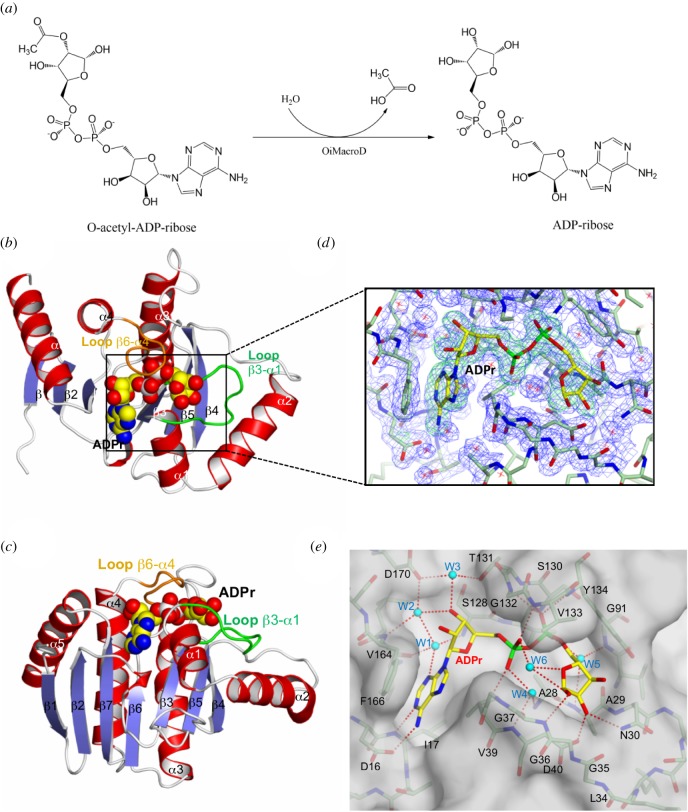
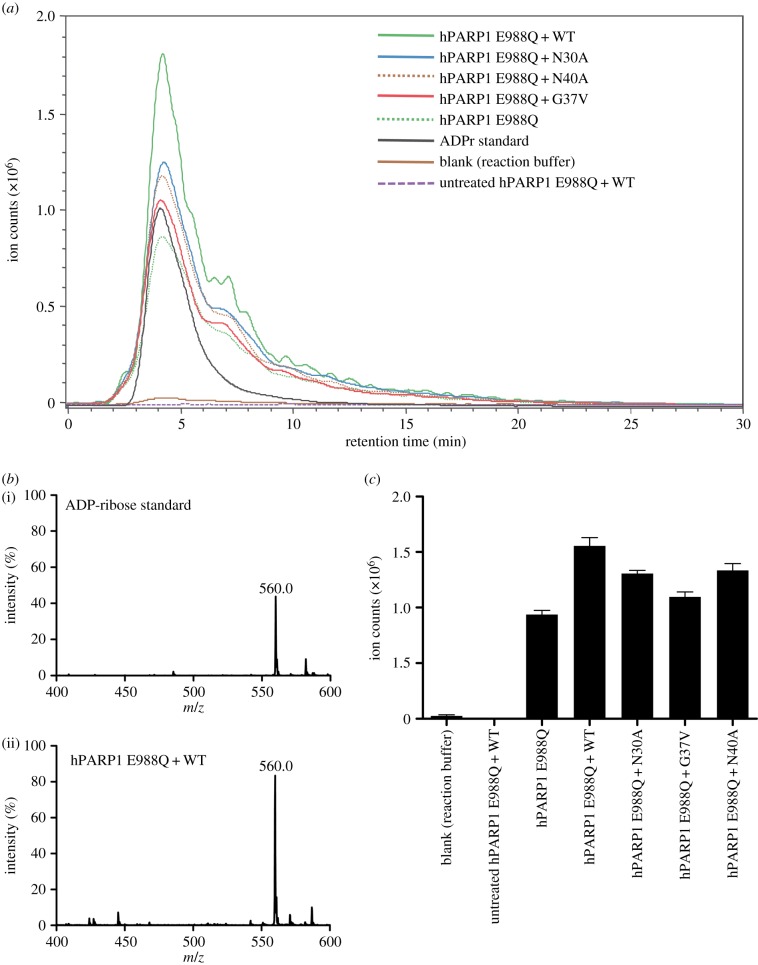
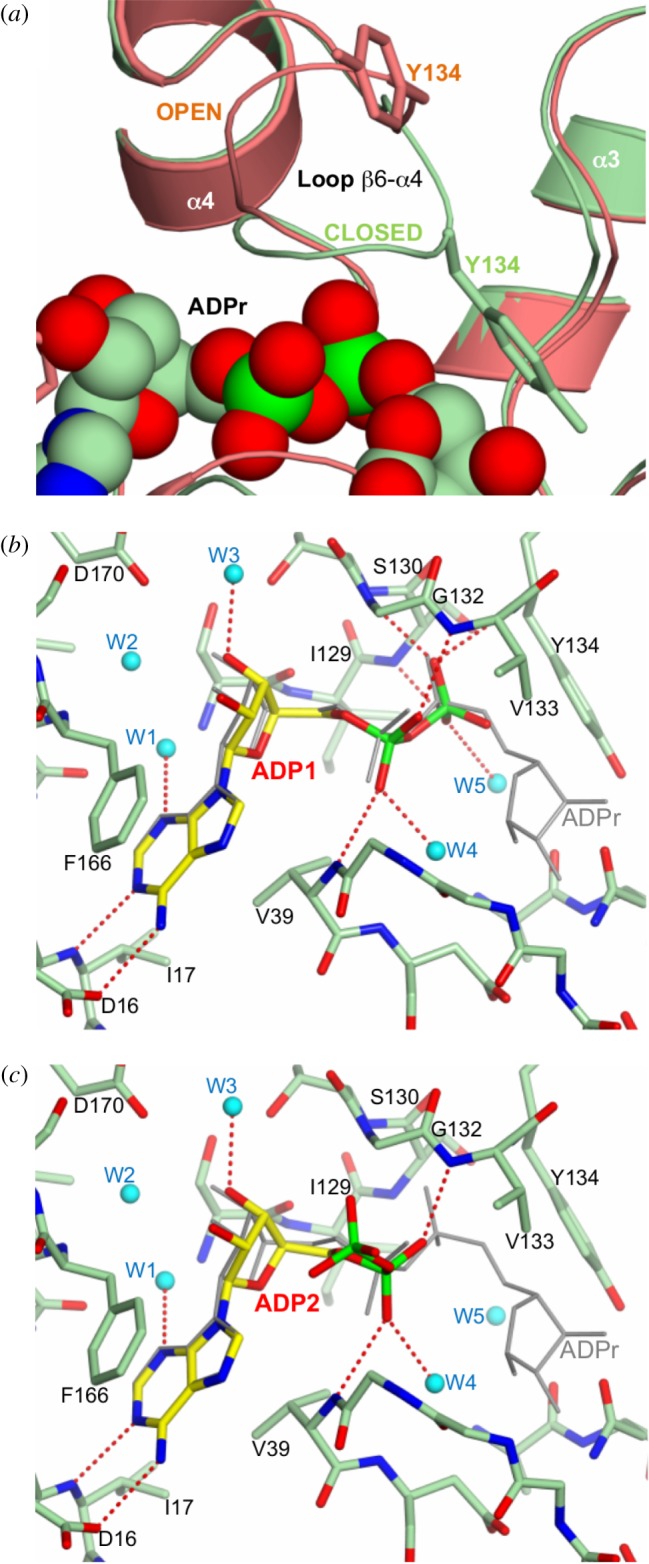
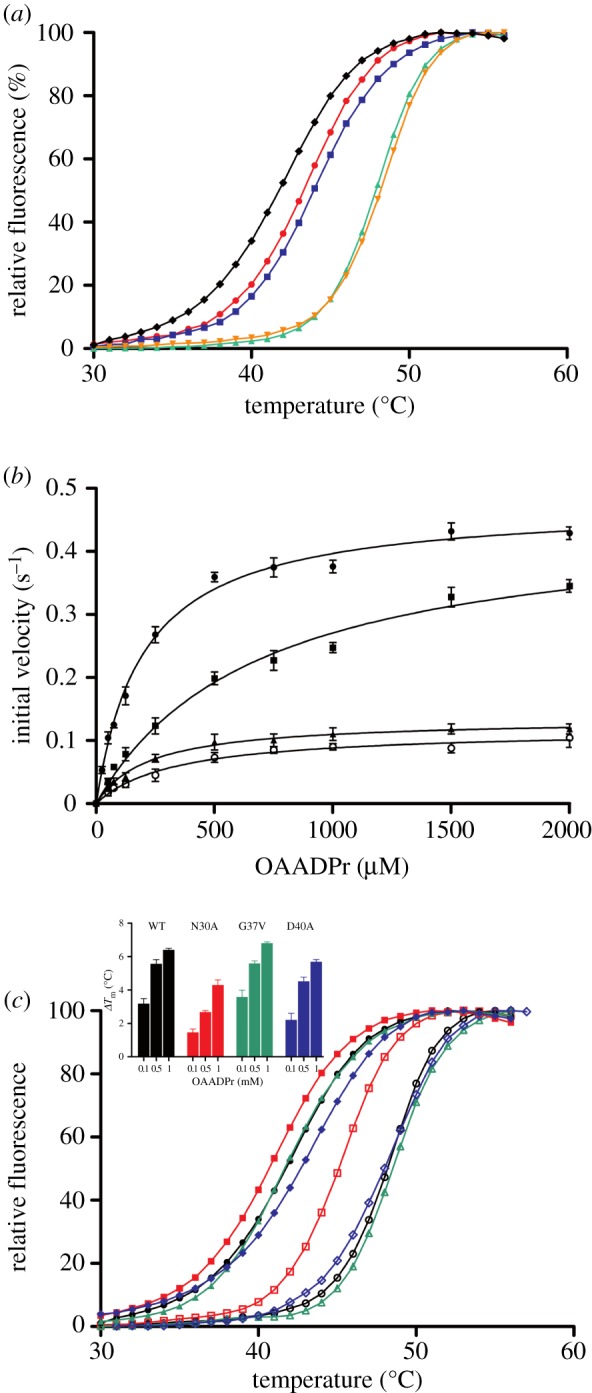
Macrodomains are ubiquitous conserved domains that bind or transform ADP-ribose (ADPr) metabolites. In humans, they are involved in transcription, X-chromosome inactivation, neurodegeneration and modulating PARP1 signalling, making them potential targets for therapeutic agents. Unfortunately, some aspects related to the substrate binding and catalysis of MacroD-like macrodomains still remain unclear, since mutation of the proposed catalytic aspartate does not completely abolish enzyme activity. Here, we present a functional and structural characterization of a macrodomain from the extremely halotolerant and alkaliphilic bacterium (OiMacroD), related to hMacroD1/hMacroD2, shedding light on substrate binding and catalysis. The crystal structures of D40A, N30A and G37V mutants, and those with MES, ADPr and ADP bound, allowed us to identify five fixed water molecules that play a significant role in substrate binding. Closure of the β6-α4 loop is revealed as essential not only for pyrophosphate recognition, but also for distal ribose orientation. In addition, a novel structural role for residue D40 is identified. Furthermore, it is revealed that OiMacroD not only catalyses the hydrolysis of -acetyl-ADP-ribose but also reverses protein mono-ADP-ribosylation. Finally, mutant G37V supports the participation of a substrate-coordinated water molecule in catalysis that helps to select the proper substrate conformation.
巨结构域是普遍存在的保守结构域,可结合或转化ADP-核糖(ADPr)代谢物。在人类中,它们参与转录、X染色体失活、神经退行性变以及调节PARP1信号传导,使其成为治疗药物的潜在靶点。不幸的是,由于拟催化天冬氨酸的突变并未完全消除酶活性,与类MacroD巨结构域的底物结合和催化相关的一些方面仍不清楚。在此,我们展示了来自极端耐盐嗜碱细菌(OiMacroD)的一个与hMacroD1/hMacroD2相关的巨结构域的功能和结构特征,为底物结合和催化提供了线索。D40A、N30A和G37V突变体以及结合了MES、ADPr和ADP的突变体的晶体结构,使我们能够鉴定出五个在底物结合中起重要作用的固定水分子。β6-α4环的闭合不仅被揭示为焦磷酸识别所必需,而且对于远端核糖的定向也至关重要。此外,还确定了残基D40的一种新的结构作用。此外,还发现OiMacroD不仅催化-乙酰-ADP-核糖的水解,还能逆转蛋白质单-ADP-核糖基化。最后,突变体G37V支持底物配位水分子参与催化,这有助于选择合适的底物构象。