Bhattacharyya Sumit, Shumard Theresa, Xie Hui, Dodda Amar, Varady Krista A, Feferman Leo, Halline Allan G, Goldstein Jay L, Hanauer Stephen B, Tobacman Joanne K
Department of Medicine, University of Illinois at Chicago, Chicago, IL, USA.
Jesse Brown VA Medical Center, Chicago, IL, USA.
Nutr Healthy Aging. 2017 Mar 31;4(2):181-192. doi: 10.3233/NHA-170023.
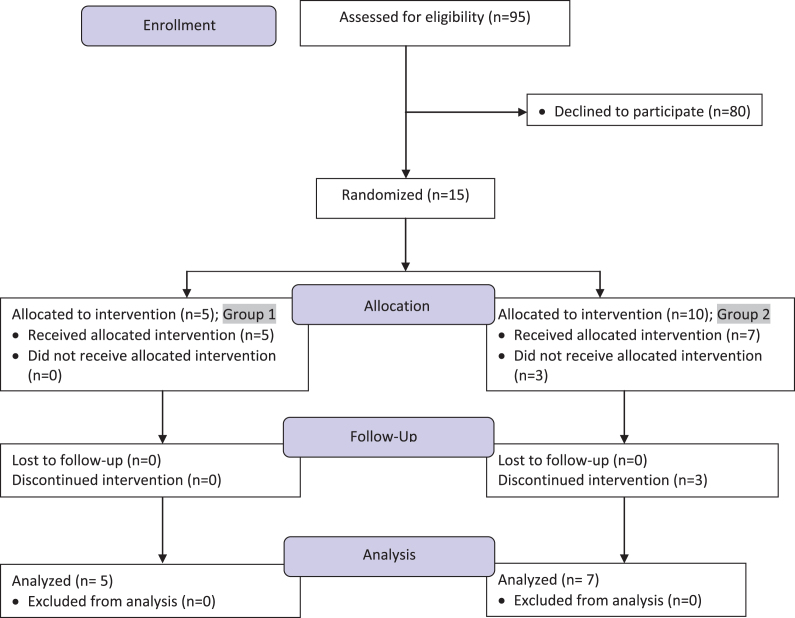
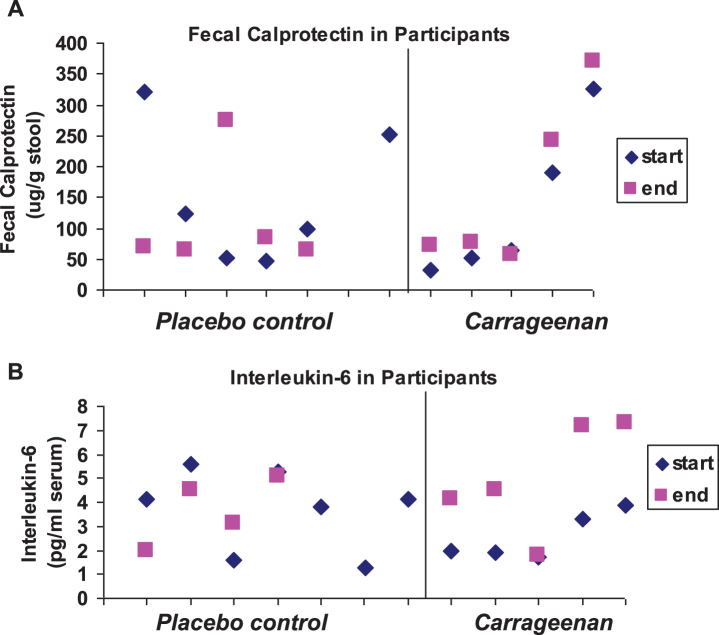
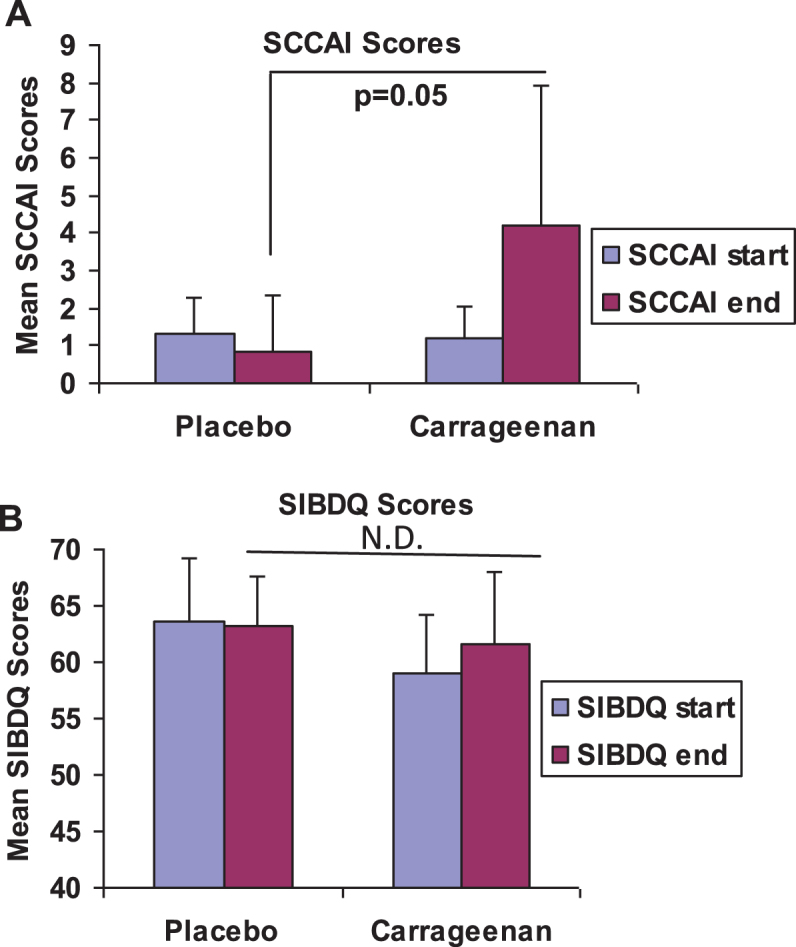
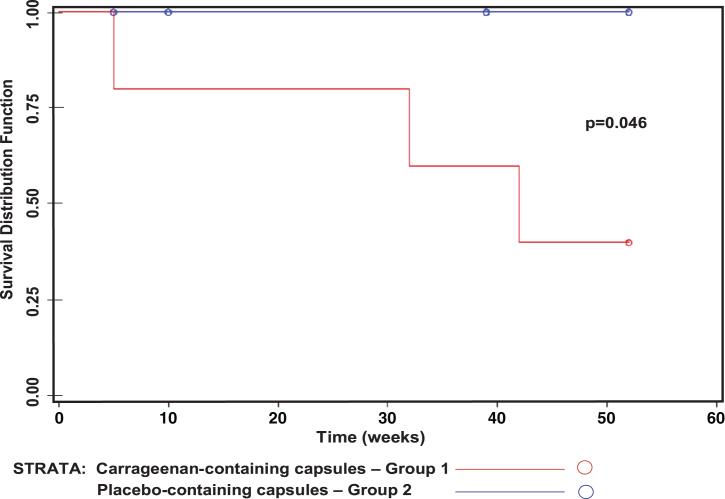
Carrageenan is a very common food additive in Western diets, but predictably causes inflammation in thousands of cell-based and animal experiments. To assess the impact of carrageenan exposure on the interval to relapse in patients with ulcerative colitis in remission. A randomized, double-blind, placebo-controlled, multicenter, clinical trial was conducted to assess if patients with ulcerative colitis in remission would have a longer interval to relapse if they followed a diet with no carrageenan. All participants were instructed in the no-carrageenan diet and were randomized to either placebo capsules or carrageenan-containing capsules. The carrageenan in the capsules was less than the average daily carrageenan intake from the diet. Relapse was defined as an increase of two or more points on the Simple Clinical Colitis Activity Index (SCCAI) and intensification of treatment for ulcerative colitis. Participants were followed by telephone calls every two weeks until relapse or one year of participation. The occurrence of relapse and inflammatory biomarkers were compared between the two groups. Twelve patients completed study questionnaires. Three patients who received carrageenan-containing capsules relapsed, and none of the patients who received placebo-containing capsules relapsed ( = 0.046, log-rank test). Laboratory tests showed increases in Interleukin-6 ( = 0.02, paired -test, two-tailed) and fecal calprotectin ( = 0.06; paired -test, two-tailed) between the beginning and the end of study participation in the carrageenan-exposed group, but not in the placebo-group. Carrageenan intake contributed to earlier relapse in patients with ulcerative colitis in remission. Restriction of dietary carrageenan may benefit patients with ulcerative colitis.
角叉菜胶是西方饮食中一种非常常见的食品添加剂,但不出所料,在数千项基于细胞和动物的实验中会引发炎症。为了评估接触角叉菜胶对缓解期溃疡性结肠炎患者复发间隔的影响。进行了一项随机、双盲、安慰剂对照、多中心临床试验,以评估缓解期溃疡性结肠炎患者遵循无角叉菜胶饮食是否会有更长的复发间隔。所有参与者都接受了无角叉菜胶饮食的指导,并被随机分为服用安慰剂胶囊或含角叉菜胶胶囊。胶囊中的角叉菜胶低于饮食中平均每日角叉菜胶摄入量。复发定义为简单临床结肠炎活动指数(SCCAI)增加两分或更多分以及溃疡性结肠炎治疗强化。每两周通过电话对参与者进行随访,直至复发或参与研究一年。比较两组之间复发的发生情况和炎症生物标志物。12名患者完成了研究问卷。三名服用含角叉菜胶胶囊的患者复发,而服用含安慰剂胶囊的患者均未复发(对数秩检验,P = 0.046)。实验室测试显示,在接触角叉菜胶组参与研究的开始和结束之间,白细胞介素 - 6(配对t检验,双侧,P = 0.02)和粪便钙卫蛋白(配对t检验,双侧,P = 0.06)有所增加,而安慰剂组没有。摄入角叉菜胶会导致缓解期溃疡性结肠炎患者更早复发。限制饮食中的角叉菜胶可能对溃疡性结肠炎患者有益。