Wu Yiru, Wang Liyan, Deng Dai, Zhang Qidong, Liu Wenhu
Department of Nephrology, Affiliated Beijing Friendship Hospital, Faculty of Kidney Diseases, Capital Medical University, No. 95 Yong An Road, Xi Cheng District, Beijing 100050, China.
Int J Mol Sci. 2017 Apr 27;18(5):855. doi: 10.3390/ijms18050855.
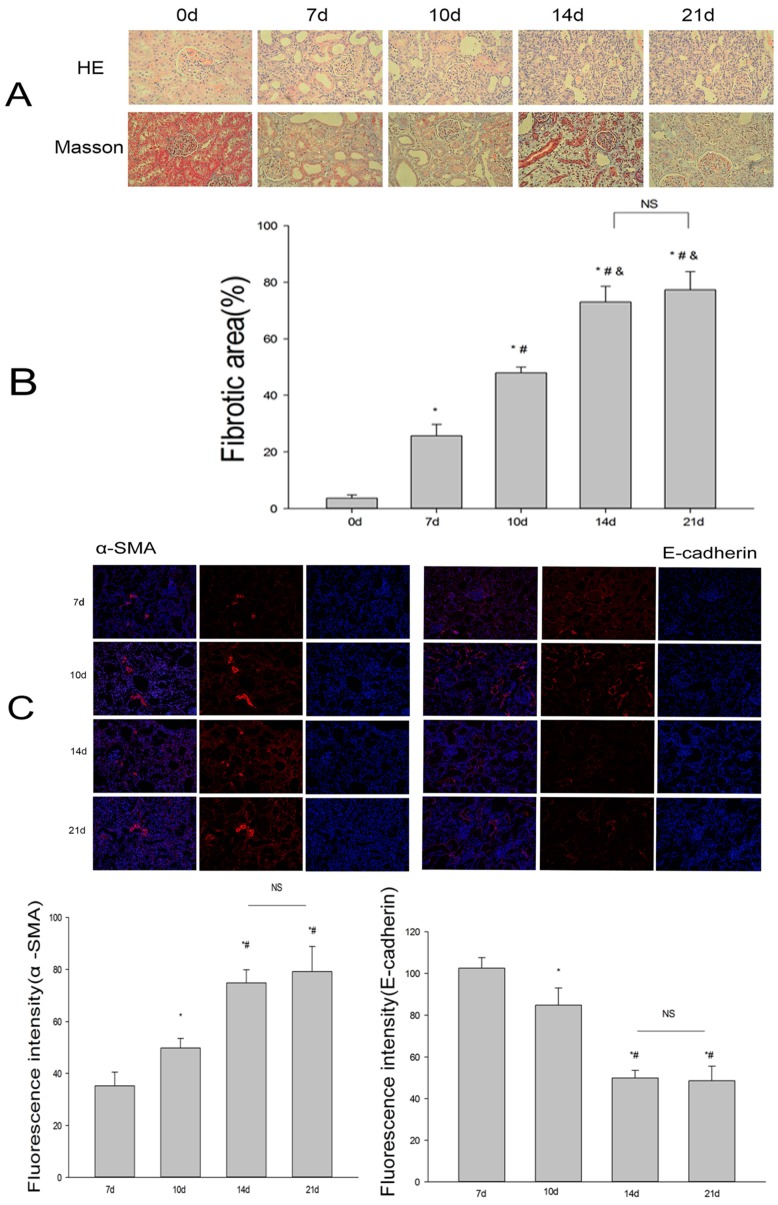
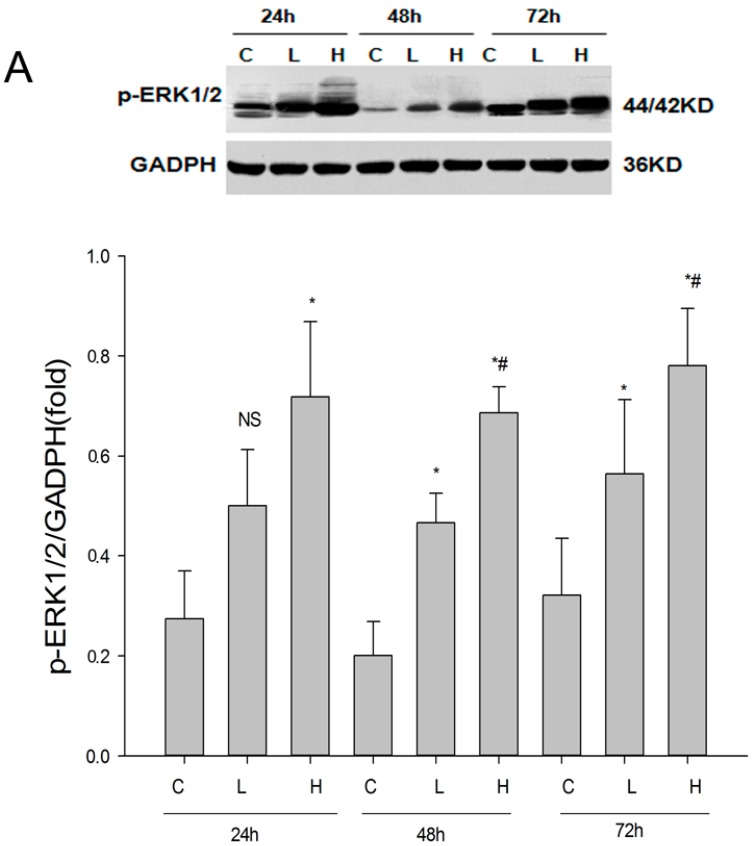
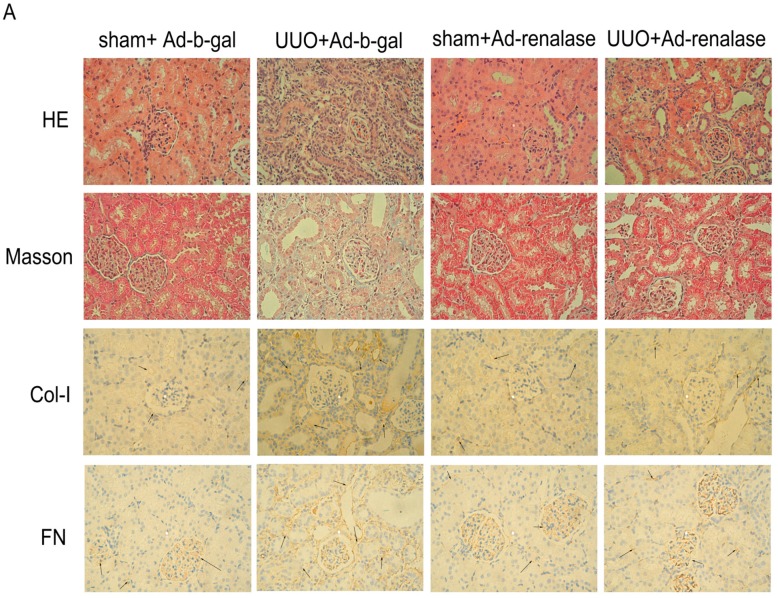
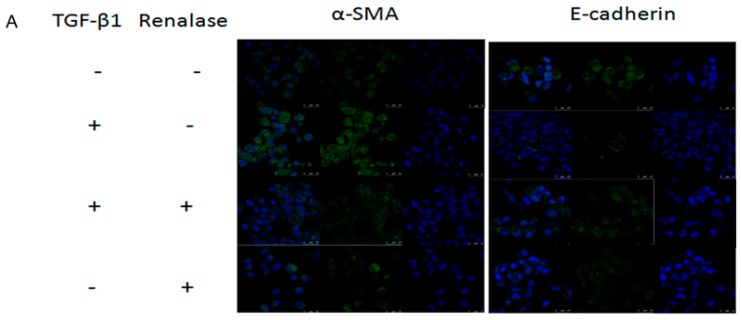
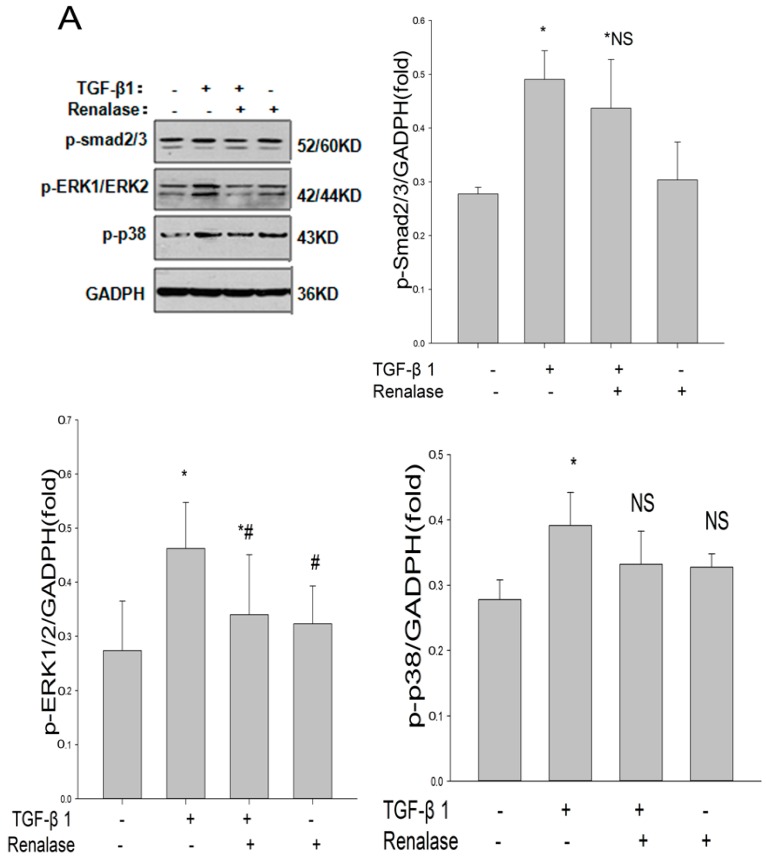
Renal interstitial fibrosis is a common pathway for the progression of chronic kidney disease (CKD) to end-stage renal disease. Renalase, acting as a signaling molecule, has been reported to have cardiovascular and renal protective effects. However, its role in renal fibrosis remains unknown. In this study, we evaluated the therapeutic efficacy of renalase in rats with complete unilateral ureteral obstruction (UUO) and examined the inhibitory effects of renalase on transforming growth factor-β1 (TGF-β1)-induced epithelial-mesenchymal transition (EMT) in human proximal renal tubular epithelial (HK-2) cells. We found that in the UUO model, the expression of renalase was markedly downregulated and adenoviral-mediated expression of renalase significantly attenuated renal interstitial fibrosis, as evidenced by the maintenance of E-cadherin expression and suppressed expression of α-smooth muscle actin (α-SMA), fibronectin and collagen-I. In vitro, renalase inhibited TGF-β1-mediated upregulation of α-SMA and downregulation of E-cadherin. Increased levels of Phospho-extracellular regulated protein kinases (p-ERK1/2) in TGF-β1-stimulated cells were reversed by renalase cotreatment. When ERK1 was overexpressed, the inhibition of TGF-β1-induced EMT and fibrosis mediated by renalase was attenuated. Our study provides the first evidence that renalase can ameliorate renal interstitial fibrosis by suppression of tubular EMT through inhibition of the ERK pathway. These results suggest that renalase has potential renoprotective effects in renal interstitial fibrosis and may be an effective agent for slowing CKD progression.
肾间质纤维化是慢性肾脏病(CKD)进展至终末期肾病的常见途径。据报道,作为一种信号分子的肾酶具有心血管和肾脏保护作用。然而,其在肾纤维化中的作用尚不清楚。在本研究中,我们评估了肾酶对完全性单侧输尿管梗阻(UUO)大鼠的治疗效果,并研究了肾酶对转化生长因子-β1(TGF-β1)诱导的人近端肾小管上皮(HK-2)细胞上皮-间质转化(EMT)的抑制作用。我们发现,在UUO模型中,肾酶的表达明显下调,腺病毒介导的肾酶表达显著减轻了肾间质纤维化,这表现为E-钙黏蛋白表达得以维持,α-平滑肌肌动蛋白(α-SMA)、纤连蛋白和I型胶原的表达受到抑制。在体外,肾酶抑制了TGF-β1介导的α-SMA上调和E-钙黏蛋白下调。肾酶共处理可逆转TGF-β1刺激细胞中磷酸化细胞外调节蛋白激酶(p-ERK1/2)水平的升高。当ERK1过表达时,肾酶介导的对TGF-β1诱导的EMT和纤维化的抑制作用减弱。我们的研究首次证明,肾酶可通过抑制ERK途径抑制肾小管EMT来改善肾间质纤维化。这些结果表明,肾酶在肾间质纤维化中具有潜在的肾脏保护作用,可能是减缓CKD进展的有效药物。