Heshiki Yoshitaro, Dissanayake Thrimendra, Zheng Tingting, Kang Kang, Yueqiong Ni, Xu Zeling, Sarkar Chinmoy, Woo Patrick C Y, Chow Billy K C, Baker David, Yan Aixin, Webster Christopher J, Panagiotou Gianni, Li Jun
Systems Biology and Bioinformatics Group, School of Biological Sciences, Faculty of Sciences, University of Hong KongHong Kong, China.
School of Biological Sciences, Faculty of Science, University of Hong KongHong Kong, China.
Front Microbiol. 2017 Apr 13;8:632. doi: 10.3389/fmicb.2017.00632. eCollection 2017.
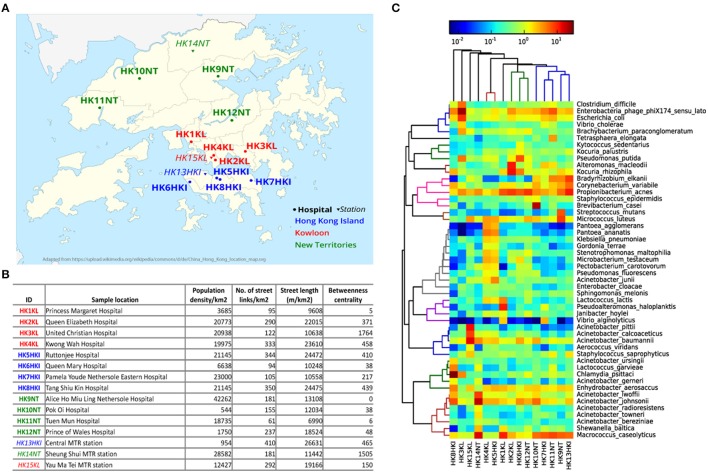
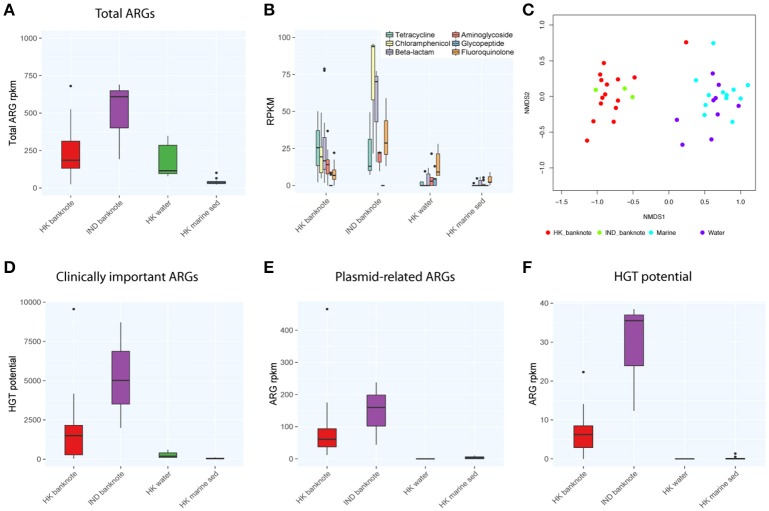
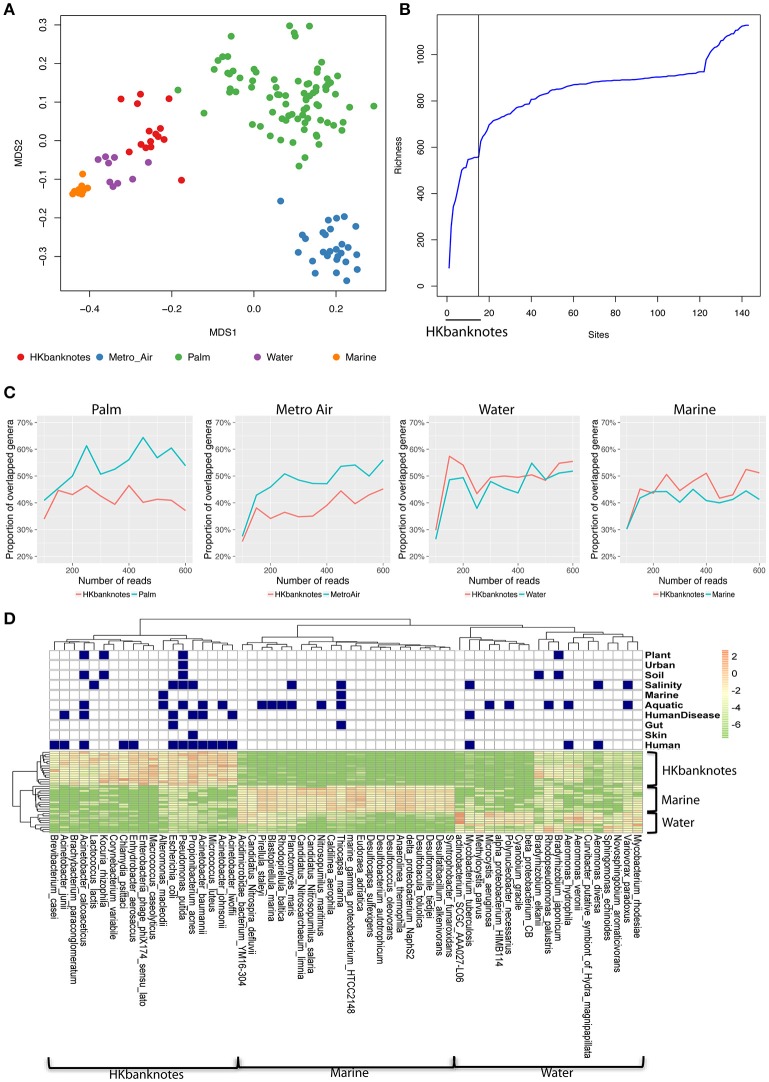
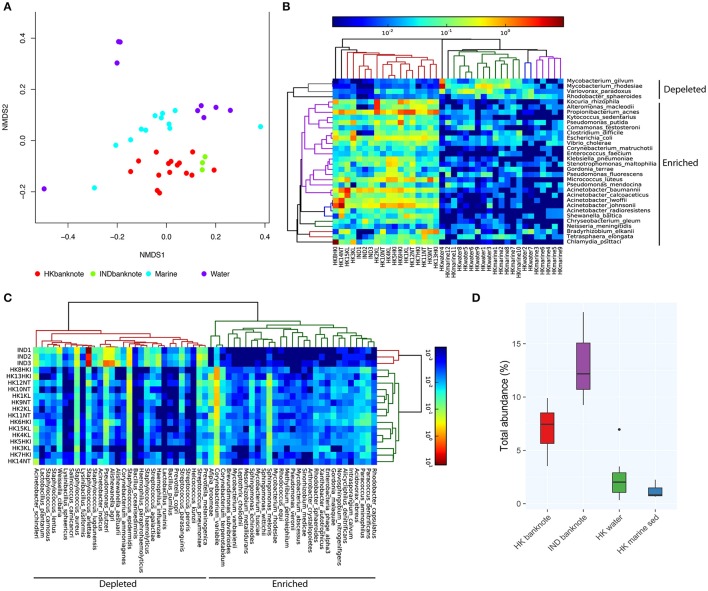
Currency is possibly one of the main media transmitting pathogens and drug resistance due to its wide circulation in daily life. In this study, we made a comprehensive characterization of the bacterial community present on banknotes collected from different geographical regions of Hong Kong (HK) by performing characterization of the bacterial presence and resistome profile, as well as metagenomic analysis including microbial diversity, the prevalence of potential pathogens, the dissemination potential of antibiotic-resistance genes (ARGs), among others. When comparing the bacterial community of HK banknotes with other HK environmental samples, including water and marine sediment, we revealed that HK banknotes cover nearly 50% of total genera found in all the environmental samples, implying that banknotes harbor diverse bacteria originated from a variety of environments. Furthermore, the banknotes have higher abundance of potential pathogenic species (5 times more) and ARGs (5 times more) with higher dissemination potential (~48 times more) compared with other environmental samples. These findings unveiled the capabilities of this common medium of exchange to accommodate various bacteria, and transmit pathogens and antibiotic resistance. Furthermore, the observed independence of microbiome profile from the city's topological indices led us to formulate a hypothesis that due to their high circulation banknotes may harbor a homogenized microbiome.
由于货币在日常生活中广泛流通,它可能是传播病原体和耐药性的主要媒介之一。在本研究中,我们通过对从香港不同地理区域收集的纸币上存在的细菌群落进行全面表征,包括细菌存在情况和耐药基因组特征分析,以及宏基因组分析,如微生物多样性、潜在病原体的流行情况、抗生素抗性基因(ARGs)的传播潜力等。当将香港纸币的细菌群落与其他香港环境样本(包括水和海洋沉积物)进行比较时,我们发现香港纸币涵盖了所有环境样本中近50%的属,这意味着纸币上含有源自各种环境的多样细菌。此外,与其他环境样本相比,纸币上潜在致病物种的丰度更高(约多5倍),ARGs的丰度更高(约多5倍),传播潜力也更高(约多48倍)。这些发现揭示了这种常见交换媒介容纳各种细菌、传播病原体和抗生素抗性的能力。此外,观察到微生物群落特征与城市拓扑指数无关,这使我们提出一个假设,即由于纸币的高流通性,它们可能拥有一个同质化的微生物群落。