van Heerden Bernadette, Kasonga Abe, Kruger Marlena C, Coetzee Magdalena
Department of Physiology, University of Pretoria, Pretoria 0001, South Africa.
School of Food and Nutrition, Massey Institute of Food Science and Technology, Massey University, Palmerston North 4442, New Zealand.
Nutrients. 2017 Apr 28;9(5):441. doi: 10.3390/nu9050441.
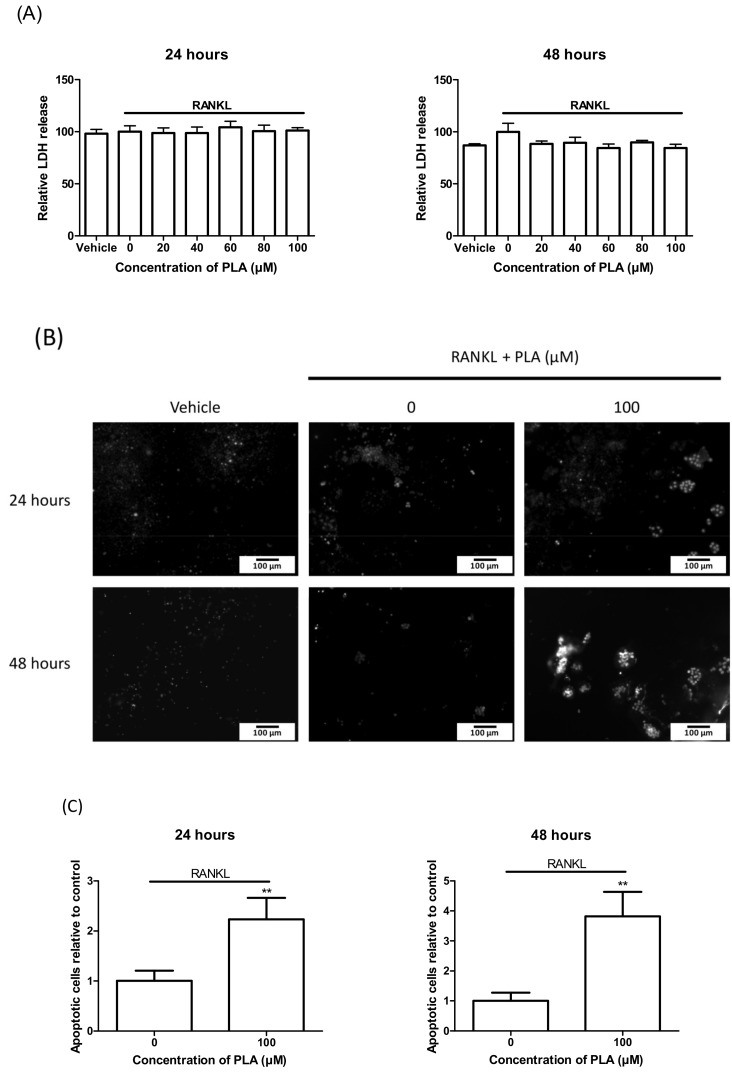
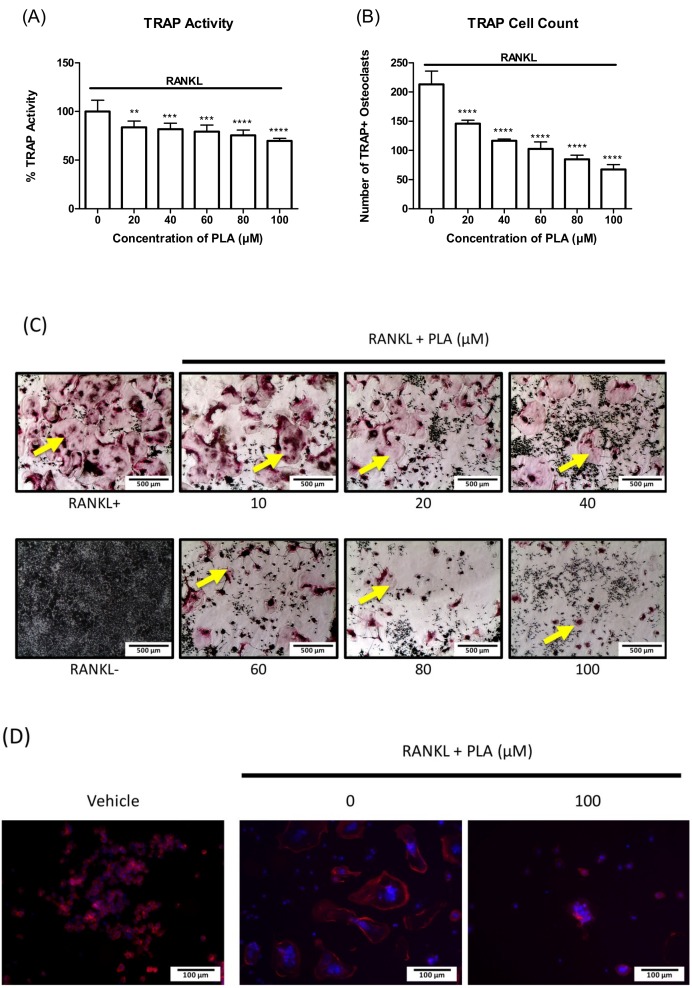
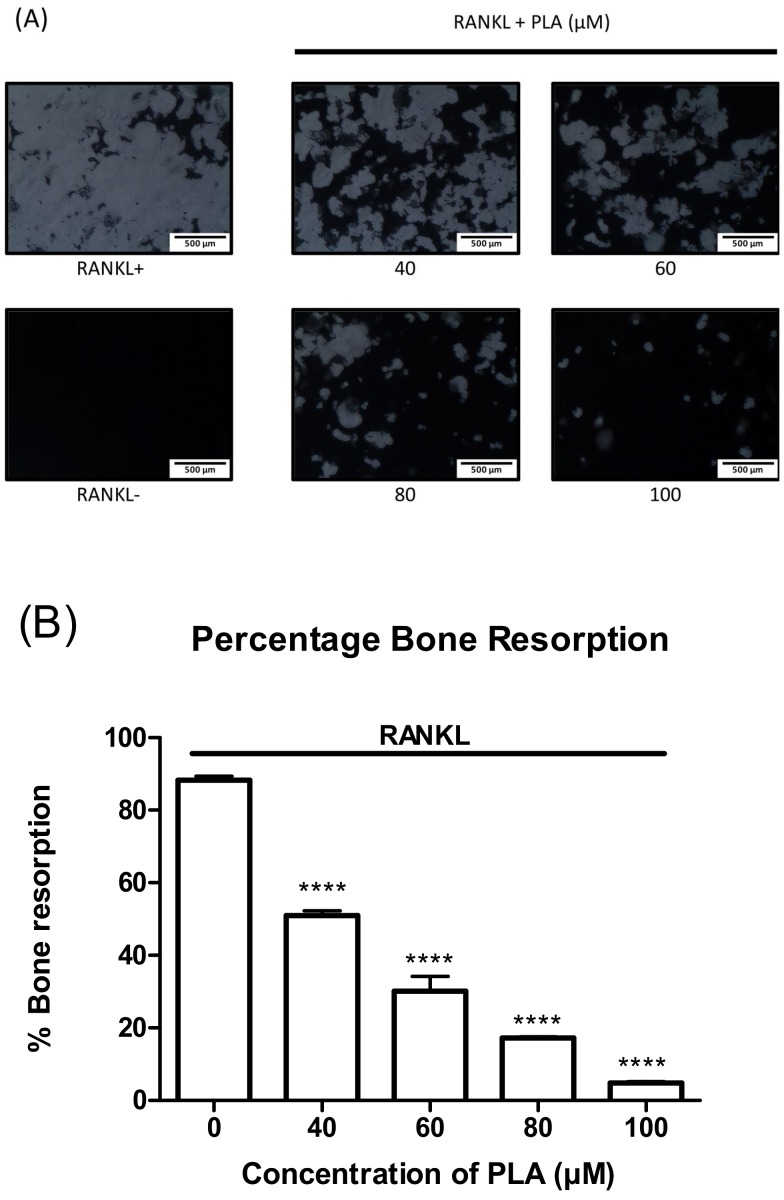
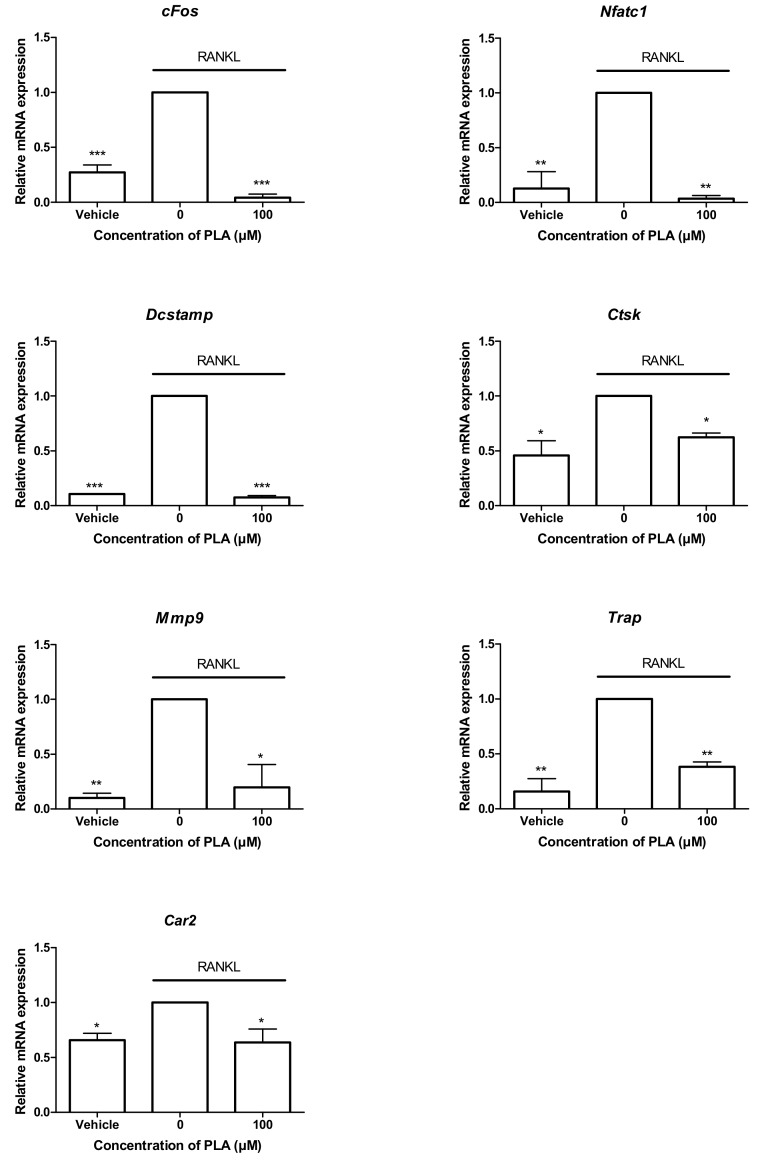
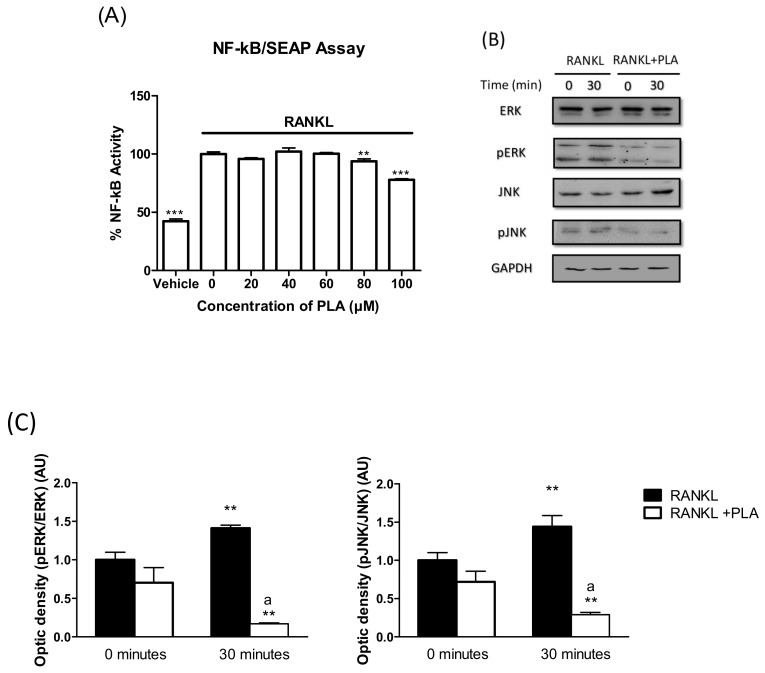
Osteoclasts are large, multinucleated cells that are responsible for the breakdown or resorption of bone during bone remodelling. Studies have shown that certain fatty acids (FAs) can increase bone formation, reduce bone loss, and influence total bone mass. Palmitoleic acid (PLA) is a 16-carbon, monounsaturated FA that has shown anti-inflammatory properties similar to other FAs. The effects of PLA in bone remain unexplored. Here we investigated the effects of PLA on receptor activator of nuclear factor kappa B (NF-κB) ligand (RANKL)-induced osteoclast formation and bone resorption in RAW264.7 murine macrophages. PLA decreased the number of large, multinucleated tartrate resistant acid phosphatase (TRAP) positive osteoclasts and furthermore, suppressed the osteolytic capability of these osteoclasts. This was accompanied by a decrease in expression of resorption markers (, matrix metalloproteinase 9 (), cathepsin K ()). PLA further decreased the expression of genes involved in the formation and function of osteoclasts. Additionally, PLA inhibited NF-κB activity and the activation of mitogen activated protein kinases (MAPK), c-Jun N-terminal kinase (JNK) and extracellular signal-regulated kinase (ERK). Moreover, PLA induced apoptosis in mature osteoclasts. This study reveals that PLA inhibits RANKL-induced osteoclast formation in RAW264.7 murine macrophages through suppression of NF-κB and MAPK signalling pathways. This may indicate that PLA has potential as a therapeutic for bone diseases characterized by excessive osteoclast formation.
破骨细胞是大型多核细胞,在骨重塑过程中负责骨的分解或吸收。研究表明,某些脂肪酸(FAs)可增加骨形成、减少骨质流失并影响骨总量。棕榈油酸(PLA)是一种16碳单不饱和脂肪酸,已显示出与其他脂肪酸相似的抗炎特性。PLA在骨方面的作用尚未得到探索。在此,我们研究了PLA对RAW264.7小鼠巨噬细胞中核因子κB(NF-κB)配体(RANKL)诱导的破骨细胞形成和骨吸收的影响。PLA减少了大型多核抗酒石酸酸性磷酸酶(TRAP)阳性破骨细胞的数量,此外,还抑制了这些破骨细胞的溶骨能力。这伴随着吸收标志物(基质金属蛋白酶9()、组织蛋白酶K())表达的降低。PLA进一步降低了参与破骨细胞形成和功能的基因的表达。此外,PLA抑制NF-κB活性以及丝裂原活化蛋白激酶(MAPK)、c-Jun氨基末端激酶(JNK)和细胞外信号调节激酶(ERK)的激活。此外,PLA诱导成熟破骨细胞凋亡。本研究表明,PLA通过抑制NF-κB和MAPK信号通路抑制RAW264.7小鼠巨噬细胞中RANKL诱导的破骨细胞形成。这可能表明PLA有潜力作为一种治疗以破骨细胞过度形成为特征的骨疾病的药物。