Kominakis Antonios, Hager-Theodorides Ariadne L, Zoidis Evangelos, Saridaki Aggeliki, Antonakos George, Tsiamis George
Department of Animal Science and Aquaculture, Agricultural University of Athens, Iera Odos 75, 11855, Athens, Greece.
Department of Environmental and Natural Resources Management, University of Patras, Seferi 2, 30100, Agrinio, Greece.
Genet Sel Evol. 2017 Apr 28;49(1):41. doi: 10.1186/s12711-017-0316-3.
Body size in sheep is an important indicator of productivity, growth and health as well as of environmental adaptation. It is a composite quantitative trait that has been studied with high-throughput genomic methods, i.e. genome-wide association studies (GWAS) in various mammalian species. Several genomic markers have been associated with body size traits and genes have been identified as causative candidates in humans, dog and cattle. A limited number of related GWAS have been performed in various sheep breeds and have identified genomic regions and candidate genes that partly account for body size variability. Here, we conducted a GWAS in Frizarta dairy sheep with phenotypic data from 10 body size measurements and genotypic data (from Illumina ovineSNP50 BeadChip) for 459 ewes.
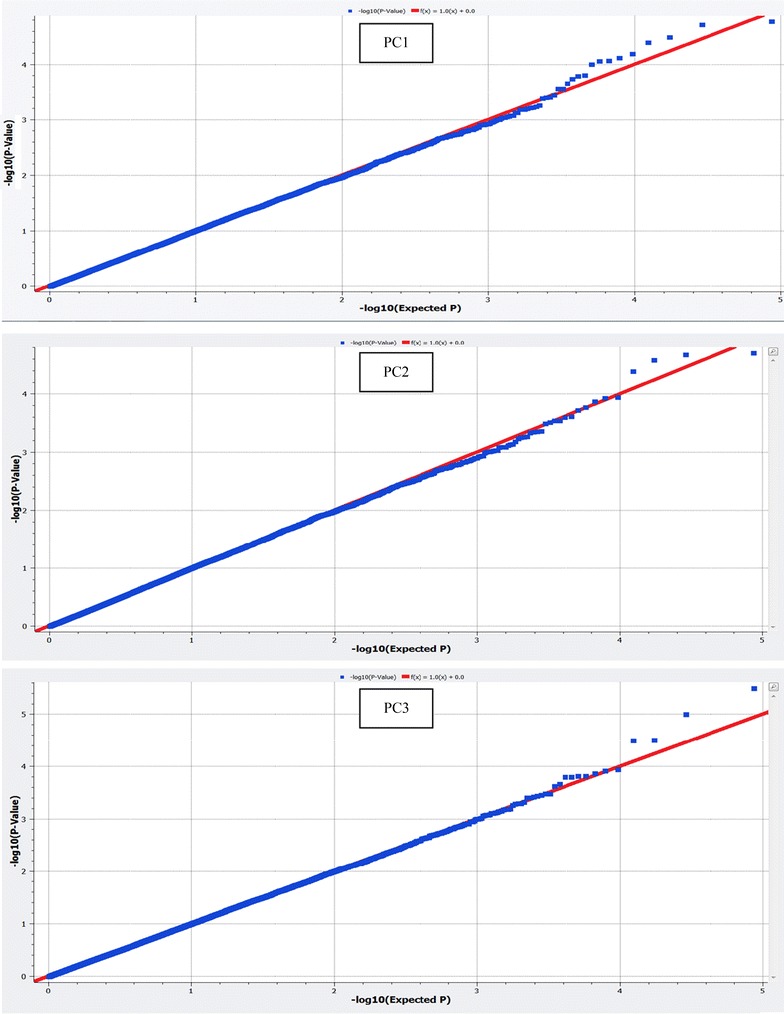
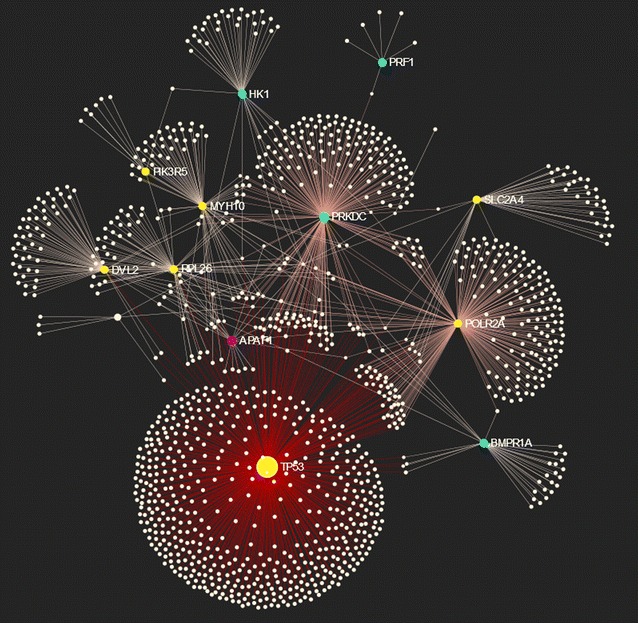
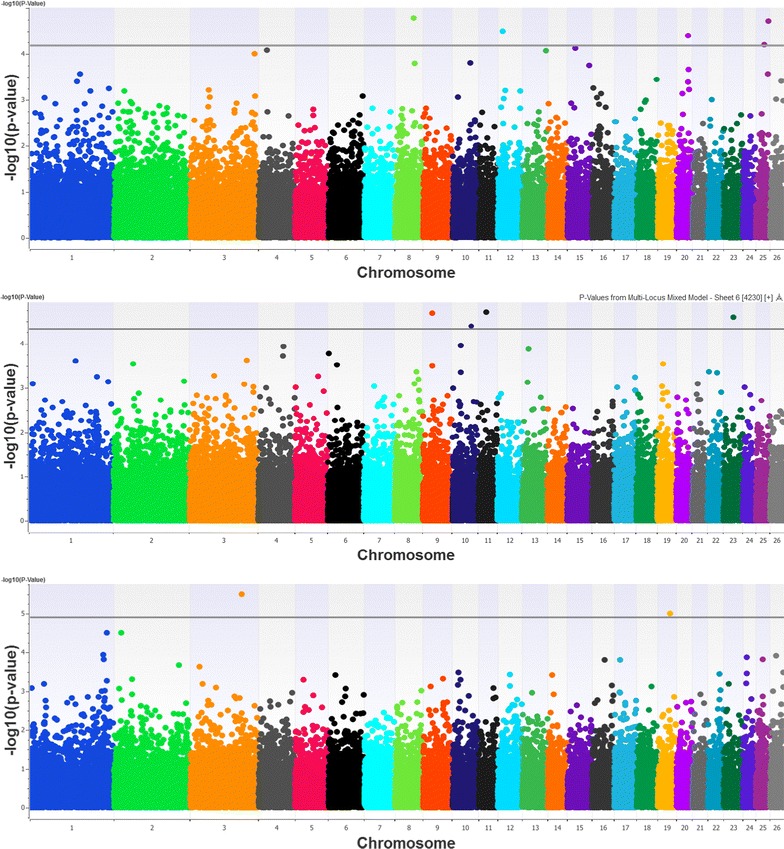
The 10 body size measurements were subjected to principal component analysis and three independent principal components (PC) were constructed, interpretable as width, height and length dimensions, respectively. The GWAS performed for each PC identified 11 significant SNPs, at the chromosome level, one on each of the chromosomes 3, 8, 9, 10, 11, 12, 19, 20, 23 and two on chromosome 25. Nine out of the 11 SNPs were located on previously identified quantitative trait loci for sheep meat, production or reproduction. One hundred and ninety-seven positional candidate genes within a 1-Mb distance from each significant SNP were found. A guilt-by-association-based (GBA) prioritization analysis (PA) was performed to identify the most plausible functional candidate genes. GBA-based PA identified 39 genes that were significantly associated with gene networks relevant to body size traits. Prioritized genes were identified in the vicinity of all significant SNPs except for those on chromosomes 10 and 12. The top five ranking genes were TP53, BMPR1A, PIK3R5, RPL26 and PRKDC.
The results of this GWAS provide evidence for 39 causative candidate genes across nine chromosomal regions for body size traits, some of which are novel and some are previously identified candidates from other studies (e.g. TP53, NTN1 and ZNF521). GBA-based PA has proved to be a useful tool to identify genes with increased biological relevance but it is subjected to certain limitations.
绵羊的体型是生产力、生长、健康以及环境适应性的重要指标。它是一个复合数量性状,已通过高通量基因组方法进行研究,即在各种哺乳动物物种中开展全基因组关联研究(GWAS)。在人类、狗和牛中,已发现若干基因组标记与体型性状相关,并确定了一些基因作为因果候选基因。在各种绵羊品种中开展了数量有限的相关GWAS,确定了部分解释体型变异性的基因组区域和候选基因。在此,我们对弗里扎尔塔奶羊进行了GWAS,分析了459只母羊的10项体型测量表型数据和基因型数据(来自Illumina羊SNP50芯片)。
对10项体型测量数据进行主成分分析,构建了三个独立的主成分(PC),分别可解释为宽度、高度和长度维度。针对每个PC进行的GWAS在染色体水平上鉴定出11个显著的单核苷酸多态性(SNP),分别位于第3、8、9、10、11、12、19、20、23号染色体上各一个,以及第25号染色体上两个。11个SNP中有9个位于先前确定的与绵羊肉、生产或繁殖相关的数量性状基因座上。在每个显著SNP的1兆碱基距离内发现了197个位置候选基因。进行了基于关联有罪(GBA)的优先排序分析(PA),以确定最有可能的功能候选基因。基于GBA的PA鉴定出39个与体型性状相关基因网络显著相关的基因。除了位于第10和12号染色体上的SNP外,在所有显著SNP附近均鉴定出了优先基因。排名前五的基因是TP53、BMPR1A、PIK3R5、RPL26和PRKDC。
本GWAS结果为九个染色体区域的39个体型性状因果候选基因提供了证据,其中一些是新发现的,一些是先前其他研究中已鉴定的候选基因(如TP53、NTN1和ZNF521)。基于GBA的PA已被证明是识别具有更高生物学相关性基因的有用工具,但也存在一定局限性。