Zou Zhongcheng, Misasi John, Sullivan Nancy, Sun Peter D
Structural Immunology Section, Laboratory of Immunogenetics, National Institute of Allergy and Infectious Diseases, National Institutes of Health, Rockville, MD 20852, USA.
Biodefense Research Section, Vaccine Research Center, National Institute of Allergy and Infectious Diseases, National Institutes of Health, Bethesda, MD 20892, USA.
Protein Expr Purif. 2017 Jul;135:45-53. doi: 10.1016/j.pep.2017.04.010. Epub 2017 Apr 27.
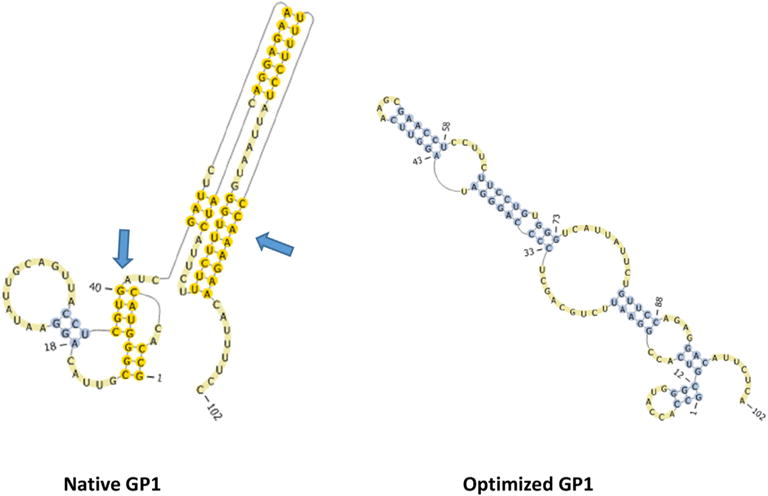
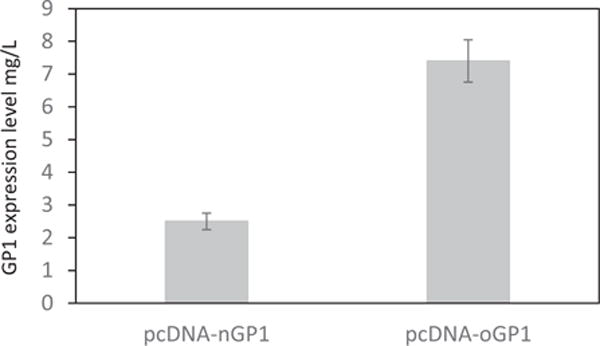
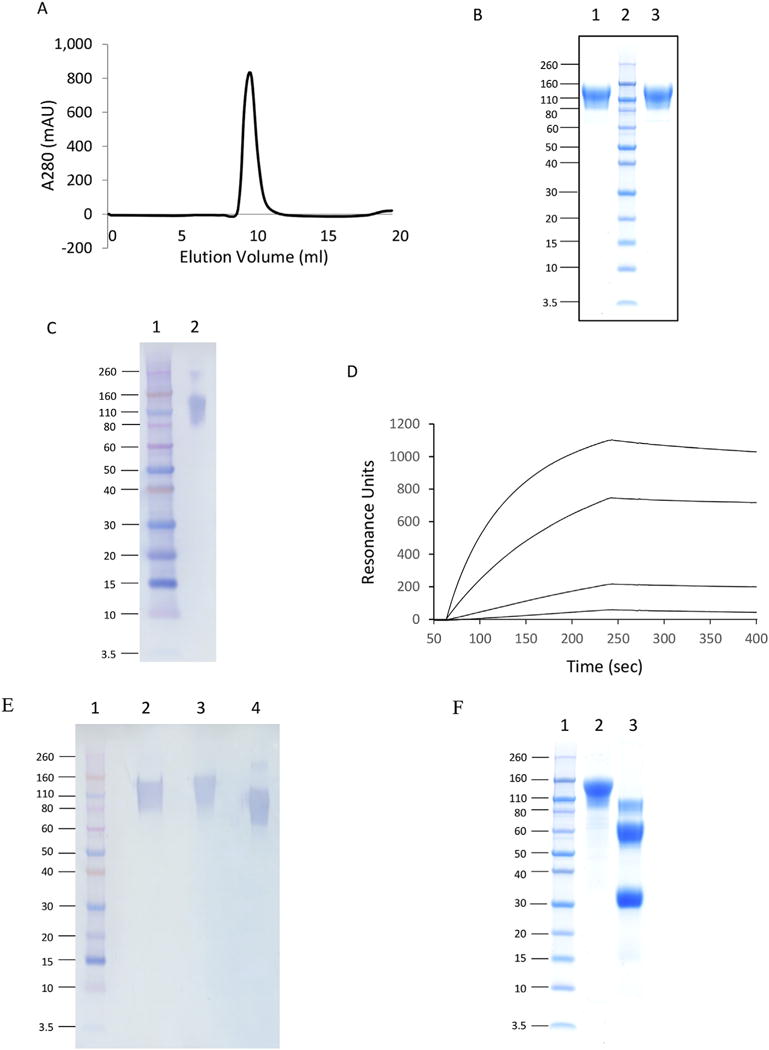
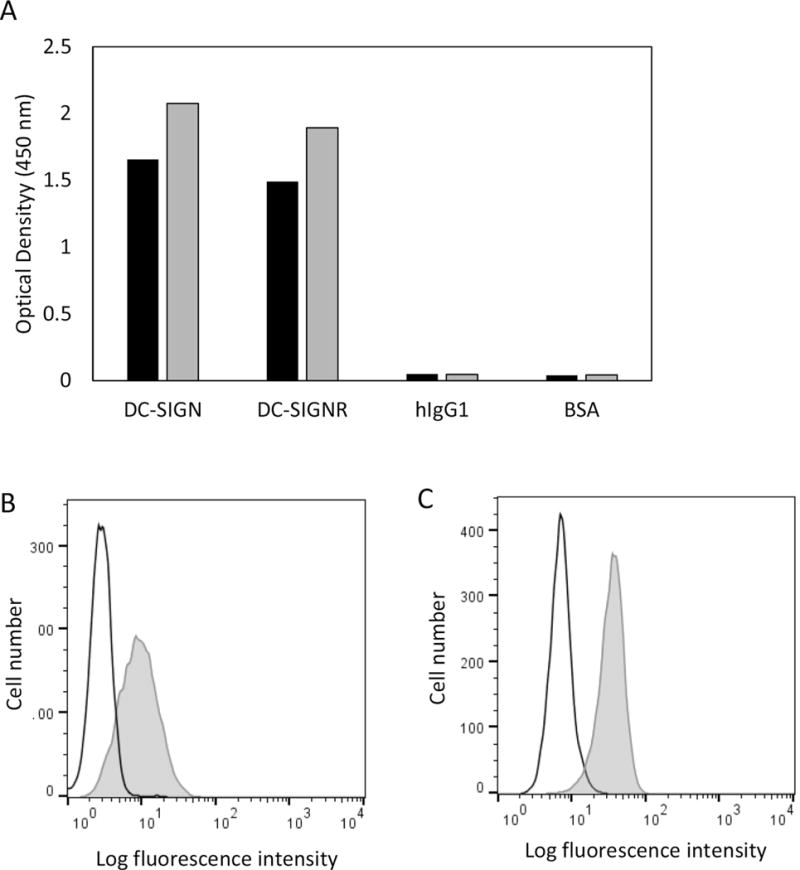
Ebola virus uses its envelope GP1 and GP2 for viral attachment and entry into host cells. Due to technical difficulty expressing full-length envelope, many structural and functional studies of Ebola envelope protein have been carried out primarily using GP1 lacking its mucin-like domain. As a result, the viral invasion mechanisms involving the mucin-like domain are not fully understood. To elucidate the role of the mucin-like domain of GP1 in Ebola-host attachment and infection and to facilitate vaccine development, we constructed a GP1 expression vector containing the entire attachment region (1-496). Cysteine 53 of GP1, which forms a disulfide bond with GP2, was mutated to serine to avoid potential disulfide bond mispairing. Stable expression clones using codon optimized open reading frame were developed in human 293-H cells with yields reaching ∼25 mg of GP1 protein per liter of spent medium. Purified GP1 was functional and bound to Ebola attachment receptors, DC-SIGN and DC-SIGNR. The over-expression and easy purification characteristic of this system has implications in Ebola research and vaccine development. To further understand the differential expression yields between the codon optimized and native GP1, we analyzed the presence of RNA structural motifs in the first 100 nucleotides of translational initiation AUG site. RNA structural prediction showed the codon optimization removed two potential RNA pseudoknot structures. This methodology is also applicable to the expression of other difficult virus envelope proteins.
埃博拉病毒利用其包膜糖蛋白GP1和GP2进行病毒附着并进入宿主细胞。由于表达全长包膜存在技术困难,许多关于埃博拉包膜蛋白的结构和功能研究主要是使用缺乏粘蛋白样结构域的GP1进行的。因此,涉及粘蛋白样结构域的病毒入侵机制尚未完全了解。为了阐明GP1的粘蛋白样结构域在埃博拉病毒与宿主附着及感染中的作用,并促进疫苗开发,我们构建了一个包含整个附着区域(1-496)的GP1表达载体。将与GP2形成二硫键的GP1的半胱氨酸53突变为丝氨酸,以避免潜在的二硫键错配。使用密码子优化的开放阅读框在人293-H细胞中构建了稳定表达克隆,每升培养基上清液中GP1蛋白产量达到约25毫克。纯化后的GP1具有功能,并能与埃博拉病毒附着受体DC-SIGN和DC-SIGNR结合。该系统的过表达和易于纯化特性对埃博拉病毒研究和疫苗开发具有重要意义。为了进一步了解密码子优化的GP1和天然GP1之间的差异表达产量,我们分析了翻译起始AUG位点前100个核苷酸中RNA结构基序的存在情况。RNA结构预测表明,密码子优化消除了两个潜在的RNA假结结构。这种方法也适用于其他难表达的病毒包膜蛋白的表达。