Chami Goylette F, Kontoleon Andreas A, Bulte Erwin, Fenwick Alan, Kabatereine Narcis B, Tukahebwa Edridah M, Dunne David W
Department of Land Economy, University of Cambridge, Cambridge CB3 9EP, United Kingdom; Department of Pathology, University of Cambridge, Cambridge CB2 1QP, United Kingdom.
Department of Land Economy, University of Cambridge, Cambridge CB3 9EP, United Kingdom.
Soc Sci Med. 2017 Jun;183:37-47. doi: 10.1016/j.socscimed.2017.04.009. Epub 2017 Apr 8.
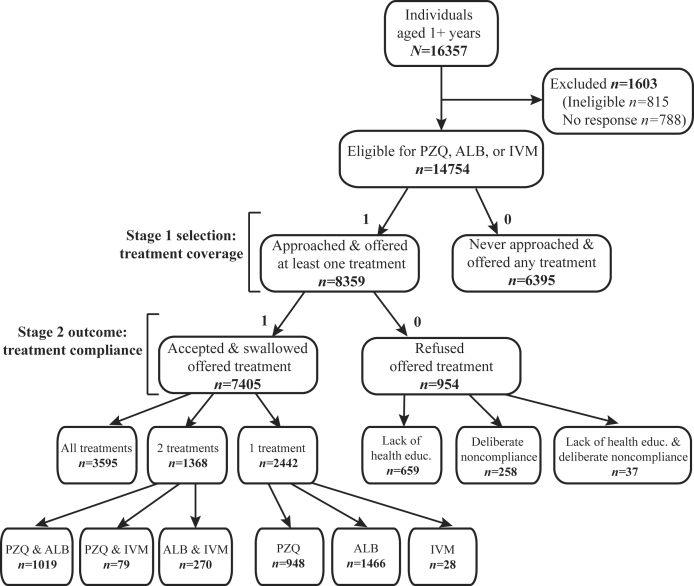
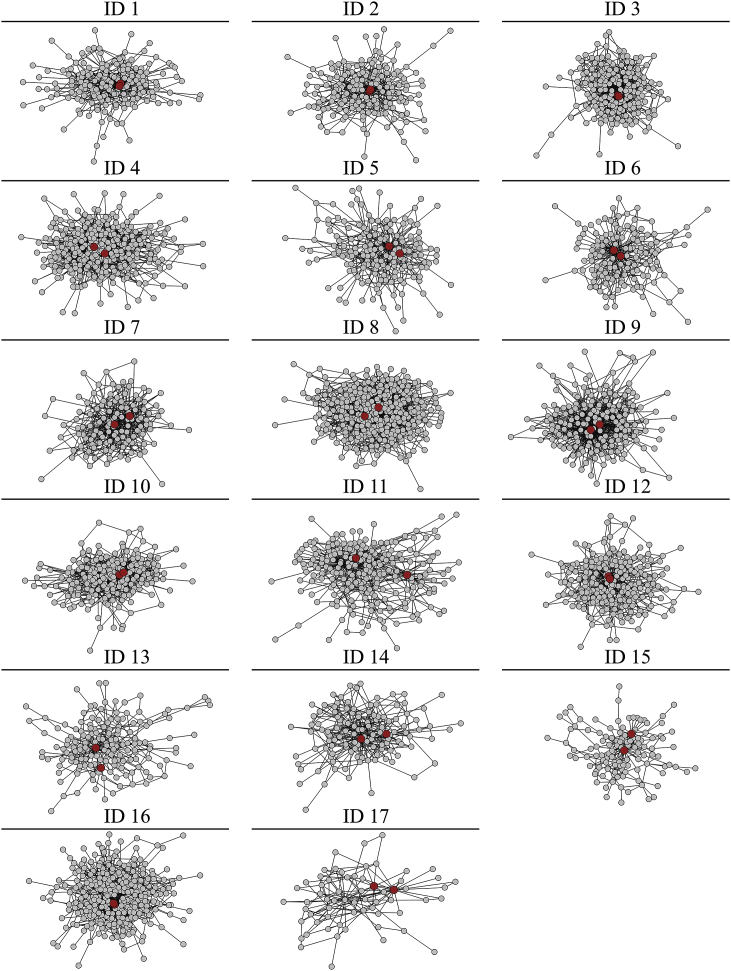
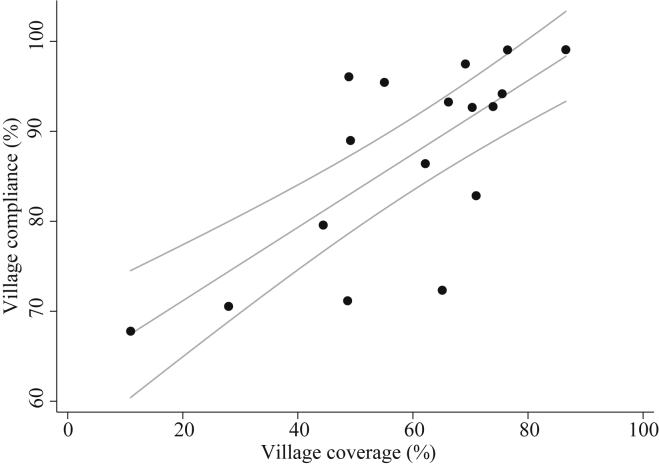
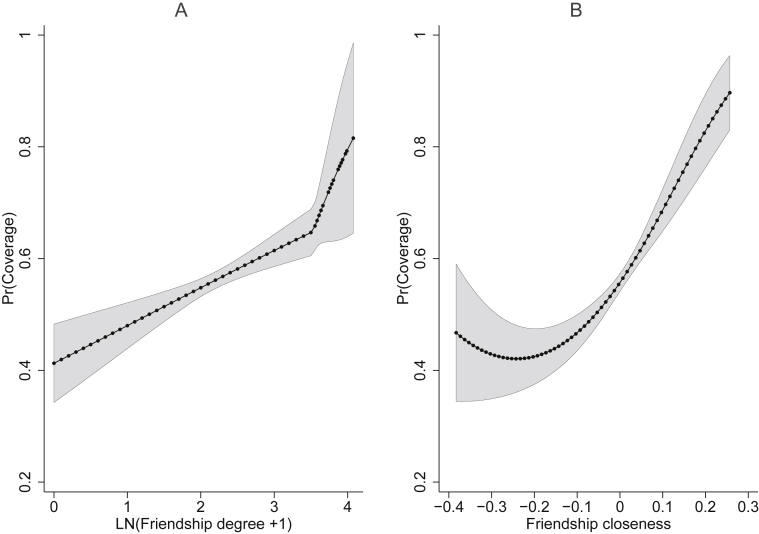
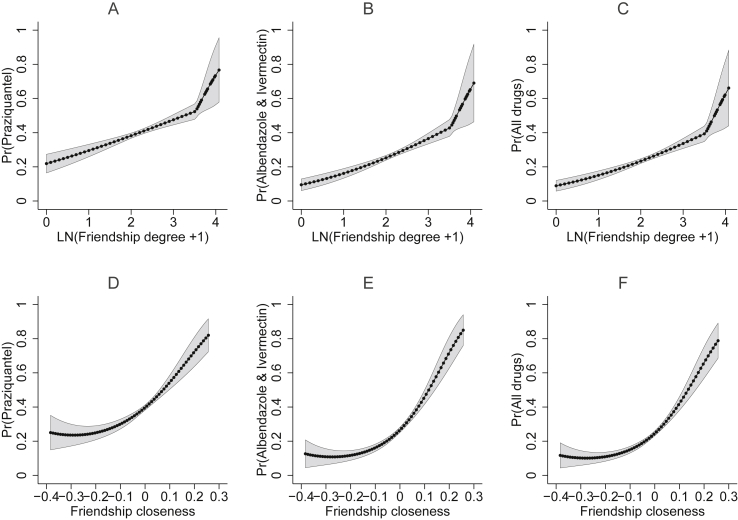
Over 1.9 billion individuals require preventive chemotherapy through mass drug administration (MDA). Community-directed MDA relies on volunteer community medicine distributors (CMDs) and their achievement of high coverage and compliance. Yet, it is unknown if village social networks influence effective MDA implementation by CMDs. In Mayuge District, Uganda, census-style surveys were conducted for 16,357 individuals from 3,491 households in 17 villages. Praziquantel, albendazole, and ivermectin were administered for one month in community-directed MDA to treat Schistosoma mansoni, hookworm, and lymphatic filariasis. Self-reported treatment outcomes, socioeconomic characteristics, friendship networks, and health advice networks were collected. We investigated systematically missed coverage and noncompliance. Coverage was defined as an eligible person being offered at least one drug by CMDs; compliance included ingesting at least one of the offered drugs. These outcomes were analyzed as a two-stage process using a Heckman selection model. To further assess if MDA through CMDs was working as intended, we examined the probability of accurate drug administration of 1) praziquantel, 2) both albendazole and ivermectin, and 3) all drugs. This analysis was conducted using bivariate Probit regression. Four indicators from each social network were examined: degree, betweenness centrality, closeness centrality, and the presence of a direct connection to CMDs. All models accounted for nested household and village standard errors. CMDs were more likely to offer medicines, and to accurately administer the drugs as trained by the national control programme, to individuals with high friendship degree (many connections) and high friendship closeness centrality (households that were only a short number of steps away from all other households in the network). Though high (88.59%), additional compliance was associated with directly trusting CMDs for health advice. Effective treatment provision requires addressing CMD biases towards influential, well-embedded individuals in friendship networks and utilizing health advice networks to increase village trust in CMDs.
超过19亿人需要通过大规模药物管理(MDA)接受预防性化疗。社区导向的MDA依赖于社区志愿药物分发员(CMD)及其实现的高覆盖率和依从性。然而,尚不清楚村庄社会网络是否会影响CMD有效实施MDA。在乌干达的马尤盖区,对17个村庄的3491户家庭中的16357人进行了普查式调查。在社区导向的MDA中,吡喹酮、阿苯达唑和伊维菌素给药一个月,以治疗曼氏血吸虫、钩虫和淋巴丝虫病。收集了自我报告的治疗结果、社会经济特征、友谊网络和健康建议网络。我们系统地调查了漏服覆盖率和不依从情况。覆盖率定义为符合条件的人至少被CMD提供一种药物;依从性包括服用至少一种提供的药物。这些结果使用Heckman选择模型分两阶段进行分析。为了进一步评估通过CMD进行的MDA是否按预期发挥作用,我们检查了准确给药的概率:1)吡喹酮,2)阿苯达唑和伊维菌素两者,以及3)所有药物。该分析使用双变量Probit回归进行。检查了每个社会网络的四个指标:度数、中介中心性、接近中心性以及与CMD的直接联系。所有模型都考虑了嵌套的家庭和村庄标准误差。CMD更有可能向友谊度数高(联系多)和友谊接近中心性高(在网络中与所有其他家庭距离仅几步之遥的家庭)的个人提供药物,并按照国家控制计划的培训准确给药。尽管依从性很高(88.59%),但额外的依从性与直接信任CMD提供健康建议有关。有效的治疗提供需要解决CMD对友谊网络中有影响力、融入良好的个人的偏见,并利用健康建议网络来提高村庄对CMD的信任。