Nguyen Van Hong, Lee Beom-Jin
Department of Pharmacy, Bioavailability Control Laboratory, College of Pharmacy, Ajou University, Suwon, Republic of Korea.
Int J Nanomedicine. 2017 Apr 18;12:3137-3151. doi: 10.2147/IJN.S129300. eCollection 2017.
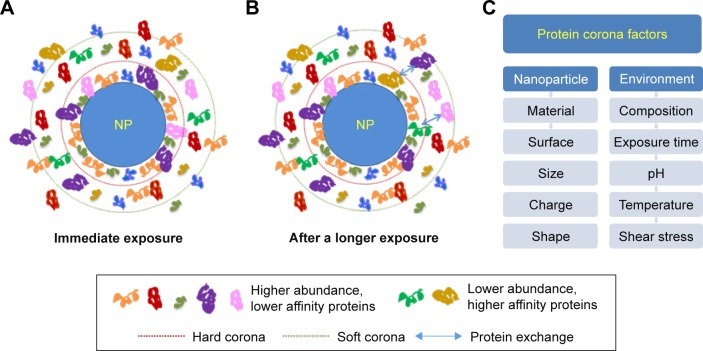
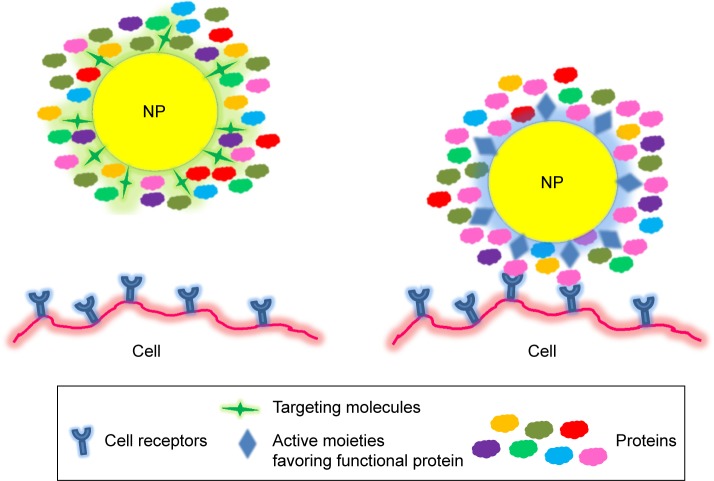
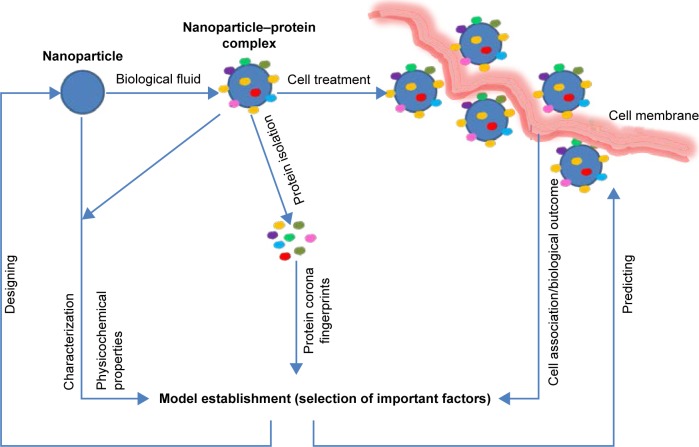
After administration of nanoparticle (NP) into biological fluids, an NP-protein complex is formed, which represents the "true identity" of NP in our body. Hence, protein-NP interaction should be carefully investigated to predict and control the fate of NPs or drug-loaded NPs, including systemic circulation, biodistribution, and bioavailability. In this review, we mainly focus on the formation of protein corona and its potential applications in pharmaceutical sciences such as prediction modeling based on NP-adsorbed proteins, usage of active proteins for modifying NP to achieve toxicity reduction, circulation time enhancement, and targeting effect. Validated correlative models for NP biological responses mainly based on protein corona fingerprints of NPs are more highly accurate than the models solely set up from NP properties. Based on these models, effectiveness as well as the toxicity of NPs can be predicted without in vivo tests, while novel cell receptors could be identified from prominent proteins which play important key roles in the models. The ungoverned protein adsorption onto NPs may have generally negative effects such as rapid clearance from the bloodstream, hindrance of targeting capacity, and induction of toxicity. In contrast, controlling protein adsorption by modifying NPs with diverse functional proteins or tailoring appropriate NPs which favor selective endogenous peptides and proteins will bring promising therapeutic benefits in drug delivery and targeted cancer treatment.
将纳米颗粒(NP)注入生物流体后,会形成NP-蛋白质复合物,它代表了NP在我们体内的“真实身份”。因此,应仔细研究蛋白质与NP的相互作用,以预测和控制NP或载药NP的命运,包括全身循环、生物分布和生物利用度。在本综述中,我们主要关注蛋白质冠的形成及其在药物科学中的潜在应用,例如基于NP吸附蛋白的预测模型、使用活性蛋白修饰NP以实现毒性降低、循环时间延长和靶向作用。基于NP生物反应的经过验证的相关模型主要基于NP的蛋白质冠指纹图谱,比仅根据NP特性建立的模型更准确。基于这些模型,无需进行体内试验即可预测NP的有效性和毒性,同时可以从在模型中起重要关键作用的突出蛋白质中识别出新的细胞受体。NP上不受控制的蛋白质吸附通常可能会产生负面影响,例如从血液中快速清除、阻碍靶向能力和诱导毒性。相比之下,通过用多种功能蛋白修饰NP或定制有利于选择性内源性肽和蛋白质的合适NP来控制蛋白质吸附,将在药物递送和靶向癌症治疗中带来有前景的治疗益处。