Hao Xinyuan, Yang Yajun, Yue Chuan, Wang Lu, Horvath David P, Wang Xinchao
Tea Research Institute, Chinese Academy of Agricultural SciencesHangzhou, China.
National Center for Tea Improvement, Key Laboratory of Tea Biology and Resources Utilization, Ministry of AgricultureHangzhou, China.
Front Plant Sci. 2017 Apr 18;8:553. doi: 10.3389/fpls.2017.00553. eCollection 2017.
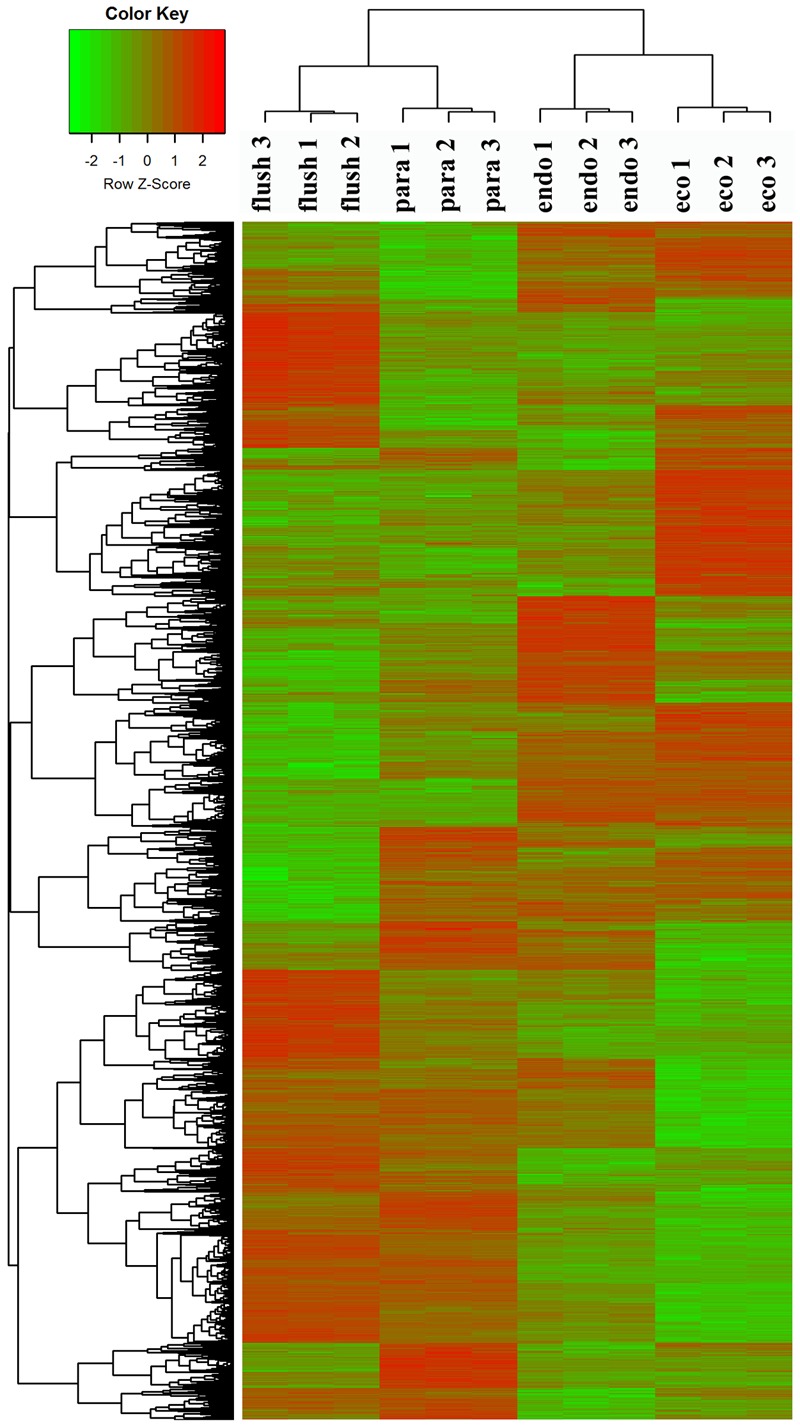
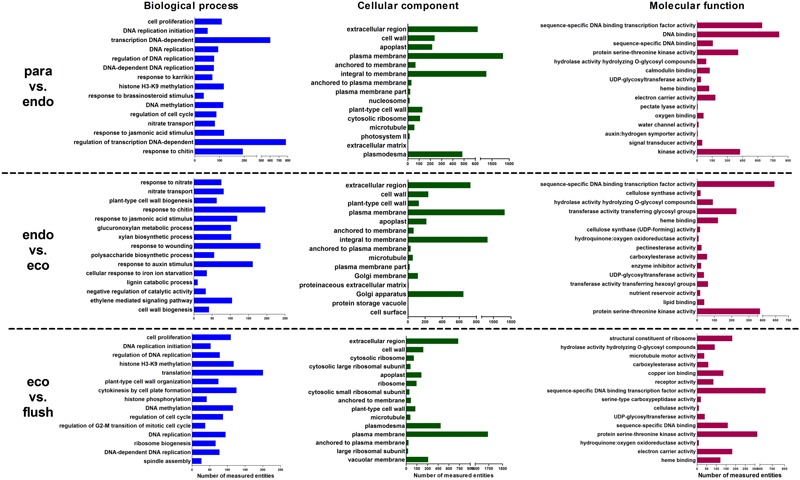
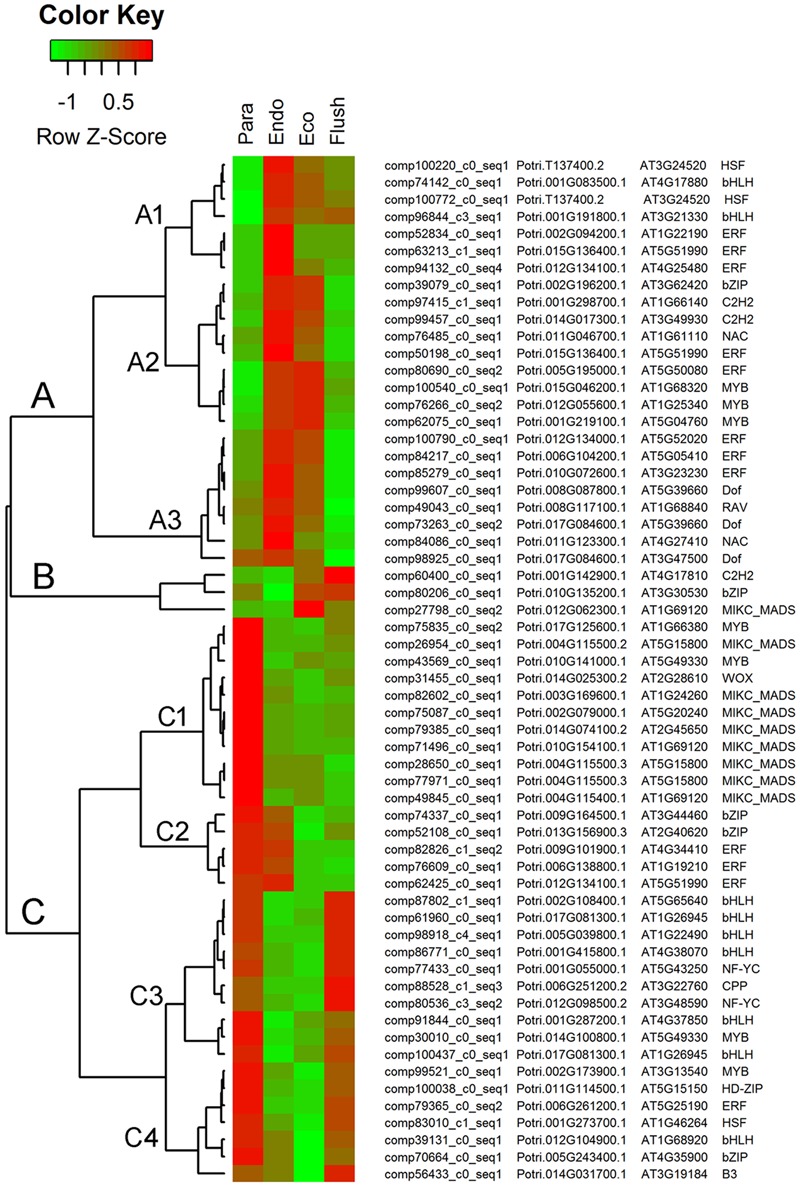
Winter dormancy is an important biological feature for tea plant to survive cold winters, and it also affects the economic output of tea plant, one of the few woody plants in the world whose leaves are harvested and one of the few non-conifer evergreen species with characterized dormancies. To discover the bud dormancy regulation mechanism of tea plant in winter, we analyzed the global gene expression profiles of axillary buds at the paradormancy, endodormancy, ecodormancy, and bud flush stages by RNA-Seq analysis. In total, 16,125 differentially expressed genes (DEGs) were identified among the different measured conditions. Gene set enrichment analysis was performed on the DEGs identified from each dormancy transition. Enriched gene ontology terms, gene sets and transcription factors were mainly associated with epigenetic mechanisms, phytohormone signaling pathways, and callose-related cellular communication regulation. Furthermore, differentially expressed transcription factors as well as chromatin- and phytohormone-associated genes were identified. GI-, CAL-, SVP-, PHYB-, SFR6-, LHY-, ZTL-, PIF4/6-, ABI4-, EIN3-, ETR1-, CCA1-, PIN3-, CDK-, and CO-related gene sets were enriched. Based on sequence homology analysis, we summarized the key genes with significant expression differences in poplar and tea plant. The major molecular pathways involved in tea plant dormancy regulation are consistent with those of poplar to a certain extent; however, the gene expression patterns varied. This study provides the global transcriptome profiles of overwintering buds at different dormancy stages and is meaningful for improving the understanding of bud dormancy in tea plant.
冬季休眠是茶树在寒冷冬季存活的重要生物学特性,它还影响着茶树的经济产量。茶树是世界上少数几种采摘叶片的木本植物之一,也是少数具有特定休眠特征的非针叶常绿树种之一。为了揭示茶树冬季芽休眠调控机制,我们通过RNA测序分析了腋芽在旁休眠、内休眠、生态休眠和芽萌发阶段的全基因组表达谱。在不同测量条件下,共鉴定出16125个差异表达基因(DEG)。对从每个休眠转变中鉴定出的DEG进行基因集富集分析。富集的基因本体术语、基因集和转录因子主要与表观遗传机制、植物激素信号通路以及胼胝质相关的细胞通讯调控有关。此外,还鉴定出了差异表达的转录因子以及与染色质和植物激素相关的基因。GI-、CAL-、SVP-、PHYB-、SFR6-、LHY-、ZTL-、PIF4/6-、ABI4-、EIN3-、ETR1-、CCA1-、PIN3-、CDK-和CO相关的基因集得到了富集。基于序列同源性分析,我们总结了杨树和茶树中具有显著表达差异的关键基因。茶树休眠调控涉及的主要分子途径在一定程度上与杨树一致;然而,基因表达模式有所不同。本研究提供了不同休眠阶段越冬芽的全转录组图谱,对于增进对茶树芽休眠的理解具有重要意义。