Belloir P, Méda B, Lambert W, Corrent E, Juin H, Lessire M, Tesseraud S
1URA,INRA,37380 Nouzilly,France.
2Ajinomoto Eurolysine S.A.S.,F-75817 Paris Cedex 17,France.
Animal. 2017 Nov;11(11):1881-1889. doi: 10.1017/S1751731117000660. Epub 2017 May 2.
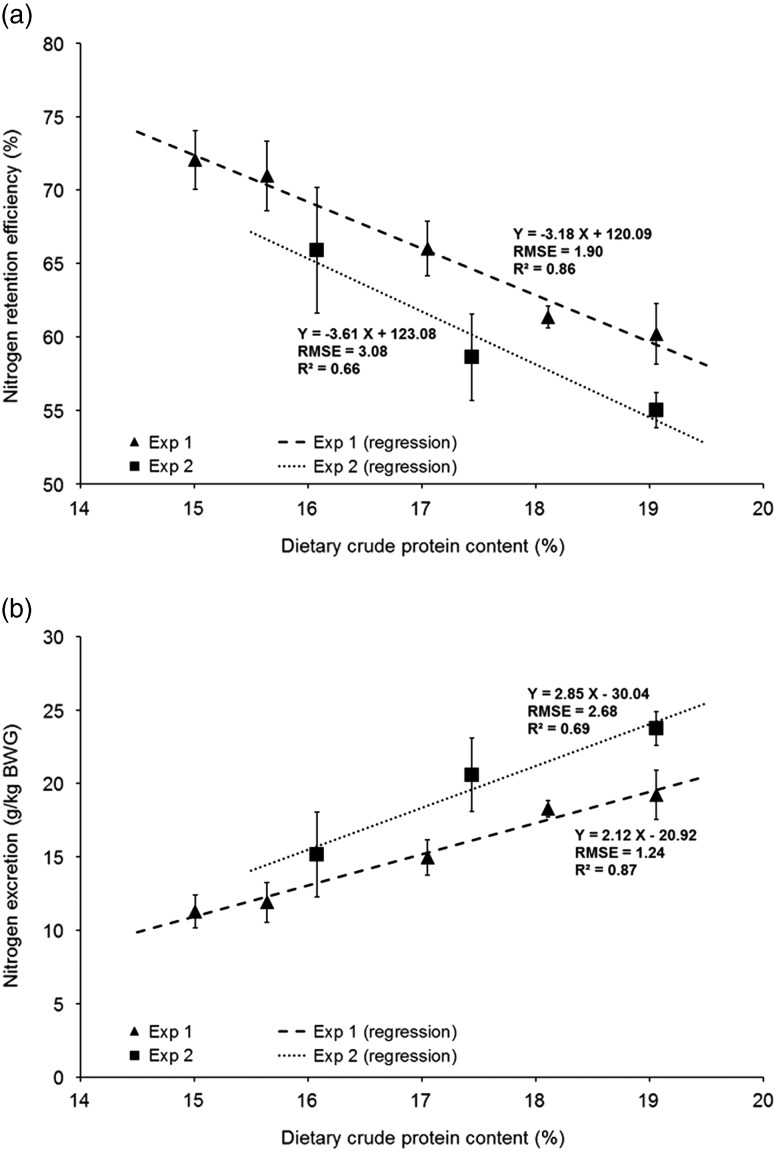
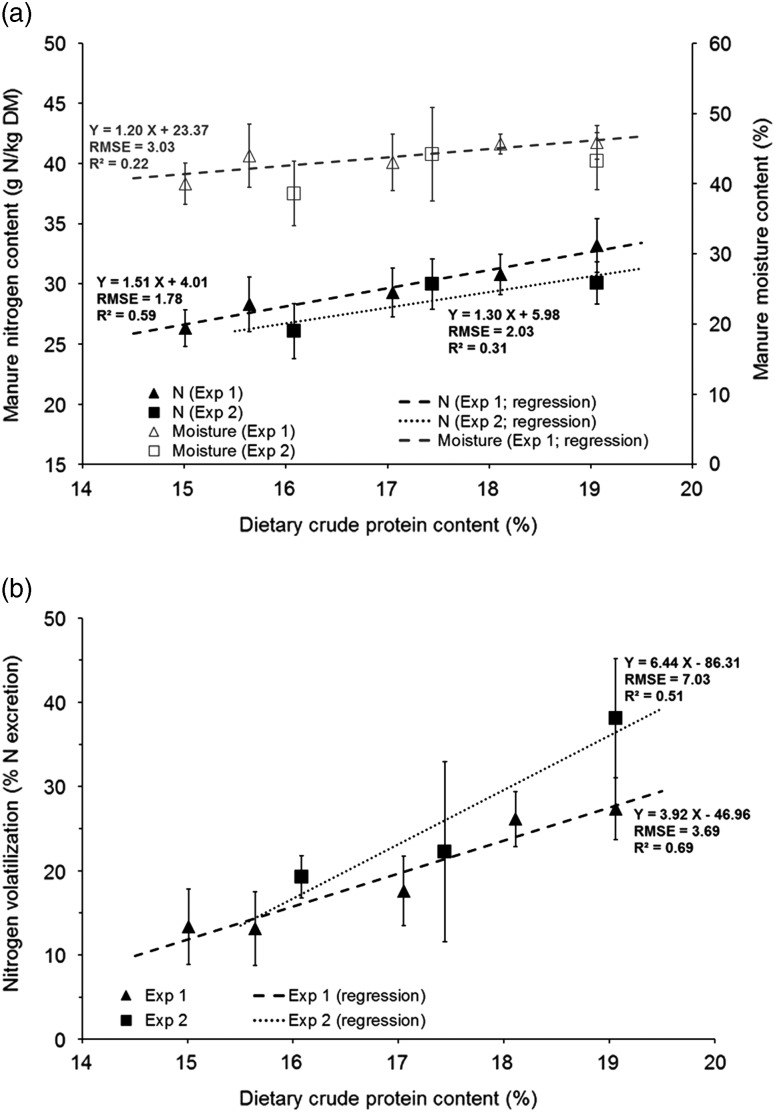
Reducing the dietary CP content is an efficient way to limit nitrogen excretion in broilers but, as reported in the literature, it often reduces performance, probably because of an inadequate provision in amino acids (AA). The aim of this study was to investigate the effect of decreasing the CP content in the diet on animal performance, meat quality and nitrogen utilization in growing-finishing broilers using an optimized dietary AA profile based on the ideal protein concept. Two experiments (1 and 2) were performed using 1-day-old PM3 Ross male broilers (1520 and 912 for experiments 1 and 2, respectively) using the minimum AA:Lys ratios proposed by Mack et al. with modifications for Thr and Arg. The digestible Thr (dThr): dLys ratio was increased from 63% to 68% and the dArg:dLys ratio was decreased from 112% to 108%. In experiment 1, the reduction of dietary CP from 19% to 15% (five treatments) did not alter feed intake or BW, but the feed conversion ratio was increased for the 16% and 15% CP diets (+2.4% and +3.6%, respectively), while in experiment 2 (three treatments: 19%, 17.5% and 16% CP) there was no effect of dietary CP on performance. In both experiments, dietary CP content did not affect breast meat yield. However, abdominal fat content (expressed as a percentage of BW) was increased by the decrease in CP content (up to +0.5 and +0.2 percentage point, in experiments 1 and 2, respectively). In experiment 2, meat quality traits responded to dietary CP content with a higher ultimate pH and lower lightness and drip loss values for the low CP diets. Nitrogen retention efficiency increased when reducing CP content in both experiments (+3.5 points/CP percentage point). The main consequence of this higher efficiency was a decrease in nitrogen excretion (-2.5 g N/kg BW gain) and volatilization (expressed as a percentage of excretion: -5 points/CP percentage point). In conclusion, this study demonstrates that with an adapted AA profile, it is possible to reduce dietary CP content to at least 17% in growing-finishing male broilers, without altering animal performance and meat quality. Such a feeding strategy could therefore help improving the sustainability of broiler production as it is an efficient way to reduce environmental burden associated with nitrogen excretion.
降低日粮粗蛋白(CP)含量是限制肉鸡氮排泄的有效方法,但如文献报道,这通常会降低生产性能,可能是因为氨基酸(AA)供应不足。本研究的目的是基于理想蛋白质概念,使用优化的日粮氨基酸谱,研究降低日粮CP含量对生长育肥期肉鸡生产性能、肉品质和氮利用的影响。使用1日龄的PM3罗斯雄性肉鸡进行了两个试验(试验1和试验2,试验1和试验2分别使用1520只和912只肉鸡),采用了Mack等人提出的最低氨基酸:赖氨酸比例,并对苏氨酸和精氨酸进行了调整。可消化苏氨酸(dThr):d赖氨酸比例从63%提高到68%,d精氨酸:d赖氨酸比例从112%降低到108%。在试验1中,日粮CP从19%降至15%(五个处理)未改变采食量或体重,但16%和15%CP日粮的饲料转化率提高(分别提高2.4%和3.6%),而在试验2(三个处理:19%、17.5%和16%CP)中,日粮CP对生产性能没有影响。在两个试验中,日粮CP含量均未影响胸肉产量。然而,CP含量降低会使腹脂含量(以体重的百分比表示)增加(试验1和试验2中分别最高增加0.5和0.