Edwards Andrew G, Louch William E
Center for Biomedical Computing, Simula Research Laboratory, Lysaker, Norway.
Center for Cardiological Innovation, Simula Research Laboratory, Lysaker, Norway.
Clin Med Insights Cardiol. 2017 Feb 2;11:1179546816686061. doi: 10.1177/1179546816686061. eCollection 2017.
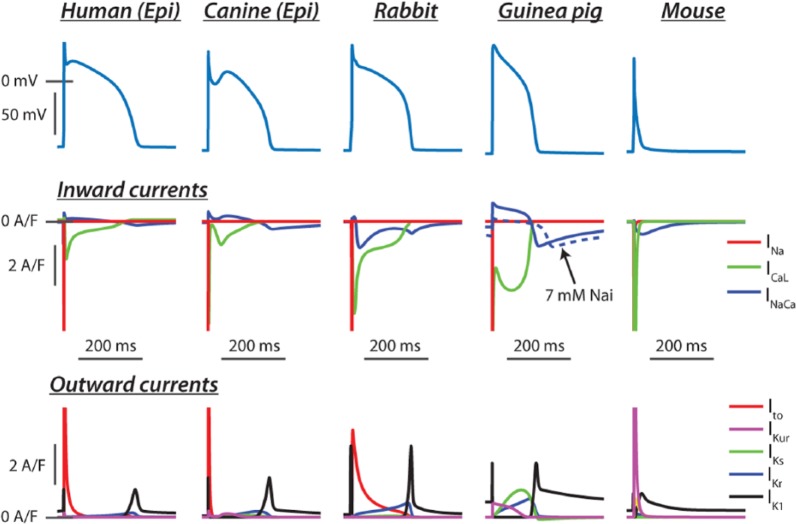
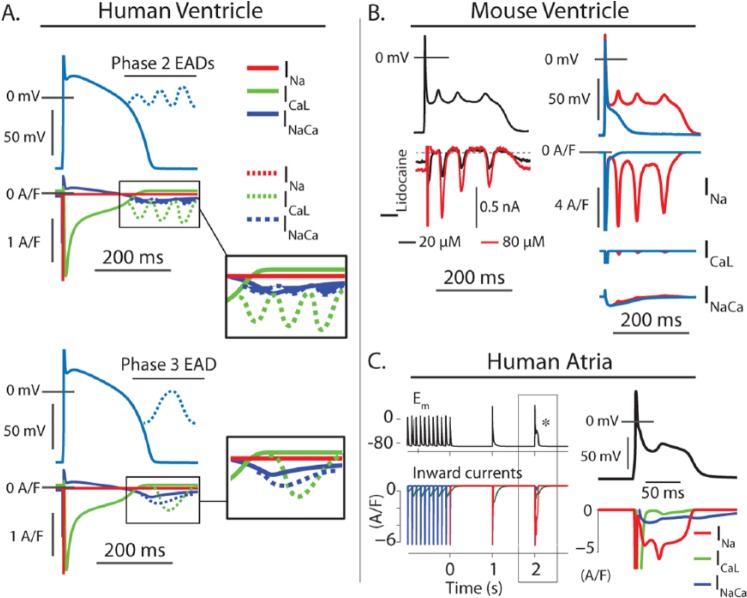
Although ventricular arrhythmia remains a leading cause of morbidity and mortality, available antiarrhythmic drugs have limited efficacy. Disappointing progress in the development of novel, clinically relevant antiarrhythmic agents may partly be attributed to discrepancies between humans and animal models used in preclinical testing. However, such differences are at present difficult to predict, requiring improved understanding of arrhythmia mechanisms across species. To this end, we presently review interspecies similarities and differences in fundamental cardiomyocyte electrophysiology and current understanding of the mechanisms underlying the generation of afterdepolarizations and reentry. We specifically highlight patent shortcomings in small rodents to reproduce cellular and tissue-level arrhythmia substrate believed to be critical in human ventricle. Despite greater ease of translation from larger animal models, discrepancies remain and interpretation can be complicated by incomplete knowledge of human ventricular physiology due to low availability of explanted tissue. We therefore point to the benefits of mathematical modeling as a translational bridge to understanding and treating human arrhythmia.
尽管室性心律失常仍然是发病和死亡的主要原因,但现有的抗心律失常药物疗效有限。新型临床相关抗心律失常药物研发进展令人失望,部分原因可能是临床前测试中使用的人类和动物模型之间存在差异。然而,目前很难预测这些差异,需要更好地理解不同物种的心律失常机制。为此,我们目前回顾了不同物种在基本心肌细胞电生理学方面的异同,以及对后去极化和折返发生机制的当前理解。我们特别强调了小型啮齿动物在再现被认为对人类心室至关重要的细胞和组织水平心律失常基质方面的明显不足。尽管从大型动物模型进行转化更容易,但差异仍然存在,而且由于移植组织的可用性较低,对人类心室生理学的不完全了解可能会使解释变得复杂。因此,我们指出数学建模作为理解和治疗人类心律失常的转化桥梁的益处。