Jagielska Anna, Lowe Alexis L, Makhija Ekta, Wroblewska Liliana, Guck Jochen, Franklin Robin J M, Shivashankar G V, Van Vliet Krystyn J
Department of Materials Science and Engineering, Massachusetts Institute of TechnologyCambridge, MA, USA.
Department of Neuroscience, Wellesley CollegeWellesley, MA, USA.
Front Cell Neurosci. 2017 Apr 20;11:93. doi: 10.3389/fncel.2017.00093. eCollection 2017.
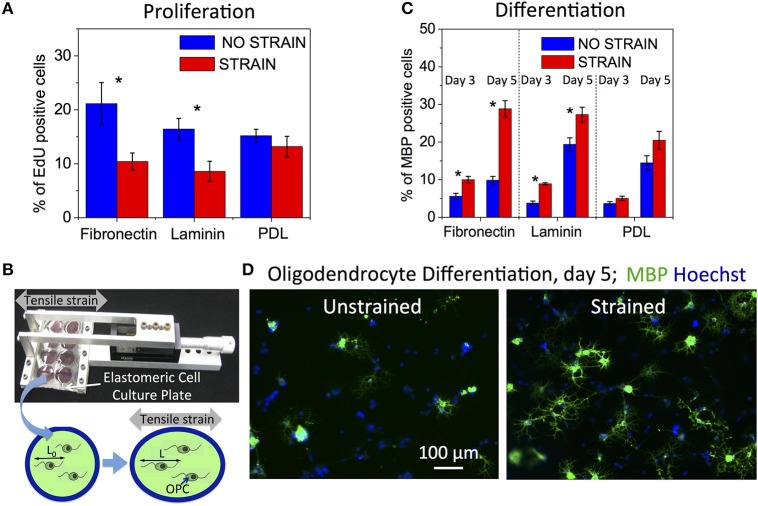
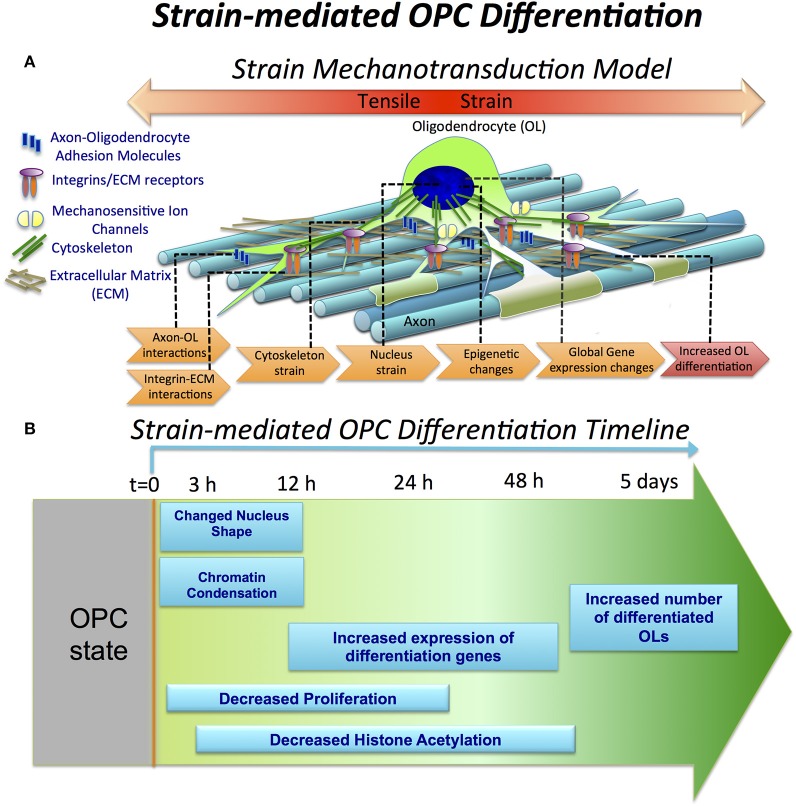
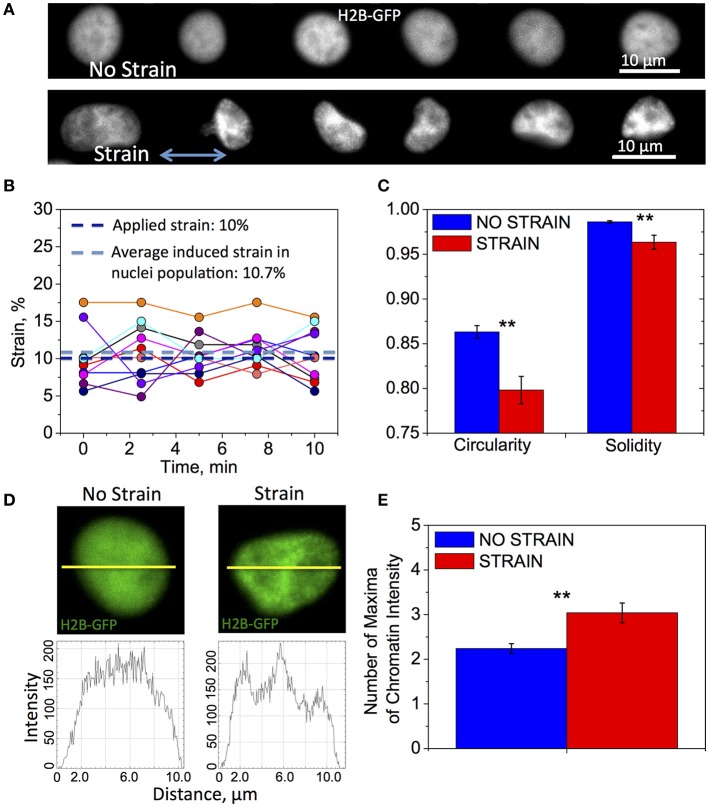
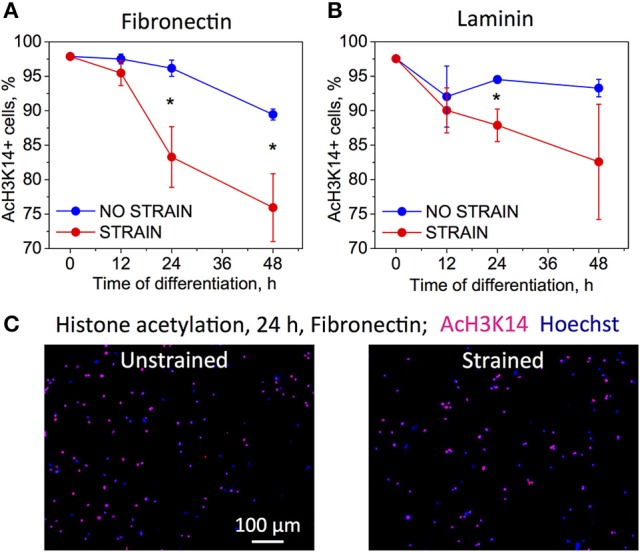
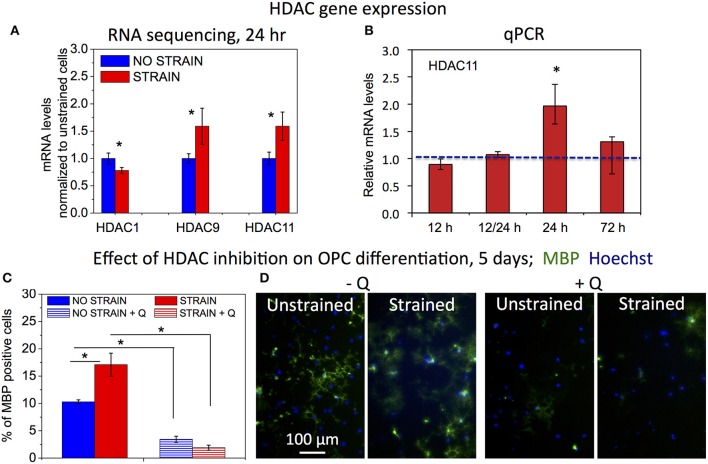
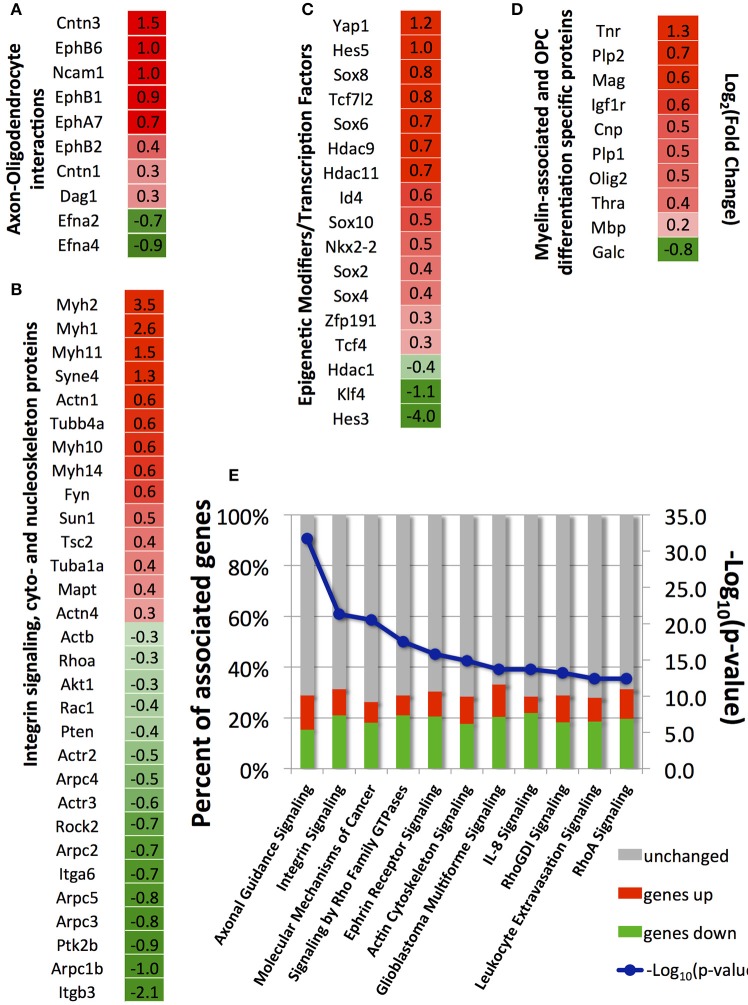
Differentiation of oligodendrocyte progenitor cells (OPC) to oligodendrocytes and subsequent axon myelination are critical steps in vertebrate central nervous system (CNS) development and regeneration. Growing evidence supports the significance of mechanical factors in oligodendrocyte biology. Here, we explore the effect of mechanical strains within physiological range on OPC proliferation and differentiation, and strain-associated changes in chromatin structure, epigenetics, and gene expression. Sustained tensile strain of 10-15% inhibited OPC proliferation and promoted differentiation into oligodendrocytes. This response to strain required specific interactions of OPCs with extracellular matrix ligands. Applied strain induced changes in nuclear shape, chromatin organization, and resulted in enhanced histone deacetylation, consistent with increased oligodendrocyte differentiation. This response was concurrent with increased mRNA levels of the epigenetic modifier histone deacetylase Hdac11. Inhibition of HDAC proteins eliminated the strain-mediated increase of OPC differentiation, demonstrating a role of HDACs in mechanotransduction of strain to chromatin. RNA sequencing revealed global changes in gene expression associated with strain. Specifically, expression of multiple genes associated with oligodendrocyte differentiation and axon-oligodendrocyte interactions was increased, including cell surface ligands (Ncam, ephrins), cyto- and nucleo-skeleton genes (Fyn, actinins, myosin, nesprin, Sun1), transcription factors (Sox10, Zfp191, Nkx2.2), and myelin genes (Cnp, Plp, Mag). These findings show how mechanical strain can be transmitted to the nucleus to promote oligodendrocyte differentiation, and identify the global landscape of signaling pathways involved in mechanotransduction. These data provide a source of potential new therapeutic avenues to enhance OPC differentiation .
少突胶质前体细胞(OPC)分化为少突胶质细胞以及随后的轴突髓鞘形成是脊椎动物中枢神经系统(CNS)发育和再生的关键步骤。越来越多的证据支持机械因素在少突胶质细胞生物学中的重要性。在此,我们探讨生理范围内的机械应变对OPC增殖和分化的影响,以及应变相关的染色质结构、表观遗传学和基因表达变化。10 - 15%的持续拉伸应变抑制OPC增殖并促进其分化为少突胶质细胞。这种对应变的反应需要OPC与细胞外基质配体的特定相互作用。施加的应变诱导了核形状、染色质组织的变化,并导致组蛋白去乙酰化增强,这与少突胶质细胞分化增加一致。这种反应与表观遗传修饰因子组蛋白去乙酰化酶Hdac11的mRNA水平升高同时发生。抑制HDAC蛋白消除了应变介导的OPC分化增加,表明HDAC在应变向染色质的机械转导中起作用。RNA测序揭示了与应变相关的基因表达的全局变化。具体而言,与少突胶质细胞分化和轴突 - 少突胶质细胞相互作用相关的多个基因的表达增加,包括细胞表面配体(Ncam、ephrins)、细胞和核骨架基因(Fyn、辅肌动蛋白、肌球蛋白、nesprin、Sun1)、转录因子(Sox10、Zfp191、Nkx2.2)和髓鞘基因(Cnp、Plp、Mag)。这些发现表明机械应变如何传递到细胞核以促进少突胶质细胞分化,并确定了参与机械转导的信号通路的全局格局。这些数据为增强OPC分化提供了潜在的新治疗途径来源。