Khoshnam Seyed Esmaeil, Winlow William, Farbood Yaghoob, Moghaddam Hadi Fathi, Farzaneh Maryam
Department of Physiology, Faculty of Medicine, Physiology Research Center, Ahvaz Jundishapur University of Medical Sciences, Ahvaz, Iran.
Dipartimento di Biologia, Università degli Studi di Napoli, Napoli, Italia.
J Stroke. 2017 May;19(2):166-187. doi: 10.5853/jos.2016.01368. Epub 2017 May 8.
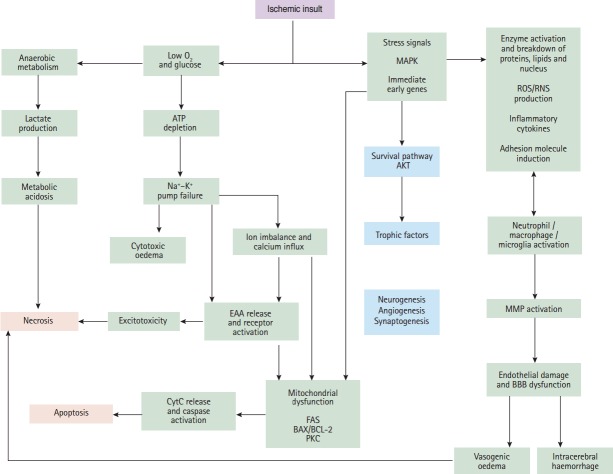
Stroke is one of the leading causes of death and physical disability worldwide. The consequences of stroke injuries are profound and persistent, causing in considerable burden to both the individual patient and society. Current treatments for ischemic stroke injuries have proved inadequate, partly owing to an incomplete understanding of the cellular and molecular changes that occur following ischemic stroke. MicroRNAs (miRNA) are endogenously expressed RNA molecules that function to inhibit mRNA translation and have key roles in the pathophysiological processes contributing to ischemic stroke injuries. Potential therapeutic areas to compensate these pathogenic processes include promoting angiogenesis, neurogenesis and neuroprotection. Several miRNAs, and their target genes, are recognized to be involved in these recoveries and repair mechanisms. The capacity of miRNAs to simultaneously regulate several target genes underlies their unique importance in ischemic stroke therapeutics. In this Review, we focus on the role of miRNAs as potential diagnostic and prognostic biomarkers, as well as promising therapeutic agents in cerebral ischemic stroke.
中风是全球范围内导致死亡和身体残疾的主要原因之一。中风损伤的后果严重且持久,给个体患者和社会都带来了相当大的负担。目前针对缺血性中风损伤的治疗方法已被证明并不充分,部分原因是对缺血性中风后发生的细胞和分子变化缺乏全面了解。微小RNA(miRNA)是内源性表达的RNA分子,其功能是抑制mRNA翻译,并且在导致缺血性中风损伤的病理生理过程中起关键作用。补偿这些致病过程的潜在治疗领域包括促进血管生成、神经发生和神经保护。几种miRNA及其靶基因被认为参与了这些恢复和修复机制。miRNA同时调节多个靶基因的能力奠定了它们在缺血性中风治疗中独特的重要性。在本综述中,我们重点关注miRNA作为潜在诊断和预后生物标志物的作用,以及在脑缺血性中风中作为有前景的治疗药物的作用。