Rio D C, Rubin G M
Whitehead Institute for Biomedical Research, Nine Cambridge Center, MA 02142.
Proc Natl Acad Sci U S A. 1988 Dec;85(23):8929-33. doi: 10.1073/pnas.85.23.8929.
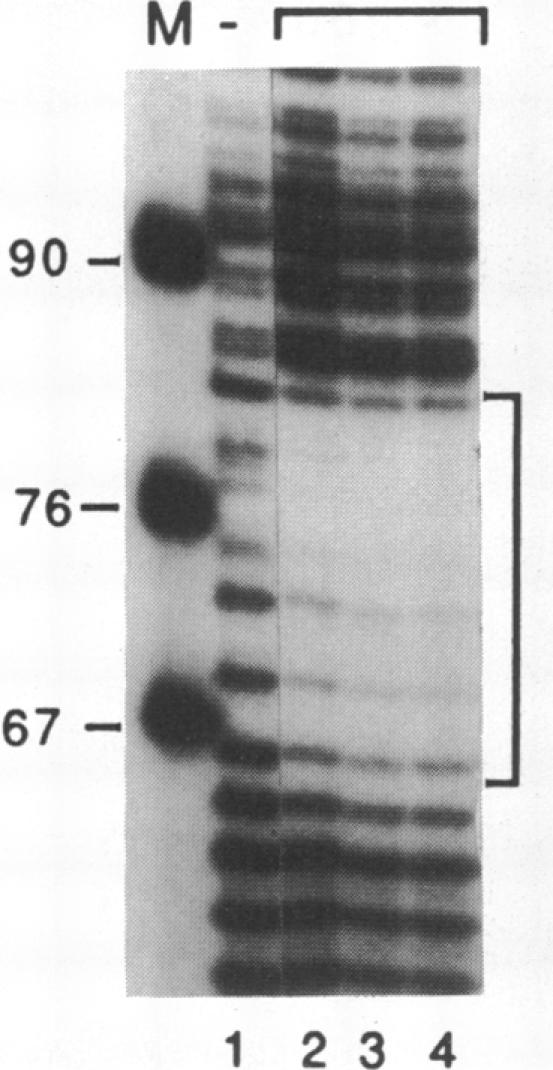
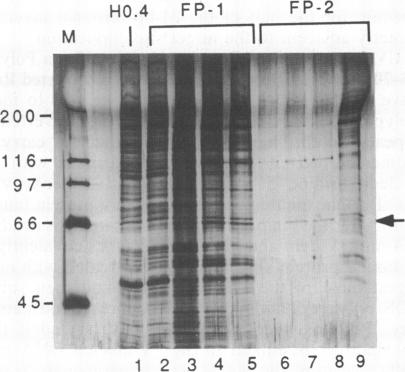
We have used DNase I footprinting and partially fractionated nuclear extracts from Drosophila Kc tissue culture cells to identify DNA-binding proteins that interact with the terminal repeats of P transposable elements. We have identified a binding activity that interacts specifically with a region of the 31-base-pair terminal inverted repeats that is directly adjacent to the duplication of target site DNA. Binding occurs to both the 5' and 3' inverted terminal repeats irrespective of the sequence of the duplicated target DNA. UV photochemical crosslinking studies suggest that the binding activity resides in a polypeptide of 65-70 kDa. Biochemical fractionation and oligonucleotide affinity chromatography have been used to purify the binding activity to near homogeneity and identify a polypeptide of 66 kDa in the highly purified preparations. The site to which binding occurs is included in a region absolutely required for P element transposition, suggesting that this binding protein may be a cellular factor involved in P element transposition.
我们利用DNase I足迹法以及果蝇Kc组织培养细胞的部分分级核提取物,来鉴定与P转座因子末端重复序列相互作用的DNA结合蛋白。我们鉴定出一种结合活性,它能与31个碱基对的末端反向重复序列中直接毗邻靶位点DNA重复序列的区域特异性相互作用。无论重复靶DNA的序列如何,该结合活性均能与5'和3'反向末端重复序列发生结合。紫外线光化学交联研究表明,该结合活性存在于一个65 - 70 kDa的多肽中。利用生化分级分离和寡核苷酸亲和层析法已将该结合活性纯化至接近均一,并在高度纯化的制剂中鉴定出一个66 kDa的多肽。发生结合的位点包含在P元件转座绝对必需的区域内,这表明这种结合蛋白可能是参与P元件转座的一种细胞因子。