Ciejka Justyna, Wolski Karol, Nowakowska Maria, Pyrc Krzysztof, Szczubiałka Krzysztof
Laboratory of Virology, Malopolska Centre of Biotechnology, Jagiellonian University, Gronostajowa 7a, 30-387 Krakow, Poland; Faculty of Chemistry, Jagiellonian University, Ingardena 3, 30-060 Krakow, Poland.
Faculty of Chemistry, Jagiellonian University, Ingardena 3, 30-060 Krakow, Poland.
Mater Sci Eng C Mater Biol Appl. 2017 Jul 1;76:735-742. doi: 10.1016/j.msec.2017.03.047. Epub 2017 Mar 6.
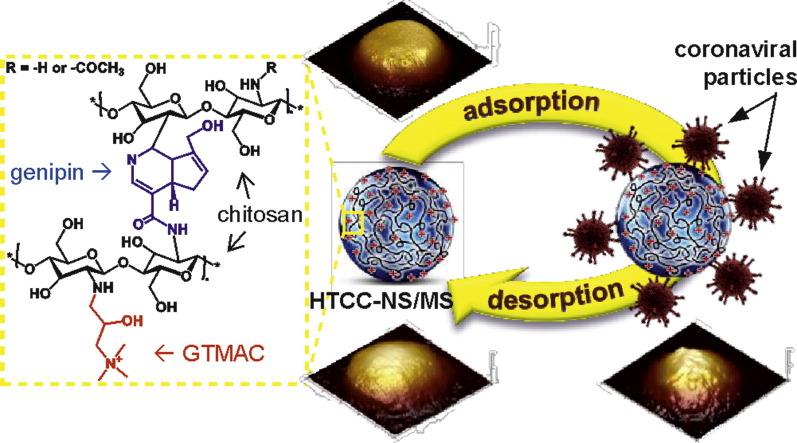
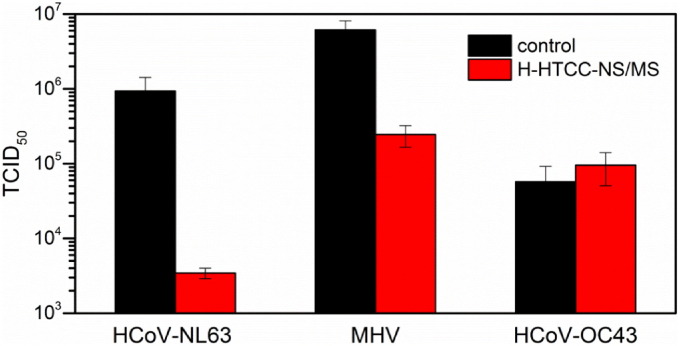
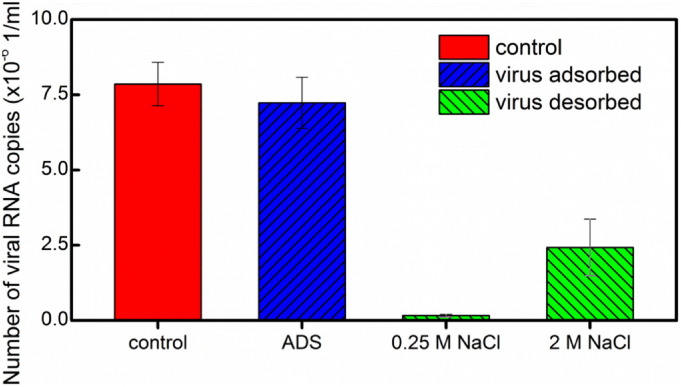
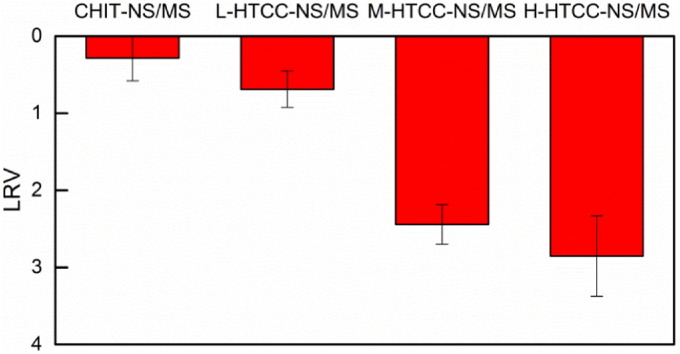
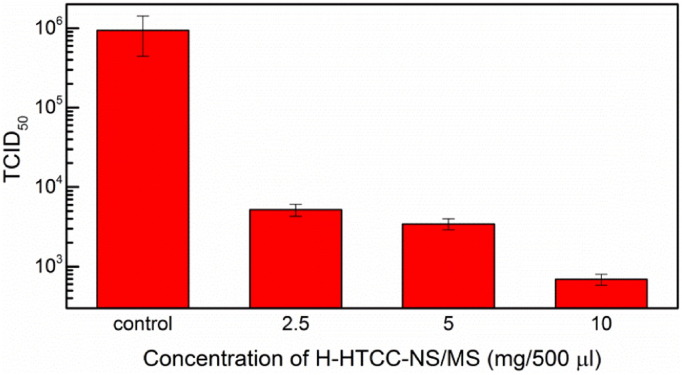
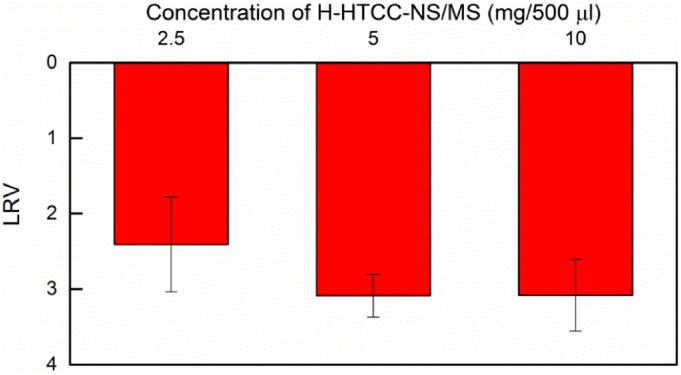
A novel biopolymeric material in the form of nano/microspheres was developed which was capable of adsorbing coronaviruses. The biopolymer was obtained by crosslinking of chitosan (CHIT) with genipin, a nontoxic compound of plant origin, in inverted emulsion and reacting the chitosan nano/microspheres obtained (CHIT-NS/MS) with glycidyltrimethyl-ammonium chloride (GTMAC). As a result the nano/microspheres of N-(2-hydroxypropyl)-3-trimethyl chitosan (HTCC-NS/MS) were obtained. HTCC-NS/MS were studied as the adsorbents of human coronavirus NL63 (HCoV-NL63), mouse hepatitis virus (MHV), and human coronavirus HCoV-OC43 particles in aqueous virus suspensions. By studying cytopathic effect (CPE) caused by these viruses and performing PCR analyses it was found HTCC-NS/MS strongly adsorb the particles of HCoV-NL63 virus, moderately adsorb mouse hepatitis virus (MHV) particles, but do not adsorb HCoV-OC43 coronavirus. The adsorption capacity of HTCC-NS/MS well correlated with the antiviral activity of soluble HTCC against a given virus. Importantly, it was shown that HCoV-NL63 particles could be desorbed from the HTCC-NS/MS surface with a salt solution of high ionic strength with retention of virus virulence. The obtained material may be applied for the removal of coronaviruses, purification and concentration of virus samples obtained from biological matrices and for purification of water from pathogenic coronaviruses.
开发了一种呈纳米/微球形式的新型生物聚合物材料,它能够吸附冠状病毒。该生物聚合物是通过壳聚糖(CHIT)与京尼平(一种植物源无毒化合物)在反相乳液中交联,并使所得的壳聚糖纳米/微球(CHIT-NS/MS)与缩水甘油基三甲基氯化铵(GTMAC)反应而获得的。结果得到了N-(2-羟丙基)-3-三甲基壳聚糖(HTCC-NS/MS)的纳米/微球。研究了HTCC-NS/MS作为水性病毒悬浮液中人类冠状病毒NL63(HCoV-NL63)、小鼠肝炎病毒(MHV)和人类冠状病毒HCoV-OC43颗粒吸附剂的性能。通过研究这些病毒引起的细胞病变效应(CPE)并进行PCR分析,发现HTCC-NS/MS能强烈吸附HCoV-NL63病毒颗粒,适度吸附小鼠肝炎病毒(MHV)颗粒,但不吸附HCoV-OC43冠状病毒。HTCC-NS/MS的吸附能力与可溶性HTCC对特定病毒的抗病毒活性密切相关。重要的是,研究表明,HCoV-NL63颗粒可以用高离子强度的盐溶液从HTCC-NS/MS表面解吸,同时保留病毒毒力。所得材料可用于去除冠状病毒、纯化和浓缩从生物基质中获得的病毒样本以及从致病冠状病毒中净化水。