Stickel N, Hanke K, Marschner D, Prinz G, Köhler M, Melchinger W, Pfeifer D, Schmitt-Graeff A, Brummer T, Heine A, Brossart P, Wolf D, von Bubnoff N, Finke J, Duyster J, Ferrara J, Salzer U, Zeiser R
Department of Hematology, Oncology and Stem Cell Transplantation, Faculty of Medicine, University of Freiburg, Freiburg, Germany.
Spemann Graduate School of Biology and Medicine, ALU Freiburg, Germany.
Leukemia. 2017 Dec;31(12):2732-2741. doi: 10.1038/leu.2017.137. Epub 2017 May 9.
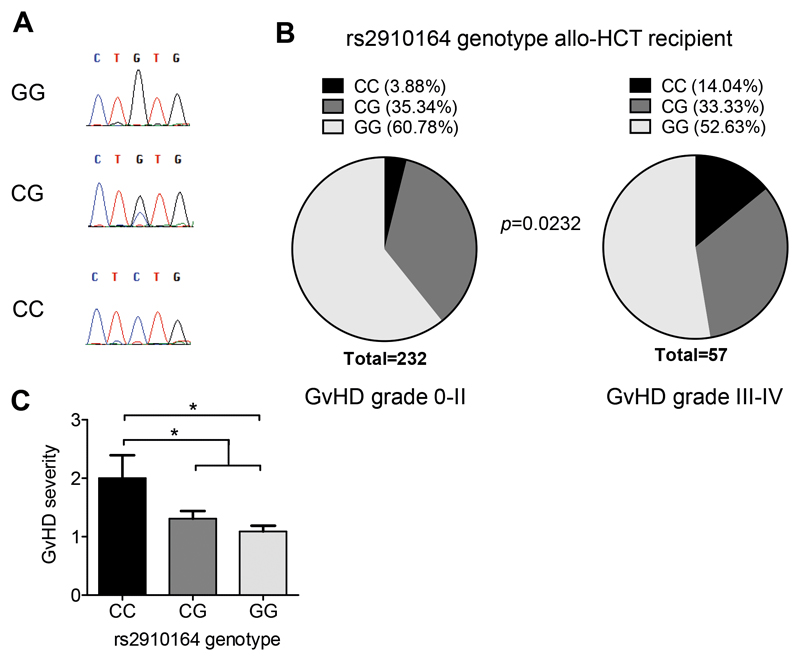
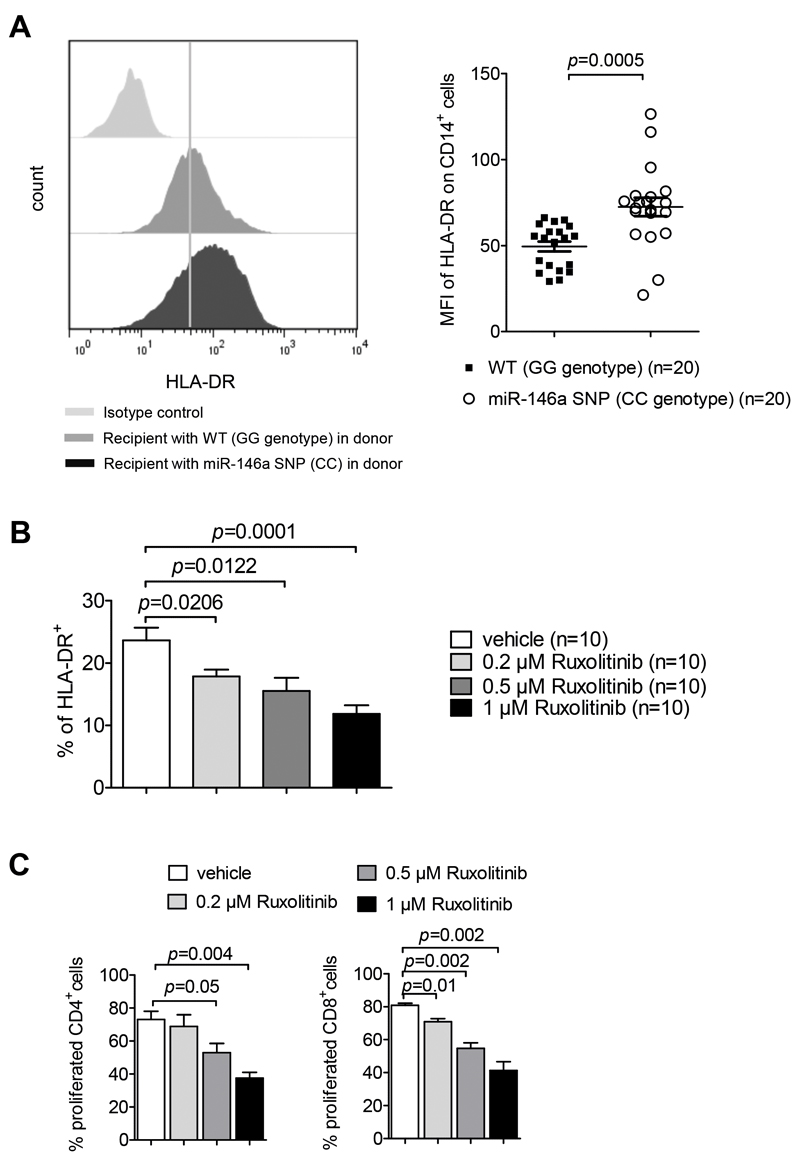
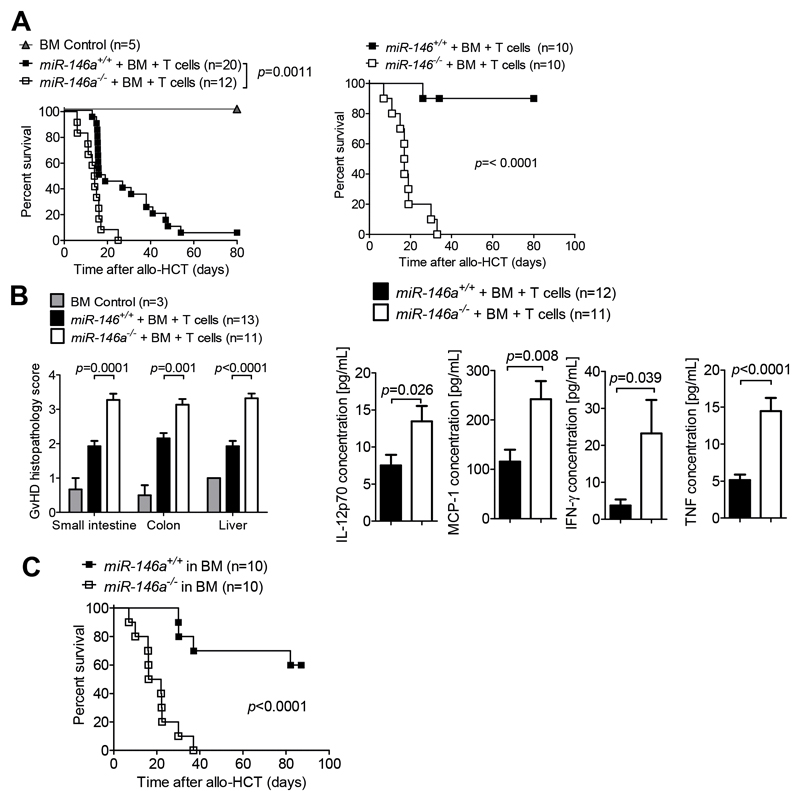
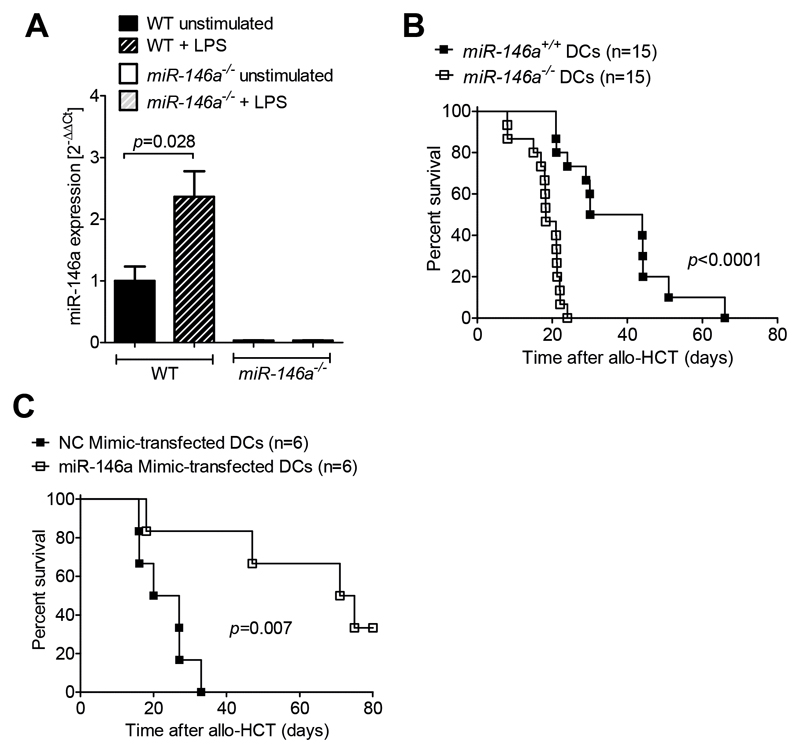
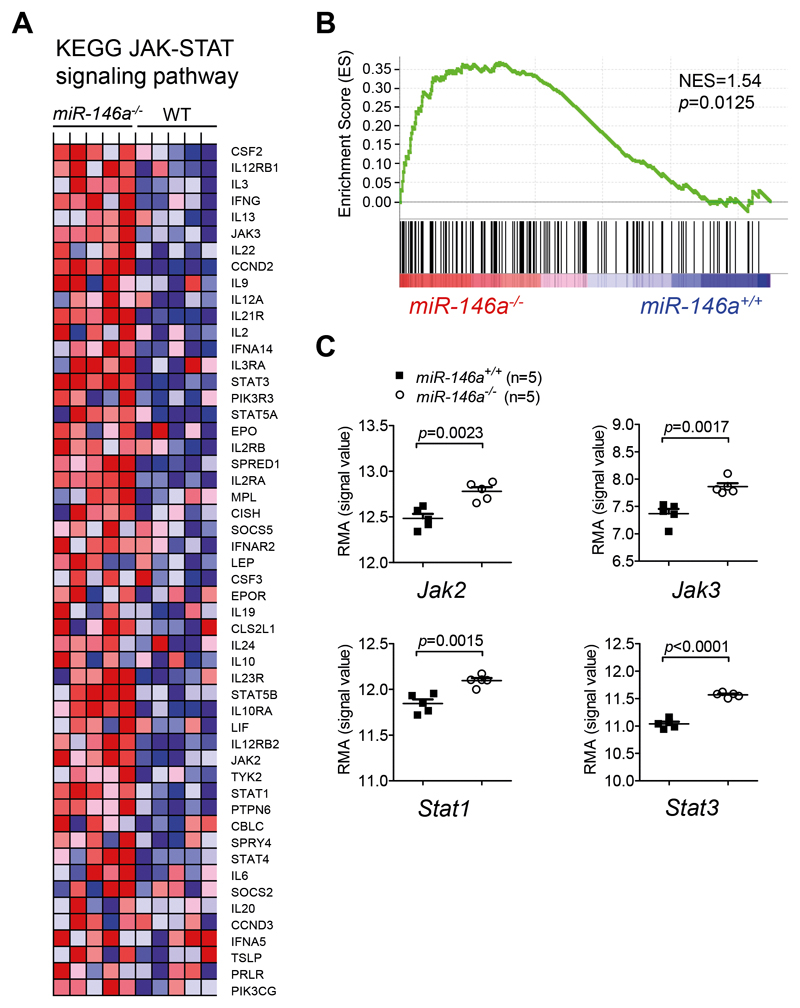
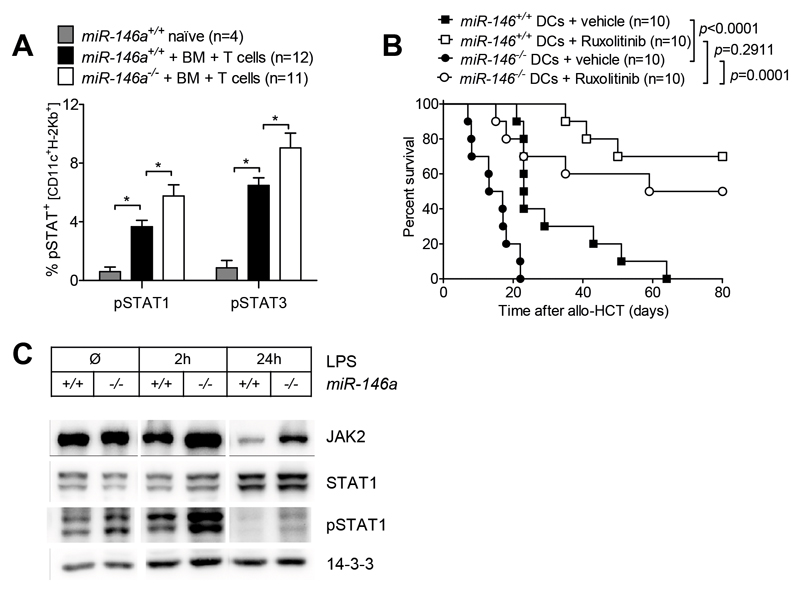
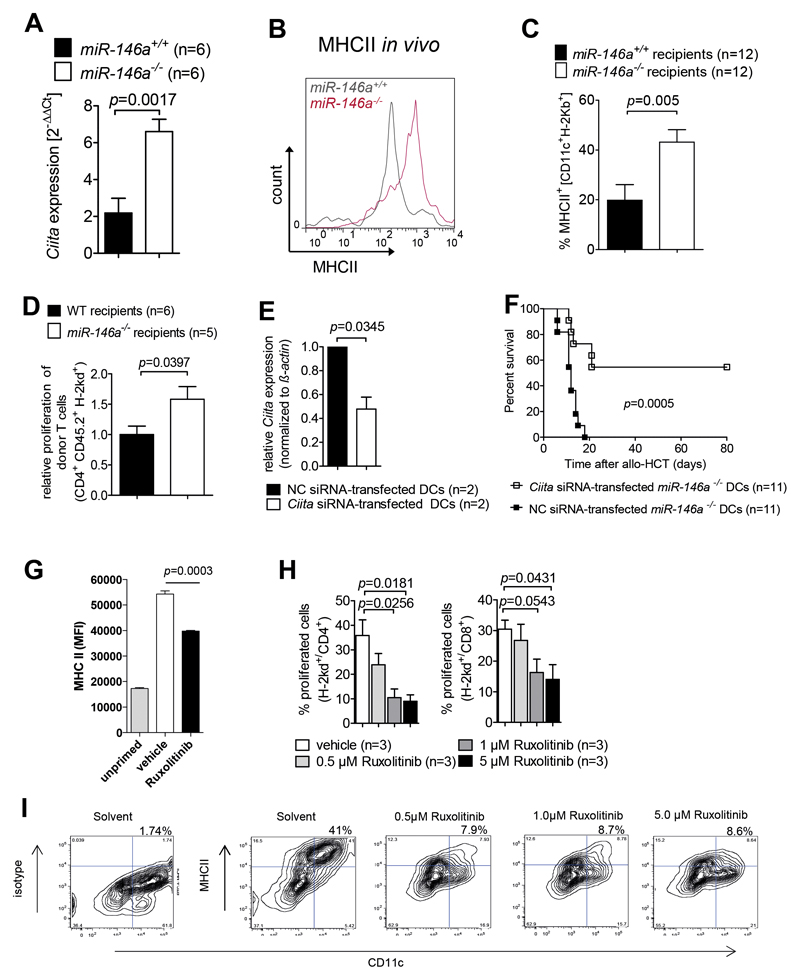
Acute Graft-versus-host disease (GVHD) is a major immunological complication after allogeneic hematopoietic cell transplantation and a better understanding of the molecular regulation of the disease could help to develop novel targeted therapies. Here we found that a G/C polymorphism within the human microRNA-146a (miR-146a) gene of transplant recipients, which causes reduced miR-146a levels, was strongly associated with the risk of developing severe acute GVHD (n=289). In mice, deficiency of miR-146a in the hematopoietic system or transfer of recipient-type miR-146a dendritic cells (DCs) enhanced GVHD, while miR-146a mimic-transfected DCs ameliorated disease. Mechanistically, lack of miR-146a enhanced JAK2-STAT1 pathway activity, which led to higher expression of class II-transactivator (CIITA) and consecutively increased MHCII-levels on DCs. Inhibition of JAK1/2 or CIITA knockdown in DCs prevented miR-146a DC-induced GVHD exacerbation. Consistent with our findings in mice, patients with the miR-146a polymorphism rs2910164 in hematopoietic cells displayed higher MHCII levels on monocytes, which could be targeted by JAK1/2 inhibition. Our findings indicate that the miR-146a polymorphism rs2910164 identifies patients at high risk for GVHD before allo-HCT. Functionally we show that miR-146a acts as a central regulator of recipient-type DC activation during GVHD by dampening the pro-inflammatory JAK-STAT/CIITA/MHCII axis, which provides a scientific rationale for early JAK1/2 inhibition in selected patients.
急性移植物抗宿主病(GVHD)是异基因造血细胞移植后的一种主要免疫并发症,更好地了解该疾病的分子调控有助于开发新的靶向治疗方法。我们发现,移植受者人类微小RNA-146a(miR-146a)基因内的G/C多态性会导致miR-146a水平降低,这与发生严重急性GVHD的风险密切相关(n=289)。在小鼠中,造血系统中miR-146a的缺乏或受体型miR-146a树突状细胞(DC)的转移会加重GVHD,而转染miR-146a模拟物的DC则可改善病情。机制上,miR-146a的缺乏增强了JAK2-STAT1信号通路的活性,导致II类反式激活因子(CIITA)表达升高,进而使DC上的MHCII水平连续增加。抑制DC中的JAK1/2或敲低CIITA可防止miR-146a DC诱导的GVHD恶化。与我们在小鼠中的发现一致,造血细胞中具有miR-146a多态性rs2910164的患者单核细胞上的MHCII水平较高,可通过抑制JAK1/2来靶向治疗。我们的研究结果表明,miR-146a多态性rs2910164可在异基因造血干细胞移植前识别出发生GVHD的高危患者。在功能上,我们表明miR-146a通过抑制促炎的JAK-STAT/CIITA/MHCII轴,在GVHD期间作为受体型DC激活的核心调节因子,这为在特定患者中早期抑制JAK1/2提供了科学依据。