Mora Delio José, Ferreira-Paim Kennio, Andrade-Silva Leonardo Eurípedes, Bragine Thatiane, Rocha Ivonete Helena, Ribeiro Barbara de Melo, Machado Guilherme Henrique, Rodrigues Junior Virmondes, Silva-Teixeira David Nascimento, Meyer Wieland, Silva-Vergara Mario León
Infectious Diseases Unit, Triângulo Mineiro Federal University, Uberaba, Minas Gerais, Brazil.
Laboratory of Immunology, Triângulo Mineiro Federal University, Uberaba, Minas Gerais, Brazil.
PLoS One. 2017 May 9;12(5):e0176304. doi: 10.1371/journal.pone.0176304. eCollection 2017.
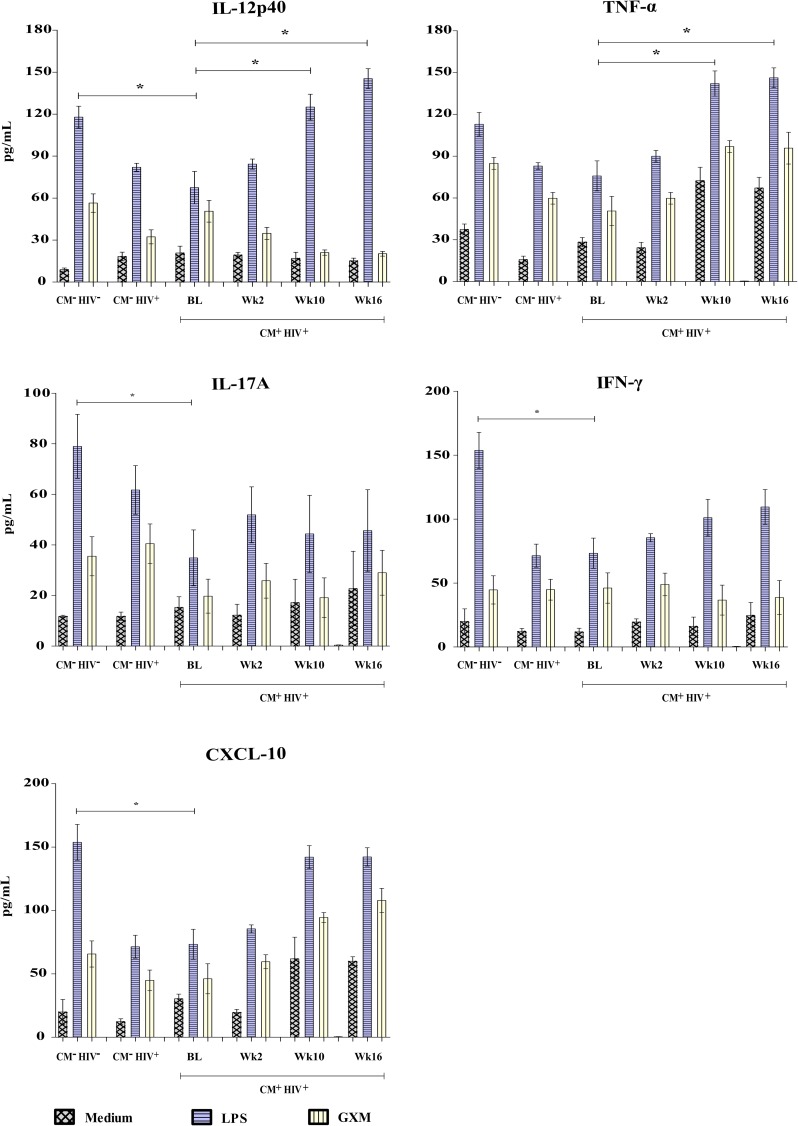
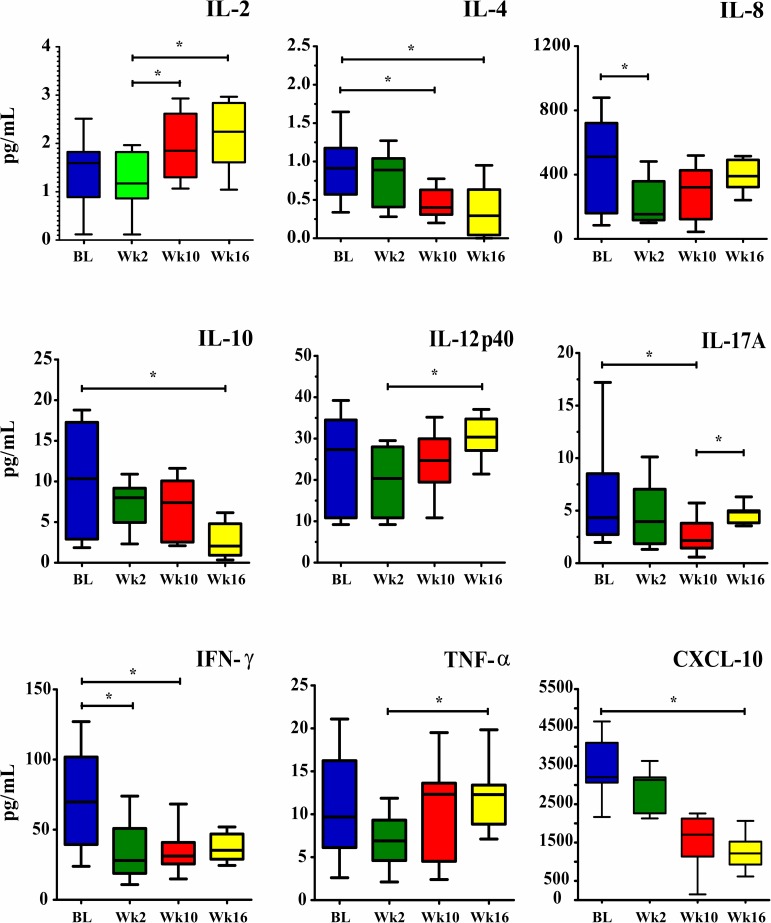
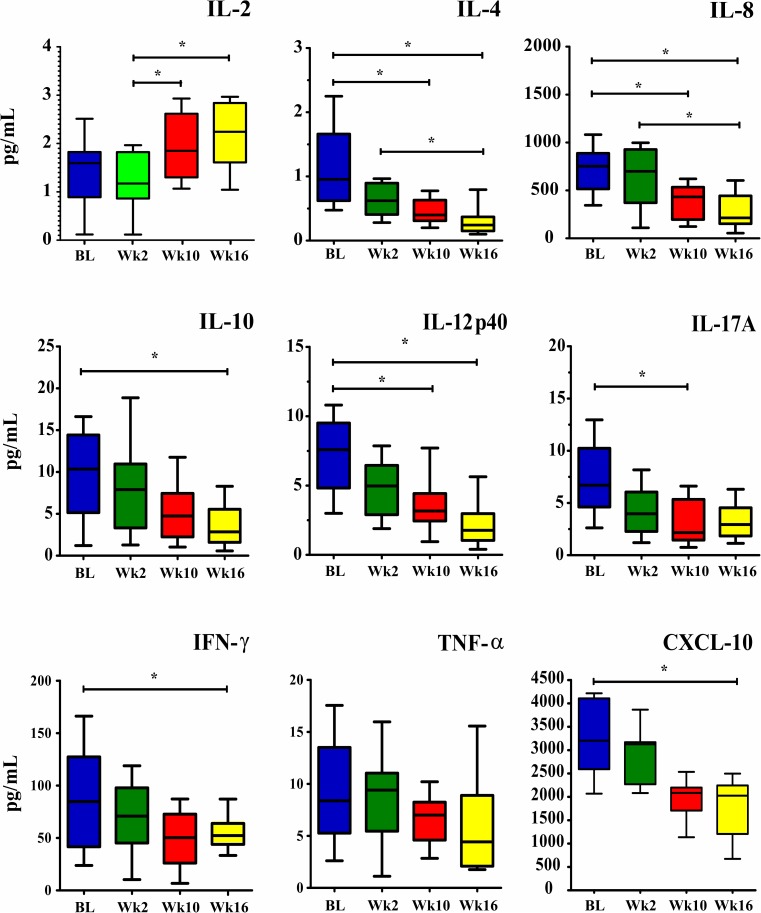
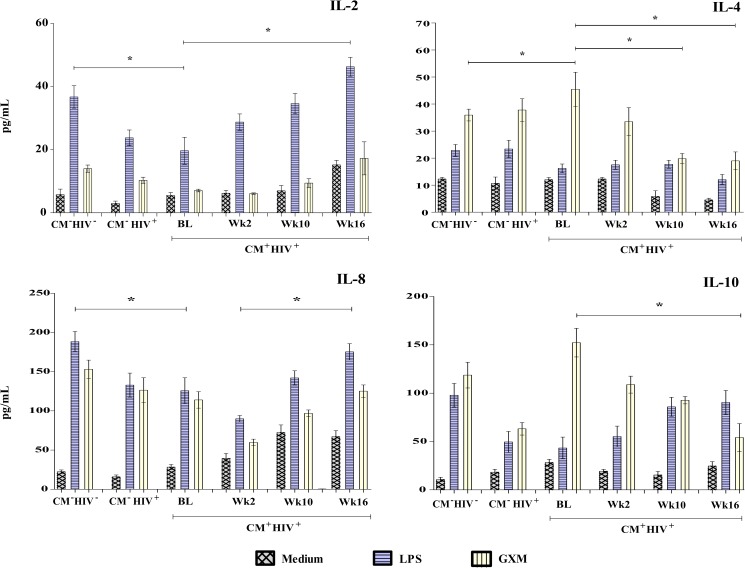
Cryptococcal meningitis (CM) is a life-threatening infection in HIV-infected patients, especially in resource-limited settings. Cytokine patterns in the cerebrospinal fluid (CSF) and sera may be related to clinical outcomes. This study aimed to evaluate cytokine patterns in the CSF and sera of HIV-infected patients with CM as well as the cytokines produced by peripheral blood mononuclear cells (PBMCs) when stimulated with LPS and cryptococcal GXM. CSF and serum levels of IL-2, IL-4, IL-8, IL-10, IL-12p40, IL-17A, INF-γ, TNF-α and CXCL-10 were measured in HIV-infected patients with CM (CM+ HIV+) at various time points. Cytokine levels were evaluated in the PBMC culture supernatants and the baseline values were compared to those of HIV-infected patients without CM (CM- HIV+) and healthy controls (CM- HIV-). CSF cytokine levels at admission (n = 33) were higher than levels among the 23 survivors at week 2, but statistically significant differences were observed for IL-8 and IFN-γ (p<0.05). CSF and serum levels of IL-4 and IL-17A at week 10 (n = 16) were lower than the baseline values, whereas IL-2 levels increased compared to week 2 (p<0.05). At week 16 (n = 15), CSF and serum levels of IL-4, IL-10 and CXCL-10 were decreased compared to the baseline values (p<0.05). PBMCs from CM- HIV- individuals produced significantly higher levels of proinflammatory cytokines in response to LPS, with the exception of TNF-α, which showed higher levels among CM+ HIV+ patients. The PBMCs of CM patients produced higher levels of IL-4 than those of CM- HIV- patients in response to GXM stimulation, and levels progressively decreased during treatment (p<0.05). Then, a progressive shift in cytokine expression favoring a Th1 pattern was observed, which is crucial in controlling cryptococcal infection. A better understanding of the protective immune response against Cryptococcus neoformans will help to develop novel strategies to improve the outcomes of patients with cryptococcosis.
隐球菌性脑膜炎(CM)是HIV感染患者中一种危及生命的感染,在资源有限的环境中尤其如此。脑脊液(CSF)和血清中的细胞因子模式可能与临床结局相关。本研究旨在评估HIV感染的CM患者脑脊液和血清中的细胞因子模式,以及外周血单个核细胞(PBMC)在用脂多糖(LPS)和隐球菌GXM刺激时产生的细胞因子。在不同时间点测量了HIV感染的CM患者(CM + HIV +)脑脊液和血清中白细胞介素-2(IL-2)、IL-4、IL-8、IL-10、IL-12p40、IL-17A、干扰素-γ(INF-γ)、肿瘤坏死因子-α(TNF-α)和CXC趋化因子配体10(CXCL-10)的水平。评估了PBMC培养上清液中的细胞因子水平,并将基线值与未患CM的HIV感染患者(CM - HIV +)和健康对照(CM - HIV -)的基线值进行比较。入院时(n = 33)脑脊液细胞因子水平高于第2周时23名幸存者中的水平,但IL-8和IFN-γ观察到有统计学显著差异(p<0.05)。第10周时(n = 16)脑脊液和血清中IL-4和IL-17A水平低于基线值,而IL-2水平与第2周相比有所升高(p<0.05)。第16周时(n = 15),脑脊液和血清中IL-4、IL-10和CXCL-10水平与基线值相比降低(p<0.05)。来自CM - HIV -个体的PBMC对LPS刺激产生的促炎细胞因子水平显著更高,但TNF-α除外,其在CM + HIV +患者中水平更高。CM患者的PBMC在GXM刺激下产生的IL-4水平高于CM - HIV -患者,且在治疗期间水平逐渐降低(p<0.05)。然后,观察到细胞因子表达逐渐向有利于Th1模式转变,这对控制隐球菌感染至关重要。更好地理解针对新型隐球菌的保护性免疫反应将有助于制定新策略以改善隐球菌病患者的预后。