Tranbarger Timothy J, Fooyontphanich Kim, Roongsattham Peerapat, Pizot Maxime, Collin Myriam, Jantasuriyarat Chatchawan, Suraninpong Potjamarn, Tragoonrung Somvong, Dussert Stéphane, Verdeil Jean-Luc, Morcillo Fabienne
Institut de Recherche pour le Développement, IRD, UMR DIADEMontpellier, France.
Department of Genetics, Kasetsart UniversityBangkok, Thailand.
Front Plant Sci. 2017 Apr 25;8:603. doi: 10.3389/fpls.2017.00603. eCollection 2017.
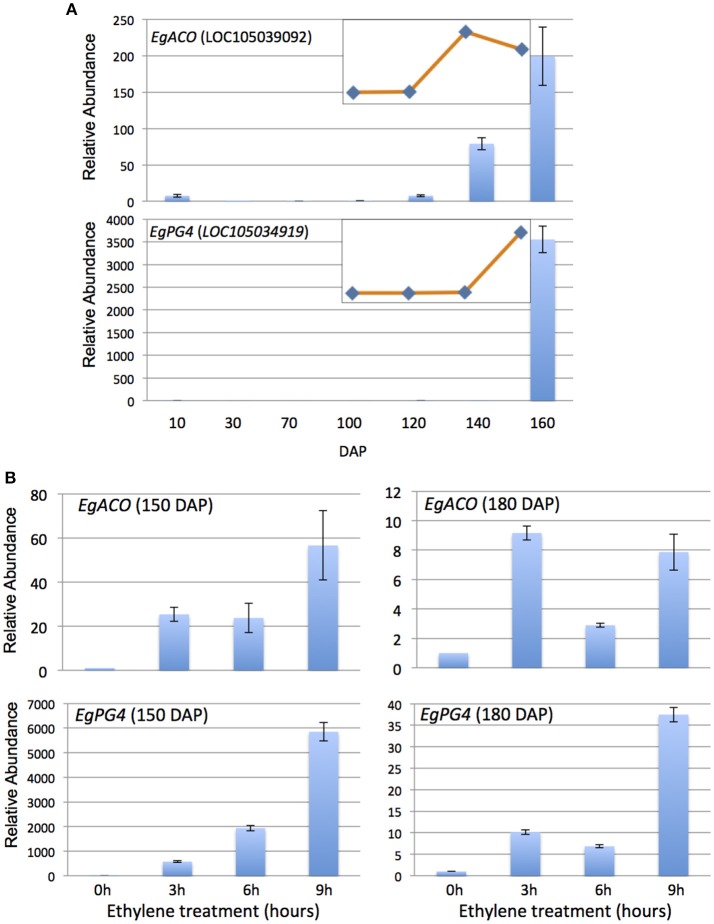
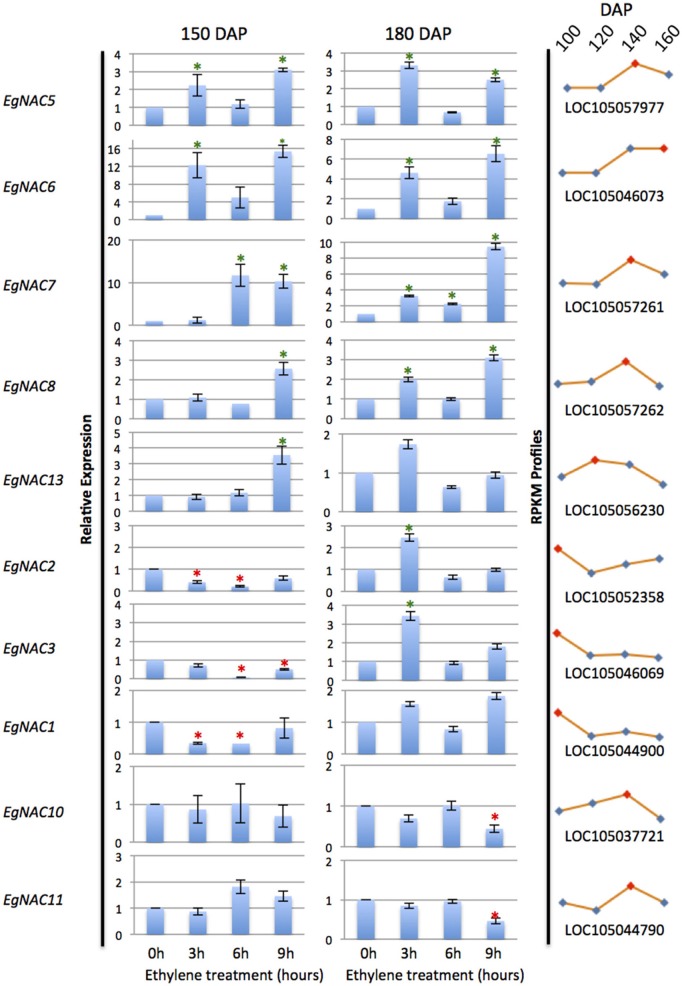
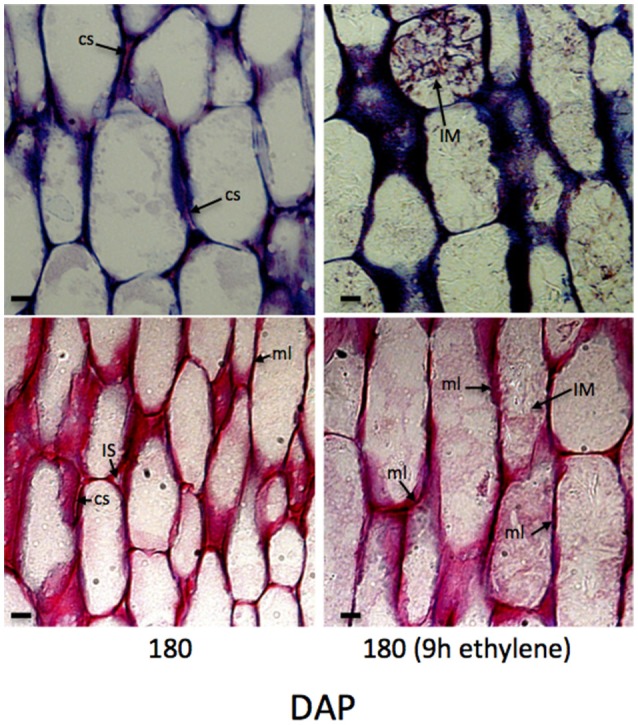
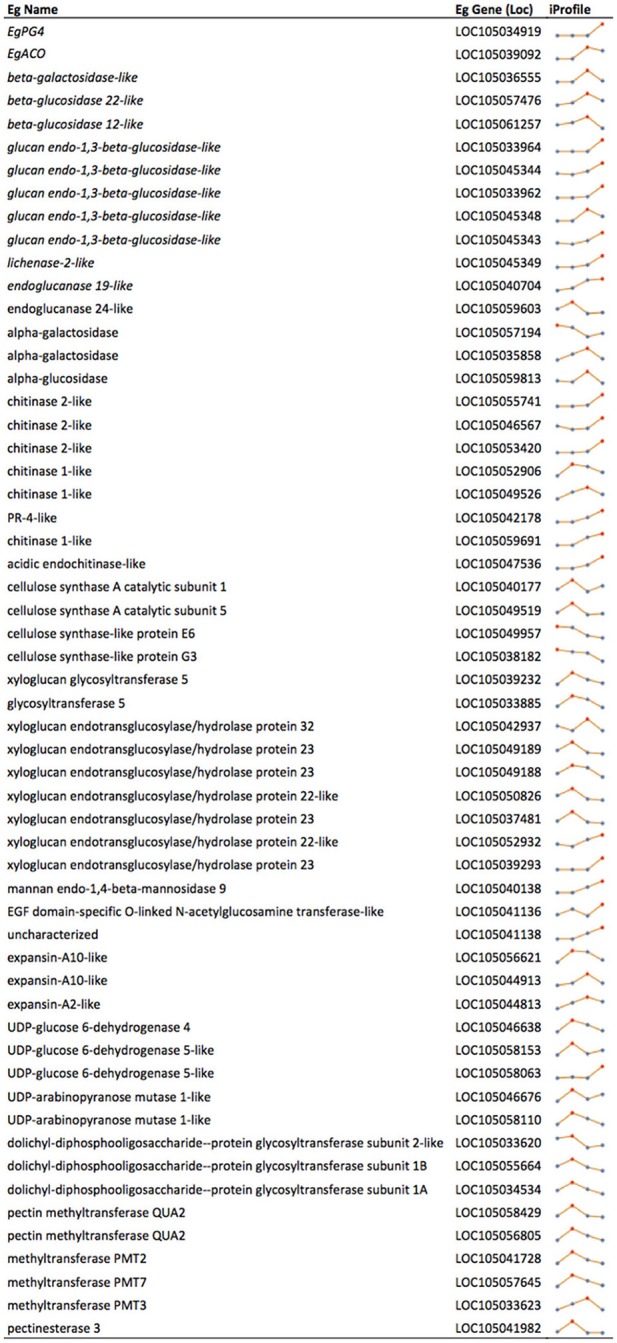
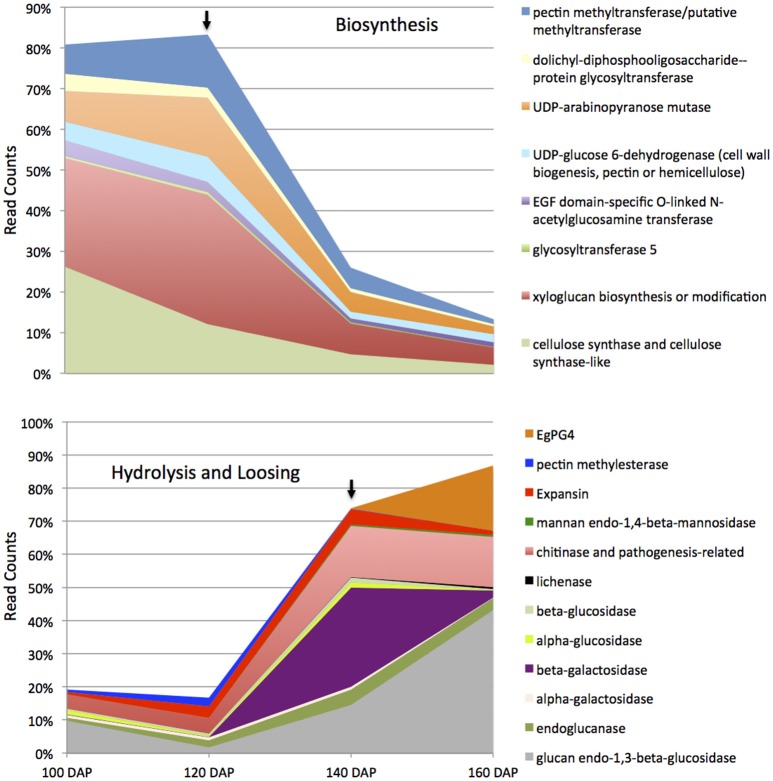
The oil palm (), a monocotyledonous species in the family Arecaceae, has an extraordinarily oil rich fleshy mesocarp, and presents an original model to examine the ripening processes and regulation in this particular monocot fruit. Histochemical analysis and cell parameter measurements revealed cell wall and middle lamella expansion and degradation during ripening and in response to ethylene. Cell wall related transcript profiles suggest a transition from synthesis to degradation is under transcriptional control during ripening, in particular a switch from cellulose, hemicellulose, and pectin synthesis to hydrolysis and degradation. The data provide evidence for the transcriptional activation of expansin, polygalacturonase, mannosidase, beta-galactosidase, and xyloglucan endotransglucosylase/hydrolase proteins in the ripening oil palm mesocarp, suggesting widespread conservation of these activities during ripening for monocotyledonous and eudicotyledonous fruit types. Profiling of the most abundant oil palm polygalacturonase () and 1-aminocyclopropane-1-carboxylic acid oxidase () transcripts during development and in response to ethylene demonstrated both are sensitive markers of ethylene production and inducible gene expression during mesocarp ripening, and provide evidence for a conserved regulatory module between ethylene and cell wall pectin degradation. A comprehensive analysis of NAC transcription factors confirmed at least 10 transcripts from diverse NAC domain clades are expressed in the mesocarp during ripening, four of which are induced by ethylene treatment, with the two most inducible ( and ) phylogenetically similar to the tomato NAC-NOR master-ripening regulator. Overall, the results provide evidence that despite the phylogenetic distance of the oil palm within the family Arecaceae from the most extensively studied monocot banana fruit, it appears ripening of divergent monocot and eudicot fruit lineages are regulated by evolutionarily conserved molecular physiological processes.
油棕()是棕榈科的单子叶植物,其肉质中果皮富含油脂,为研究这种特殊单子叶果实的成熟过程和调控提供了一个独特的模型。组织化学分析和细胞参数测量显示,在成熟过程中以及对乙烯的响应中,细胞壁和中胶层会发生扩张和降解。与细胞壁相关的转录本谱表明,在成熟过程中,从合成到降解的转变受转录控制,特别是从纤维素、半纤维素和果胶合成到水解和降解的转变。这些数据为成熟油棕中果皮中扩张蛋白、多聚半乳糖醛酸酶、甘露糖苷酶、β-半乳糖苷酶和木葡聚糖内转糖基酶/水解酶蛋白的转录激活提供了证据,表明这些活性在单子叶和双子叶果实类型的成熟过程中广泛存在。对发育过程中以及对乙烯响应时最丰富的油棕多聚半乳糖醛酸酶()和1-氨基环丙烷-1-羧酸氧化酶()转录本进行分析表明,二者都是乙烯产生的敏感标记以及中果皮成熟过程中诱导基因表达的标记,并为乙烯与细胞壁果胶降解之间保守的调控模块提供了证据。对NAC转录因子的综合分析证实,至少有10种来自不同NAC结构域分支的转录本在成熟中果皮中表达,其中4种受乙烯处理诱导,其中诱导性最强的两种(和)在系统发育上与番茄NAC-NOR主成熟调节因子相似。总体而言,结果表明,尽管油棕在棕榈科中的系统发育距离与研究最广泛的单子叶香蕉果实较远,但不同的单子叶和双子叶果实谱系的成熟似乎受进化上保守的分子生理过程调控。