Zhang Mengchen, Lu Qing, Wu Wei, Niu Xiaojun, Wang Caihong, Feng Yue, Xu Qun, Wang Shan, Yuan Xiaoping, Yu Hanyong, Wang Yiping, Wei Xinghua
State Key Laboratory of Rice Biology, China National Rice Research InstituteHangzhou, China.
Crop Research Institute, Guangdong Academy of Agricultural Sciences (GAAS), South China Peanut Sub-Center of National Center of Oilseed Crops Improvement, Guangdong Key Laboratory for Crops Genetic ImprovementGuangzhou, China.
Front Plant Sci. 2017 Apr 25;8:678. doi: 10.3389/fpls.2017.00678. eCollection 2017.
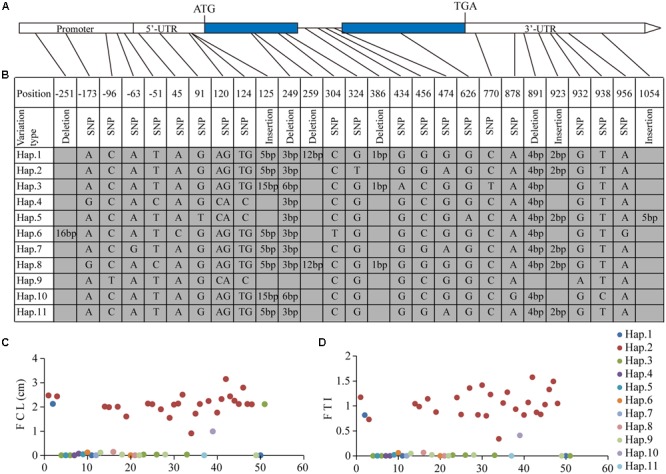
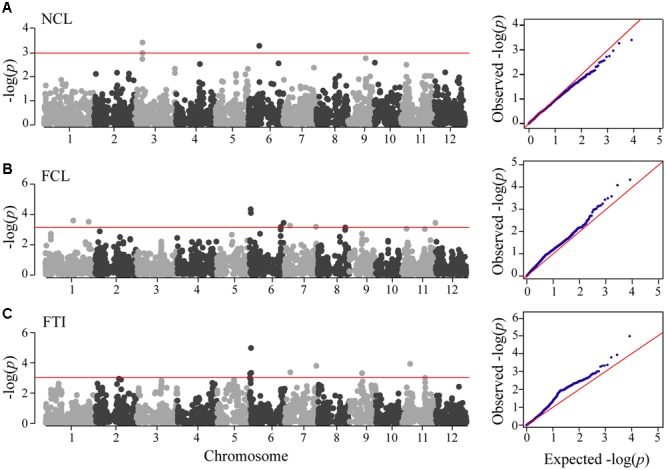
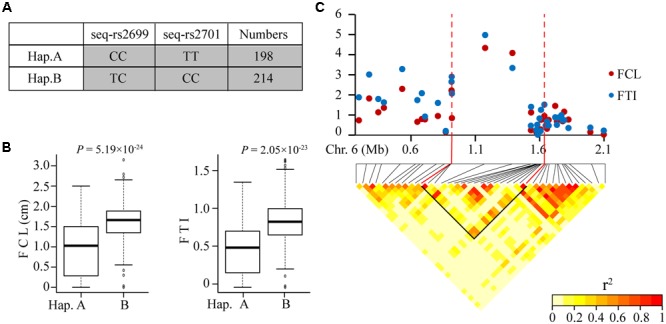
Rice ( L.) is the only cereal crop that possesses the ability to germinate under flooded or other oxygen-deficient conditions. Rapid elongation of the coleoptile is a perfect response to flooding during germination, with coleoptile length differing among various rice varieties. Despite multiple studies have uncovered valuable information concerning this trait by focusing on the physiological metabolism of oxygen stress, the underlying genetic mechanism still remains unknown. In the present study, we screened coleoptile lengths of 432 varieties germinated in two environments (normal and flooded) and found more variation existing in flooded coleoptile length (FCL) rather than in normal coleoptile length (NCL). With the phenotypic data of NCL, FCL and FTI (flooding tolerance index), a genome-wide association study was performed by using 5291 single nucleotide polymorphism (SNP) markers. We detected 2, 11, and 9 significant SNPs under a mixed linear mode for NCL, FCL, and FTI, respectively. Of these SNPs, five were shared by FCL and FTI. Haplotype and phenotype effect analysis on the highest ranking locus indicated one of the two haplotypes contributed to coleoptile elongation remarkably. To better understand the controlling gene of this locus, reported expression profile data was applied. We focused on LOC_Os06g03520, a candidate gene which was highly induced by anoxia (∼507 fold). Sequence analysis in 51 varieties demonstrated Hap.2 associated perfectly with flooding tolerance. Further studies on this gene may help explore the molecular mechanism of rice flooding tolerance during germination. We believe our discoveries may conduce to isolating major genes and aid the improvement of flooding tolerance in modern breeding programs.
水稻(Oryza sativa L.)是唯一能够在淹水或其他缺氧条件下萌发的谷类作物。胚芽鞘的快速伸长是萌发期间对淹水的完美响应,不同水稻品种的胚芽鞘长度存在差异。尽管多项研究通过关注氧胁迫的生理代谢揭示了有关该性状的有价值信息,但其潜在的遗传机制仍然未知。在本研究中,我们筛选了在两种环境(正常和淹水)中萌发的432个品种的胚芽鞘长度,发现淹水胚芽鞘长度(FCL)的变异比正常胚芽鞘长度(NCL)更多。利用NCL、FCL和FTI(耐淹性指数)的表型数据,使用5291个单核苷酸多态性(SNP)标记进行了全基因组关联研究。我们在混合线性模型下分别检测到NCL、FCL和FTI的2个、11个和9个显著SNP。在这些SNP中,有5个是FCL和FTI共有的。对排名最高的位点进行单倍型和表型效应分析表明,两种单倍型之一对胚芽鞘伸长有显著贡献。为了更好地了解该位点的控制基因,应用了已报道的表达谱数据。我们聚焦于LOC_Os06g03520,一个在缺氧条件下高度诱导(约507倍)的候选基因。对51个品种的序列分析表明,单倍型2与耐淹性完美相关。对该基因的进一步研究可能有助于探索水稻萌发期间耐淹性的分子机制。我们相信我们的发现可能有助于分离主要基因,并有助于在现代育种计划中提高耐淹性。