Lytton William W, Arle Jeff, Bobashev Georgiy, Ji Songbai, Klassen Tara L, Marmarelis Vasilis Z, Schwaber James, Sherif Mohamed A, Sanger Terence D
Department of Physiology and Pharmacology and Neurology, SUNY Downstate, Kings County Hospital, Brooklyn, NY, 11203, USA.
Harvard U, Cambridge, MA, USA.
Brain Inform. 2017 Dec;4(4):219-230. doi: 10.1007/s40708-017-0067-5. Epub 2017 May 9.
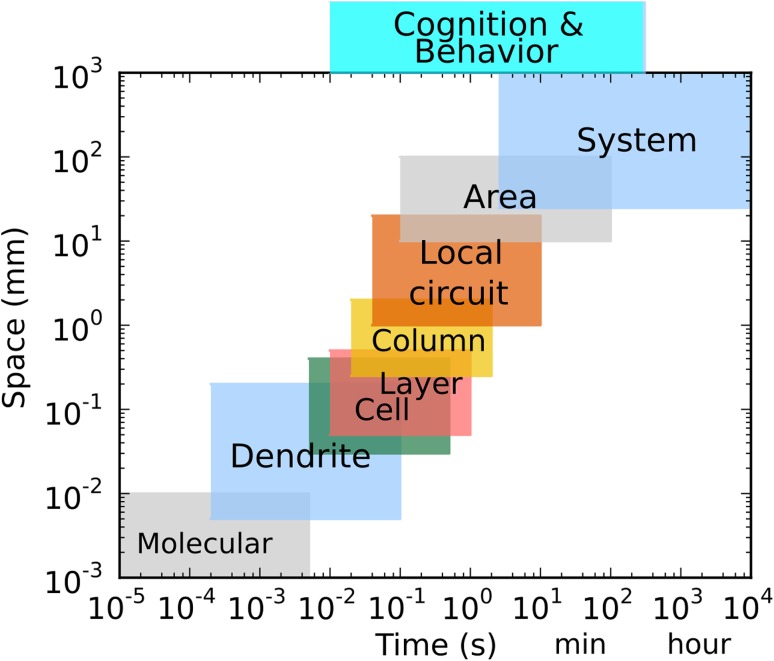
Computational neuroscience is a field that traces its origins to the efforts of Hodgkin and Huxley, who pioneered quantitative analysis of electrical activity in the nervous system. While also continuing as an independent field, computational neuroscience has combined with computational systems biology, and neural multiscale modeling arose as one offshoot. This consolidation has added electrical, graphical, dynamical system, learning theory, artificial intelligence and neural network viewpoints with the microscale of cellular biology (neuronal and glial), mesoscales of vascular, immunological and neuronal networks, on up to macroscales of cognition and behavior. The complexity of linkages that produces pathophysiology in neurological, neurosurgical and psychiatric disease will require multiscale modeling to provide understanding that exceeds what is possible with statistical analysis or highly simplified models: how to bring together pharmacotherapeutics with neurostimulation, how to personalize therapies, how to combine novel therapies with neurorehabilitation, how to interlace periodic diagnostic updates with frequent reevaluation of therapy, how to understand a physical disease that manifests as a disease of the mind. Multiscale modeling will also help to extend the usefulness of animal models of human diseases in neuroscience, where the disconnects between clinical and animal phenomenology are particularly pronounced. Here we cover areas of particular interest for clinical application of these new modeling neurotechnologies, including epilepsy, traumatic brain injury, ischemic disease, neurorehabilitation, drug addiction, schizophrenia and neurostimulation.
计算神经科学是一个可追溯到霍奇金和赫胥黎工作的领域,他们开创了神经系统电活动的定量分析。虽然计算神经科学也继续作为一个独立的领域,但它已与计算系统生物学相结合,神经多尺度建模作为一个分支应运而生。这种整合将电学、图形学、动力系统、学习理论、人工智能和神经网络的观点与细胞生物学(神经元和神经胶质细胞)的微观尺度、血管、免疫和神经网络的中观尺度,一直到认知和行为的宏观尺度结合起来。在神经、神经外科和精神疾病中产生病理生理学的联系的复杂性,将需要多尺度建模来提供超越统计分析或高度简化模型所能达到的理解:如何将药物治疗与神经刺激结合起来,如何实现个性化治疗,如何将新疗法与神经康复结合起来,如何将定期诊断更新与频繁的治疗重新评估交织在一起,如何理解一种表现为精神疾病的身体疾病。多尺度建模还将有助于扩展神经科学中人类疾病动物模型的实用性,在神经科学中,临床现象与动物现象之间的脱节尤为明显。在这里,我们涵盖了这些新型建模神经技术在临床应用中特别感兴趣的领域,包括癫痫、创伤性脑损伤、缺血性疾病、神经康复、药物成瘾、精神分裂症和神经刺激。