Todorova Dilyana, Simoncini Stéphanie, Lacroix Romaric, Sabatier Florence, Dignat-George Françoise
From the Aix-Marseille Univ, INSERM, VRCM, UMR_S 1076, Marseille, France (D.T., S.S., R.L., F.S., F.D.-G.); APHM, CHU de la Conception, Service d'Hématologie, Marseille, France (R.L., F.D.-G.); and APHM, CHU de la Conception, Laboratoire de Culture et Thérapie Cellulaire, INSERM, UMR_S 1076, CBT1409, Marseille, France (F.S.).
Circ Res. 2017 May 12;120(10):1658-1673. doi: 10.1161/CIRCRESAHA.117.309681.
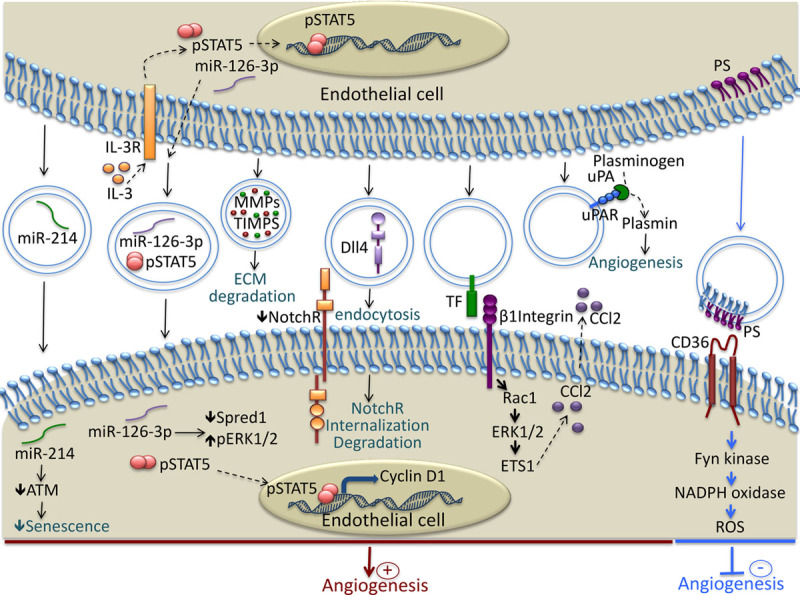
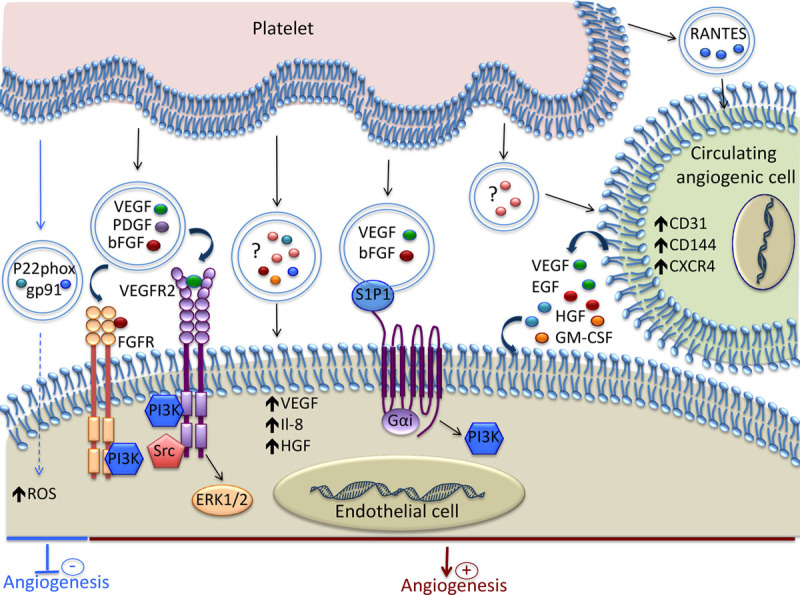
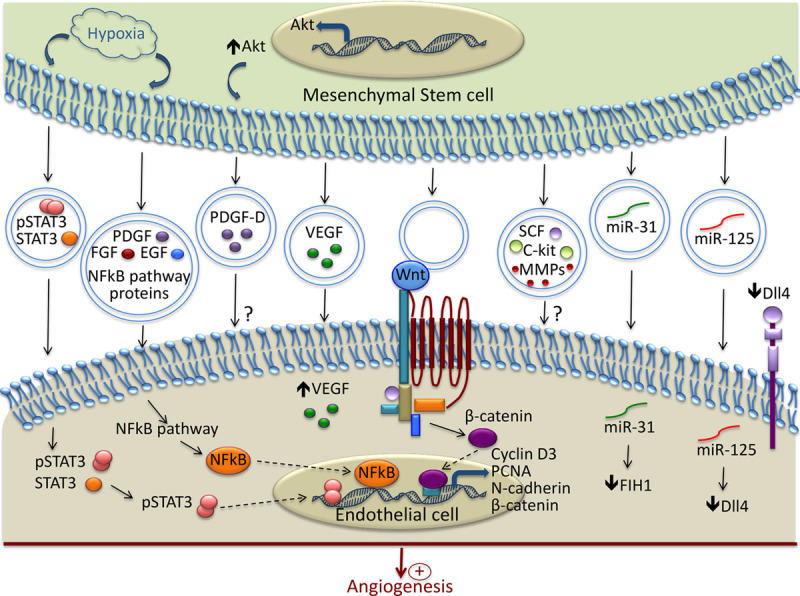
During the past decade, extracellular vesicles (EVs), which include apoptotic bodies, microvesicles, and exosomes, have emerged as important players in cell-to-cell communication in normal physiology and pathological conditions. EVs encapsulate and convey various bioactive molecules that are further transmitted to neighboring or more distant cells, where they induce various signaling cascades. The message delivered to the target cells is dependent on EV composition, which, in turn, is determined by the cell of origin and the surrounding microenvironment during EV biogenesis. Among their multifaceted role in the modulation of biological responses, the involvement of EVs in vascular development, growth, and maturation has been widely documented and their potential therapeutic application in regenerative medicine or angiogenesis-related diseases is drawing increasing interest. EVs derived from various cell types have the potential to deliver complex information to endothelial cells and to induce either pro- or antiangiogenic signaling. As dynamic systems, in response to changes in the microenvironment, EVs adapt their cargo composition to fine-tune the process of blood vessel formation. This article reviews the current knowledge on the role of microvesicles and exosomes from various cellular origins in angiogenesis, with a particular emphasis on the underlying mechanisms, and discusses the main challenges and prerequisites for their therapeutic applications.
在过去十年中,细胞外囊泡(EVs),包括凋亡小体、微泡和外泌体,已成为正常生理和病理条件下细胞间通讯的重要参与者。细胞外囊泡包裹并传递各种生物活性分子,这些分子进一步传递到邻近或更远的细胞,在那里它们诱导各种信号级联反应。传递给靶细胞的信息取决于细胞外囊泡的组成,而细胞外囊泡的组成又由其起源细胞和细胞外囊泡生物发生过程中的周围微环境决定。在细胞外囊泡对生物反应调节的多方面作用中,其在血管发育、生长和成熟中的作用已得到广泛记录,并且它们在再生医学或血管生成相关疾病中的潜在治疗应用正引起越来越多的关注。源自各种细胞类型的细胞外囊泡有可能向内皮细胞传递复杂信息,并诱导促血管生成或抗血管生成信号。作为动态系统,细胞外囊泡响应微环境的变化,调整其货物组成以微调血管形成过程。本文综述了目前关于各种细胞来源的微泡和外泌体在血管生成中的作用的知识,特别强调其潜在机制,并讨论了其治疗应用的主要挑战和前提条件。