Hambrick Erin P, Oppenheim-Weller Shani, N'zi Amanda M, Taussig Heather N
The Kempe Center for the Prevention and Treatment of Child Abuse and Neglect, Departments of Pediatrics and Psychiatry, University of Colorado - School of Medicine.
University of Denver - Graduate School of Social Work.
Child Youth Serv Rev. 2016 Nov;70:65-77. doi: 10.1016/j.childyouth.2016.09.002. Epub 2016 Sep 8.
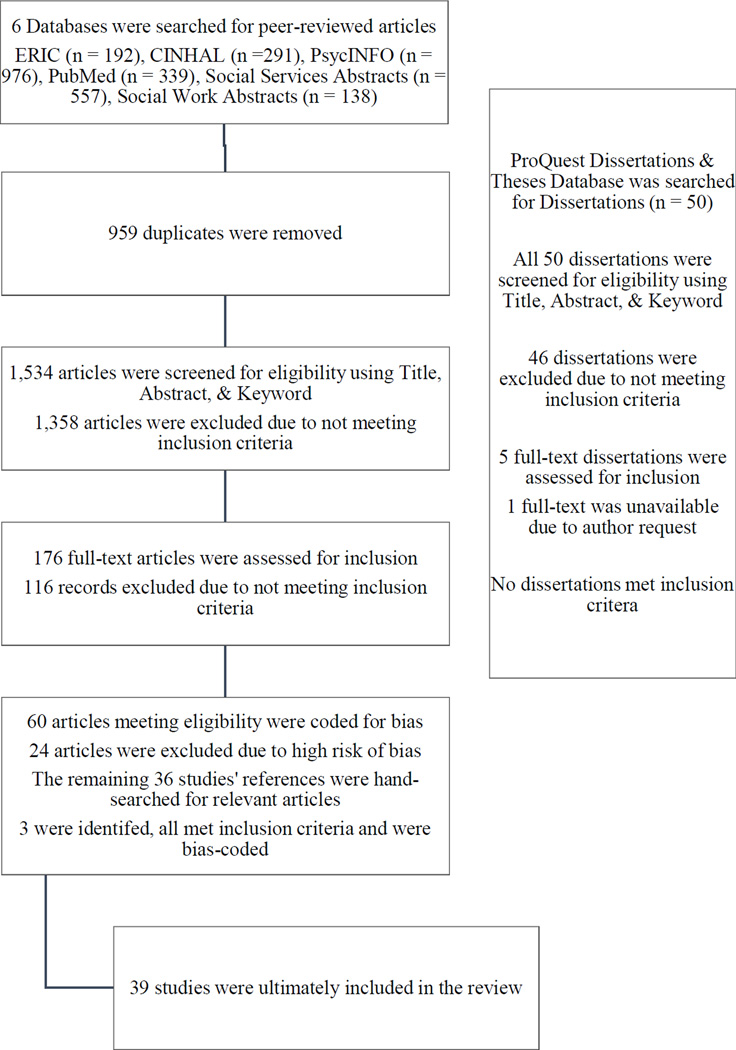
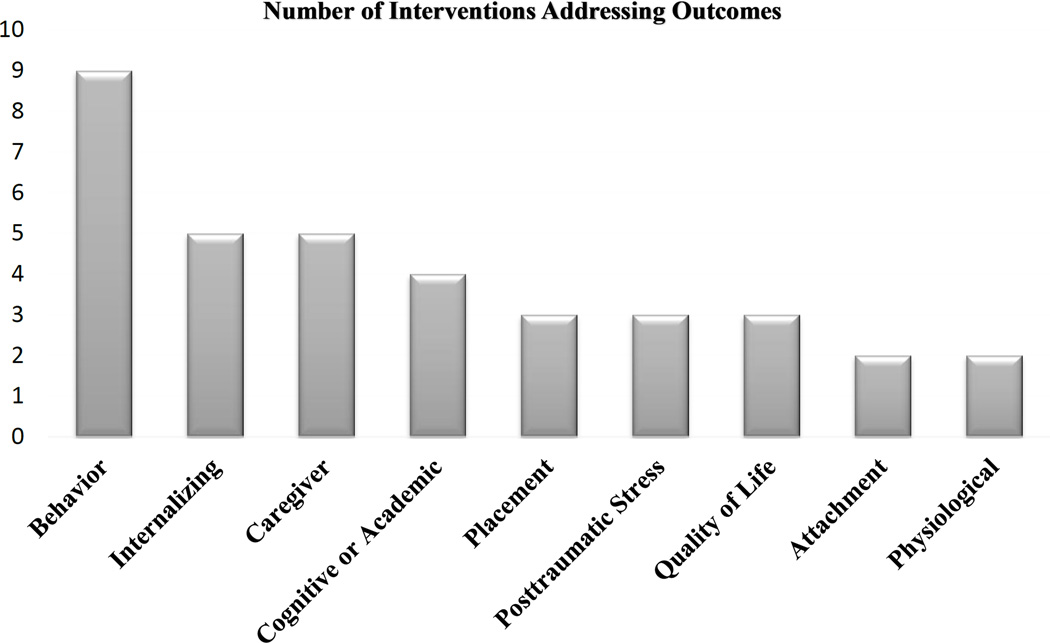
Children in foster care have high rates of adverse childhood experiences and are at risk for mental health problems. These problems can be difficult to ameliorate, creating a need for rigorous intervention research. Previous research suggests that intervening with children in foster care can be challenging for several reasons, including the severity and complexity of their mental health problems, and challenges engaging this often transitory population in mental health services. The goal of this article was to systematically review the intervention research that has been conducted with children in foster care, and to identify future research directions. This review was conducted on mental health interventions for children, ages 0 to 12, in foster care, using ERIC, CINAHL, PsycINFO, PubMed, ProQuest's Dissertation and Theses Database, Social Services Abstracts, and Social Work Abstracts. It was restricted to interventions that are at least "possibly efficacious" (i.e., supported by evidence from at least one randomized controlled trial). Studies were evaluated for risk of bias. Ten interventions were identified, with diverse outcomes, including mental health and physiological. Six interventions were developed for children in foster care. Interventions not developed for children in foster care were typically adapted to the foster context. Most interventions have yet to be rigorously evaluated in community-based settings with children in foster care. Little research has been conducted on child and family engagement within these interventions, and there is a need for more research on moderators of intervention outcomes and subgroups that benefit most from these interventions. In addition, there is not consensus regarding how to adapt interventions to this population. Future research should focus on developing and testing more interventions with this population, rigorously evaluating their effectiveness in community-based settings, determining necessary adaptations, and identifying which interventions work best for whom.
寄养儿童有很高比例的童年不良经历,存在心理健康问题风险。这些问题可能难以改善,因此需要进行严格的干预研究。先前的研究表明,对寄养儿童进行干预可能具有挑战性,原因有几个,包括他们心理健康问题的严重性和复杂性,以及让这个经常流动的群体参与心理健康服务所面临的挑战。本文的目的是系统回顾针对寄养儿童开展的干预研究,并确定未来的研究方向。本综述针对0至12岁寄养儿童的心理健康干预措施进行,使用教育资源信息中心(ERIC)、护理学与健康领域数据库(CINAHL)、心理学文摘数据库(PsycINFO)、医学期刊数据库(PubMed)、ProQuest的学位论文数据库、社会服务摘要数据库和社会工作摘要数据库。它仅限于至少“可能有效”(即至少有一项随机对照试验的证据支持)的干预措施。对研究进行了偏倚风险评估。确定了十种干预措施,结果各不相同,包括心理健康和生理方面。六种干预措施是专门为寄养儿童开发的。并非为寄养儿童开发的干预措施通常会根据寄养环境进行调整。大多数干预措施尚未在基于社区的寄养儿童环境中进行严格评估。关于这些干预措施中儿童和家庭参与度的研究很少,而且需要更多关于干预结果调节因素以及从这些干预措施中获益最大的亚组的研究。此外,对于如何使干预措施适应该群体,尚未达成共识。未来的研究应侧重于针对该群体开发和测试更多干预措施,在基于社区的环境中严格评估其有效性,确定必要的调整,并确定哪些干预措施对哪些人最有效。