Huang Po-Kai, Lin Shi-Xiang, Tsai May-Jywan, Leong Max K, Lin Shian-Ren, Kankala Ranjith Kumar, Lee Chia-Hung, Weng Ching-Feng
Department of Life Science and Institute of Biotechnology, National Dong Hwa University, Hualien 97401, Taiwan.
Neural Regeneration Laboratory, Neurological Institute, Taipei Veterans General Hospital, Taipei 11217, Taiwan.
Nanomaterials (Basel). 2017 May 12;7(5):112. doi: 10.3390/nano7050112.
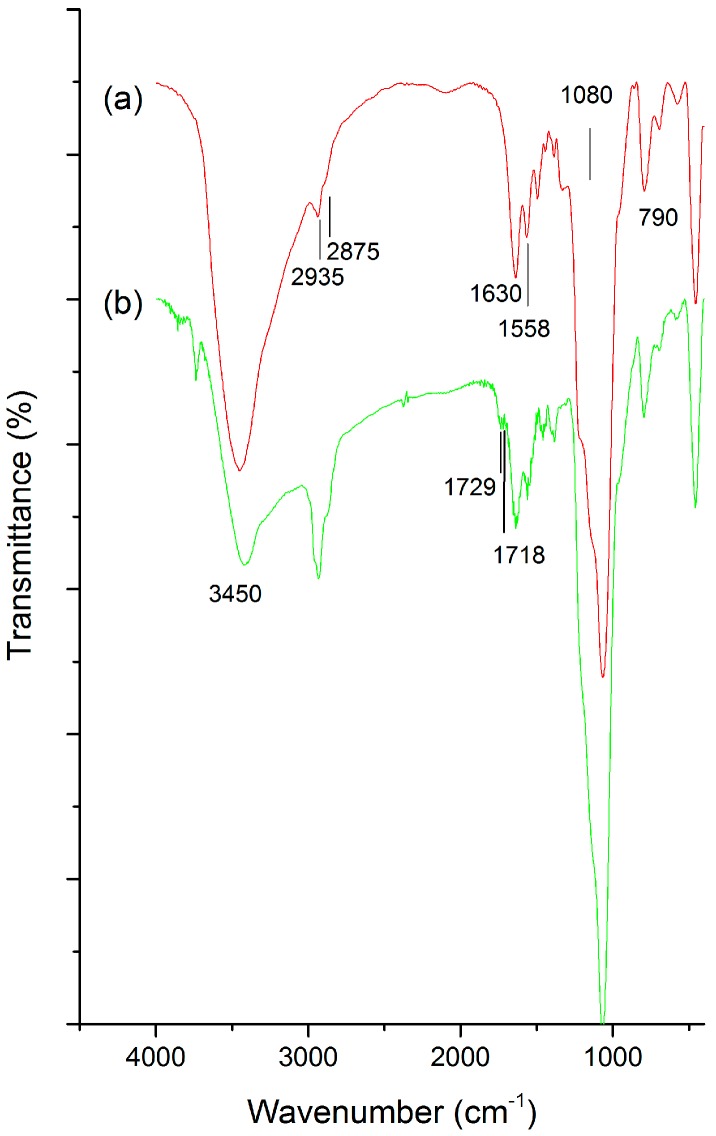
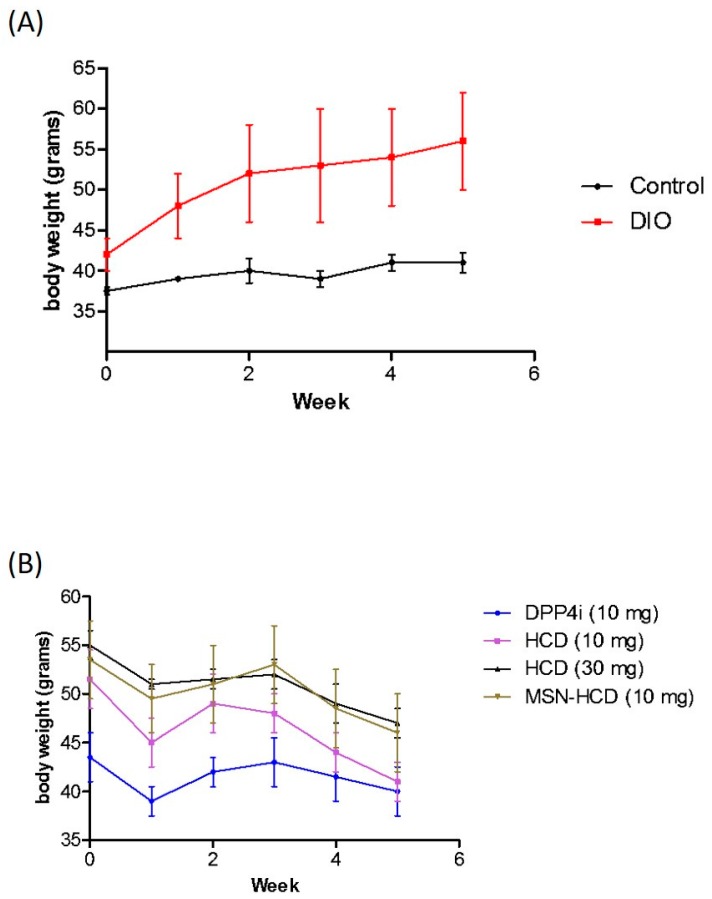
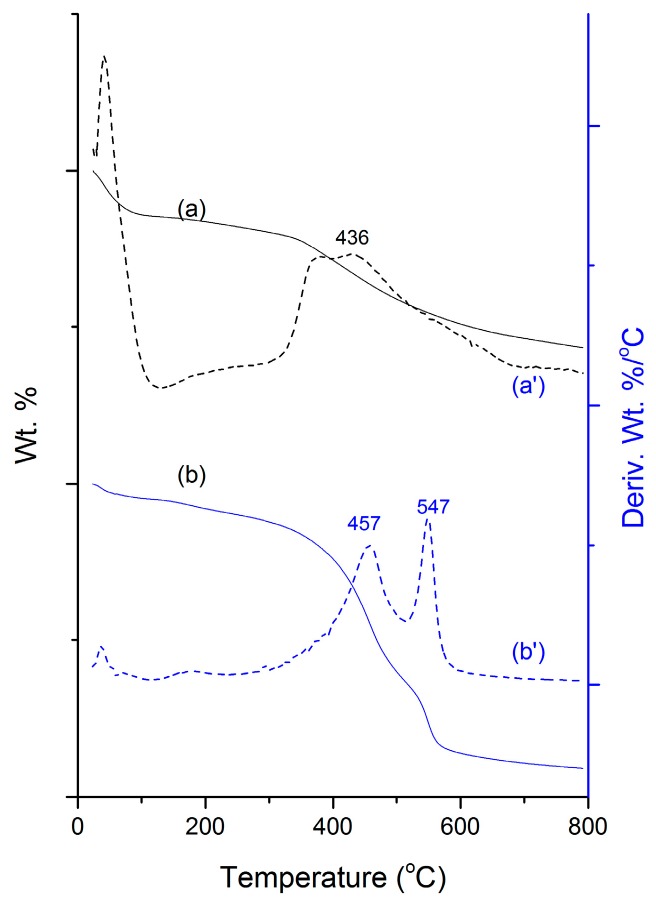
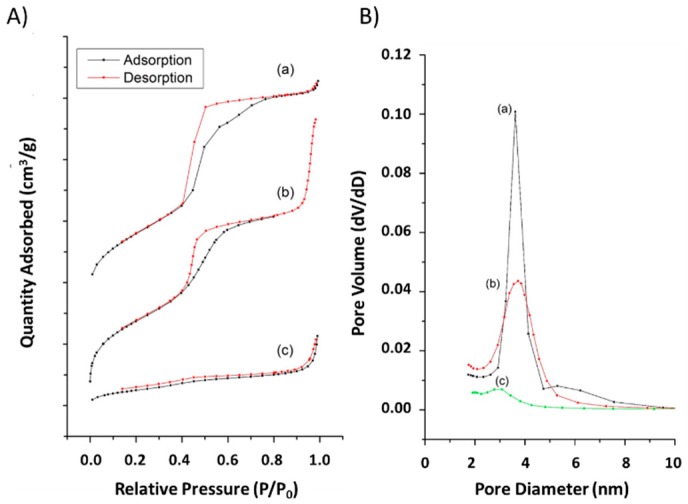
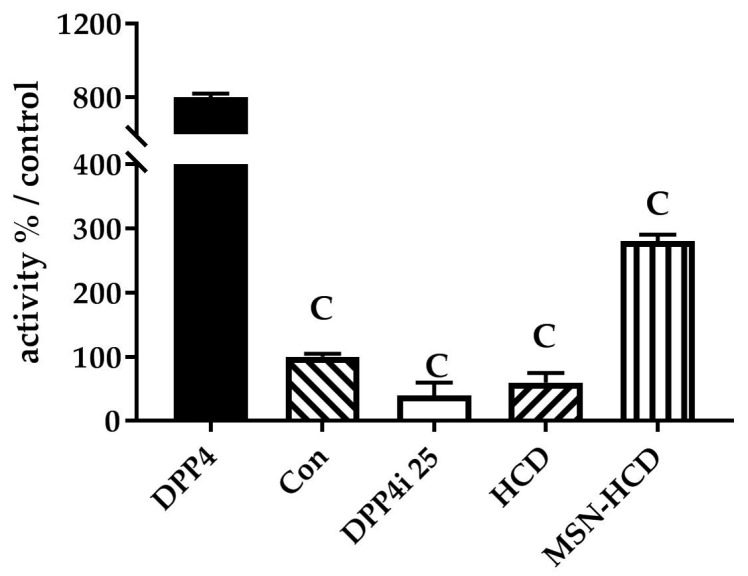
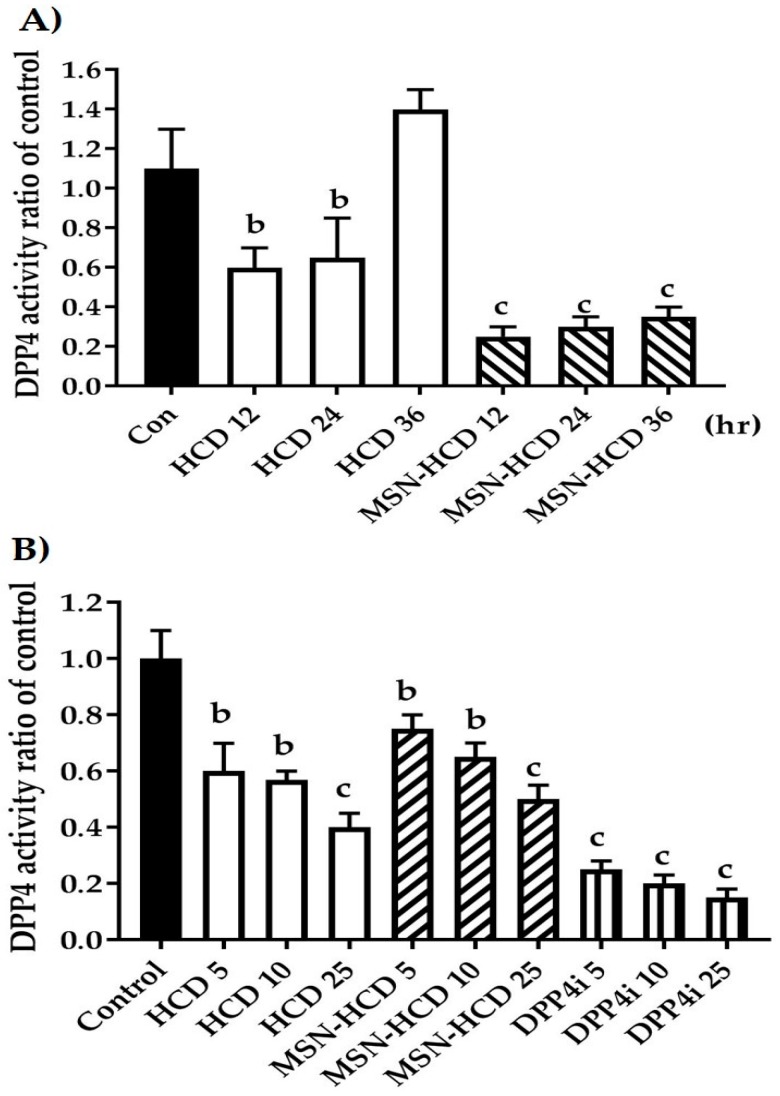
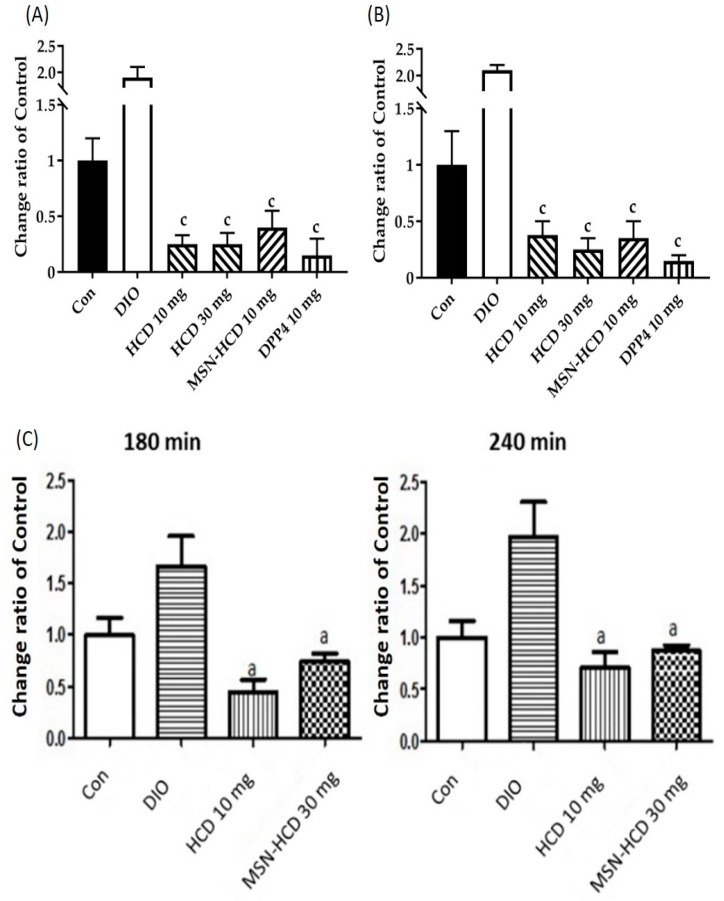
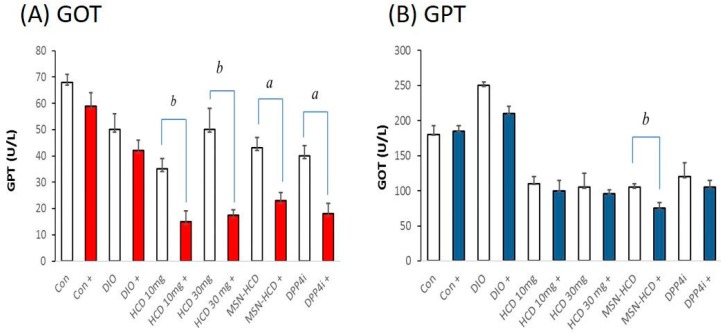
Natural supplements comprise good efficacy with less adverse effects as against diabetic therapy, but their advancement as anti-diabetic agents is unsatisfactory with regard to the delivery system. Dipeptidyl peptidase-4 (DPP4)/CD26) can degrade glucagon-like pepetide-1 (GLP-1) which renders a decrease of blood glucose levels. 16-hydroxycleroda-3,13-dine-16,15-olide (HCD) extracted from Polyalthia longifolia, exhibits numerous medicinal potentials including hypoglycemic potential. On consideration of HCD application, the bioavailability is affected by low solubility. Extended experiments of anti-diabetic efficacy confirmed HCD biocompatible with mesoporous silica nanoparticles (MSNs) encapsulation resulted in a sustained release property in delivering HCD for the inhibition of DPP4 via the activity and protein levels of DPP4 analysis. In the enzymatic activity assay, MSN-HCD directly changed DPP4 activity. Moreover, MSN-HCD nanoparticles were treated with Caco-2 cells and the protein levels of DPP4 determined within the cells. The results revealed that MSN-HCD caused reduction of DPP4 activity in a time- and dose-dependent fashion. Orally administered MSN-HCD in diet-induced diabetic mice alleviated blood glucose via an oral glucose tolerance test. In addition, administration of MSN-HCD for five weeks revealed that the biochemical cues such as pyruvate transaminase (GPT), glutamate oxaloacetate transaminase (GOT), triglycerides (TG), cholesterol (CHO), and glycated hemoglobin (HbA1c) in mice were commendable as further confirmation of MSN-HCD efficacy and less adverse effects in down-regulation of hyperglycemia. Furthermore, this formulation effectively controlled blood glucose and significantly decreased the body weight of mice, suggesting that MSN-HCD exerts natural DPP4 inhibitor as a potential clinical drug for the treatment of diabetes.
与糖尿病治疗相比,天然补充剂疗效良好且副作用较少,但就给药系统而言,它们作为抗糖尿病药物的进展并不理想。二肽基肽酶-4(DPP4)/CD26可降解胰高血糖素样肽-1(GLP-1),从而导致血糖水平下降。从长叶暗罗中提取的16-羟基克罗烷-3,13-二烯-16,15-内酯(HCD)具有多种药用潜力,包括降血糖潜力。考虑到HCD的应用,其低溶解度会影响生物利用度。抗糖尿病疗效的扩展实验证实,HCD与介孔二氧化硅纳米颗粒(MSN)包封具有生物相容性,在递送HCD以通过DPP4活性和蛋白质水平分析抑制DPP4方面具有缓释特性。在酶活性测定中,MSN-HCD直接改变DPP4活性。此外,用Caco-2细胞处理MSN-HCD纳米颗粒,并测定细胞内DPP4的蛋白质水平。结果显示,MSN-HCD以时间和剂量依赖性方式降低DPP4活性。通过口服葡萄糖耐量试验,在饮食诱导的糖尿病小鼠中口服MSN-HCD可降低血糖。此外,给予MSN-HCD五周的结果显示,小鼠体内诸如谷丙转氨酶(GPT)、谷草转氨酶(GOT)、甘油三酯(TG)、胆固醇(CHO)和糖化血红蛋白(HbA1c)等生化指标值得称赞,这进一步证实了MSN-HCD的疗效以及在下调高血糖方面副作用较少。此外,该制剂有效控制血糖并显著降低小鼠体重,表明MSN-HCD作为一种潜在的临床治疗糖尿病药物发挥着天然DPP4抑制剂的作用。