Department of Psychology, Bielefeld University, Postfach 10 01 31, 33501, Bielefeld, Germany.
Center of Excellence Cognitive Interaction Technology (CITEC), Bielefeld University, Bielefeld, Germany.
BMC Psychol. 2017 May 12;5(1):16. doi: 10.1186/s40359-017-0186-z.
Why is it that certain violent criminals repeatedly find themselves engaged in brawls? Many inmates report having felt provoked or threatened by their victims, which might be due to a tendency to ascribe malicious intentions when faced with ambiguous social signals, termed hostile attribution bias.
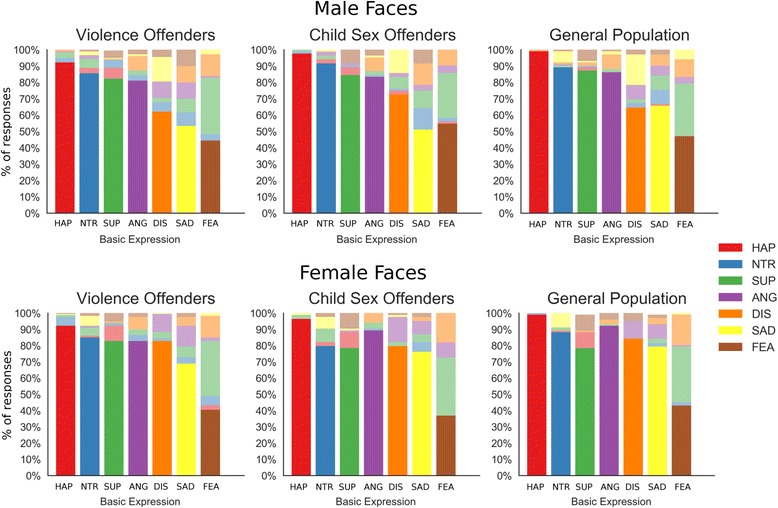
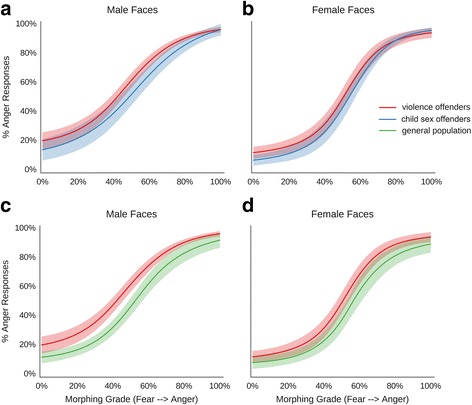
The present study presented morphed fear-anger faces to prison inmates with a history of violent crimes, a history of child sexual abuse, and to matched controls form the general population. Participants performed a fear-anger decision task. Analyses compared both response frequencies and measures derived from psychophysical functions fitted to the data. In addition, a test to distinguish basic facial expressions and questionnaires for aggression, psychopathy and personality disorders were administered.
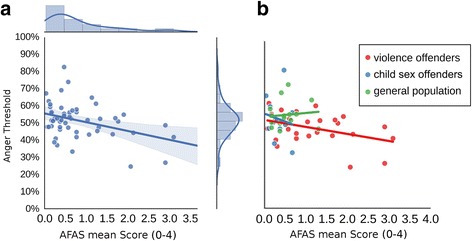
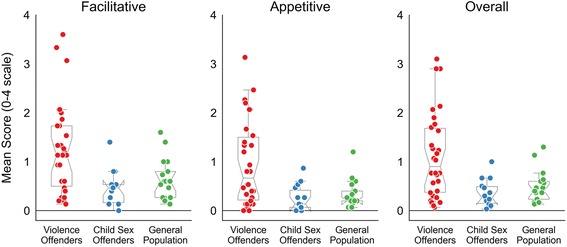
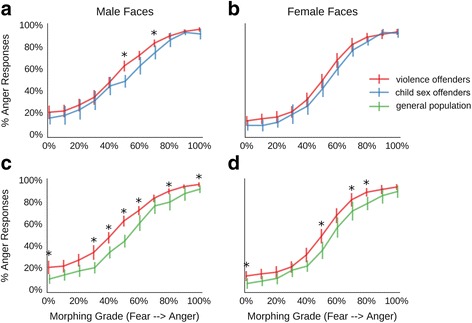
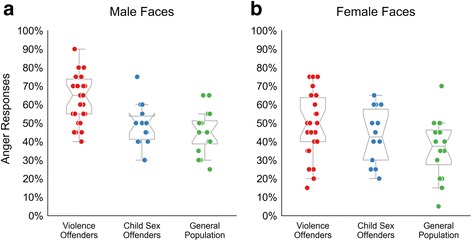
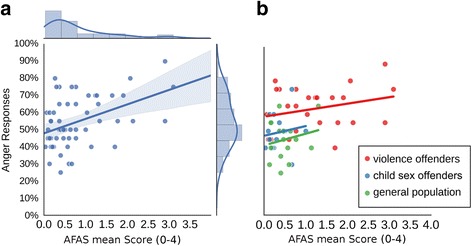
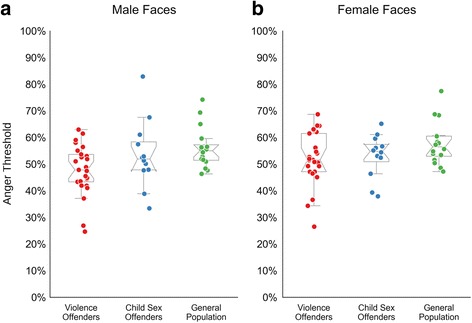
Violent offenders present with a reliable hostile attribution bias, in that they rate ambiguous fear-anger expressions as more angry, compared to both the control population and perpetrators of child sexual abuse. Psychometric functions show a lowered threshold to detect anger in violent offenders compared to the general population. This effect is especially pronounced for male faces, correlates with self-reported aggression and presents in absence of a general emotion recognition impairment.
The results indicate that a hostile attribution, related to individual level of aggression and pronounced for male faces, might be one mechanism mediating physical violence.
为什么某些暴力罪犯会反复卷入斗殴?许多囚犯报告说,他们感到受到受害者的挑衅或威胁,这可能是由于面对模糊的社会信号时倾向于归因于恶意意图,这种倾向被称为敌意归因偏差。
本研究向有暴力犯罪史、儿童性虐待史的监狱囚犯和来自普通人群的匹配对照组呈现了变形的恐惧-愤怒面孔。参与者执行了一个恐惧-愤怒决策任务。分析比较了数据拟合的心理物理函数的响应频率和测量值。此外,还进行了一项用于区分基本面部表情的测试,以及用于攻击性、精神病态和人格障碍的问卷。
暴力罪犯表现出可靠的敌意归因偏差,即与对照组和儿童性虐待者相比,他们将模糊的恐惧-愤怒表情评定为更愤怒。心理物理函数显示,与普通人群相比,暴力罪犯检测愤怒的阈值降低。对于男性面孔,这种效果尤为明显,与自我报告的攻击性相关,并且在不存在一般情绪识别障碍的情况下出现。
结果表明,与个体攻击性相关的敌意归因,对于男性面孔尤为明显,可能是介导身体暴力的一种机制。