Ongwisespaiboon Oranun, Jiraungkoorskul Wannee
Mahidol University International College, Mahidol University, Salaya Campus, Nakhon Pathom 73170, Thailand.
Department of Pathobiology, Faculty of Science, Mahidol University, Bangkok 10400, Thailand.
Pharmacogn Rev. 2017 Jan-Jun;11(21):27-30. doi: 10.4103/phrev.phrev_50_16.
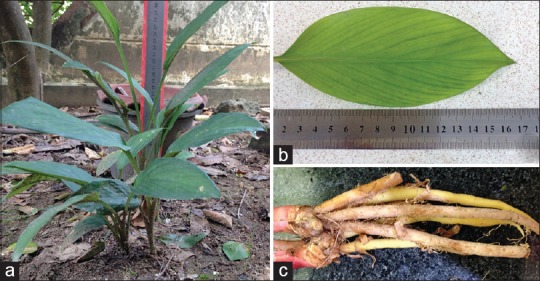
(Family: ) as known as fingerroot is a daily food ingredient and traditional medicinal plant in Southeast Asia and Indo-China. It has been shown to possess anti-allergic, antibacterial, anticancer, anti-inflammatory, antioxidant, and antiulcer activities and also shown wound healing. Its common phytochemical components include alkaloids, essential oils, flavonoids, and phenolics. This plant is rich in boesenbergin, krachaizin, panduratin, and pinostrobin, all of which has been reported to contribute to its remedial properties including aphrodisiac property. Based on established literature on the aphrodisiac property of and possible mode of action, this review article has attempted to compile that could be further explored for the development of potential aphrodisiac treatment.
(姜科山柰属植物)又名沙姜,是东南亚和印度支那地区的日常食品原料和传统药用植物。研究表明,它具有抗过敏、抗菌、抗癌、抗炎、抗氧化和抗溃疡活性,还具有伤口愈合作用。其常见的植物化学成分包括生物碱、精油、黄酮类化合物和酚类化合物。这种植物富含山柰素、沙姜嗪、益智酮和松属素,据报道,所有这些成分都有助于其治疗特性,包括壮阳特性。基于已有的关于沙姜壮阳特性及其可能作用方式的文献,这篇综述文章试图汇编相关内容,以便进一步探索沙姜在开发潜在壮阳疗法方面的可能性。