Grace Karen Trister, Fleming Christina
Johns Hopkins University School of Nursing, an Adjunct Instructor at Georgetown University School of Nursing & Health Studies, and is in clinical midwifery practice at Mary's Center in Adelphi, MD.
Johns Hopkins University School of Nursing, an Adjunct Instructor at Georgetown University School of Nursing & Health Studies, and is in clinical midwifery practice at Providence Hospital in Washington, D.C.
World Med Health Policy. 2016 Dec;8(4):382-408. doi: 10.1002/wmh3.209. Epub 2016 Nov 10.
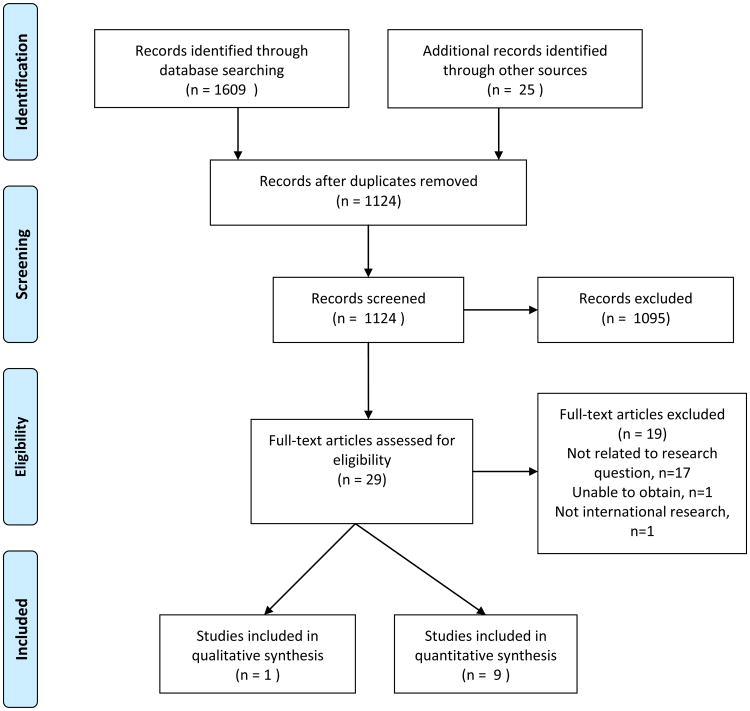
Reproductive coercion is behavior that interferes with a woman's autonomous reproductive decision-making. It may take the form of birth control sabotage, pregnancy coercion, or controlling the outcome of a pregnancy. Perpetrators may be partners, a partner's family, or the woman's family. This article reviews the literature on reproductive coercion in international settings. In this review of 10 research studies, findings are presented on prevalence and type of reproductive coercion, associated factors, specific tactics, relationship with intimate partner violence and domestic violence (in-laws particularly), and implications for women's reproductive health. Findings highlight reproductive coercion as a subset of intimate partner violence that is poorly understood, especially in international settings. More research is needed on protective factors, how interventions can capitalize on protective factors, and the strategies women use to resist reproductive coercion. Policy implications and recommendations are discussed with particular attention to issues related to diverse social and cultural environments.
生殖胁迫是指干扰女性自主生殖决策的行为。它可能表现为破坏节育措施、强迫怀孕或控制怀孕结果。实施者可能是伴侣、伴侣的家人或女性自己的家人。本文回顾了国际背景下有关生殖胁迫的文献。在对10项研究的综述中,呈现了关于生殖胁迫的发生率和类型、相关因素、具体策略、与亲密伴侣暴力及家庭暴力(尤其是姻亲暴力)的关系以及对女性生殖健康影响的研究结果。研究结果凸显出生殖胁迫是亲密伴侣暴力的一个子集,人们对此了解甚少,尤其是在国际背景下。需要对保护因素、干预措施如何利用保护因素以及女性抵抗生殖胁迫所采用的策略开展更多研究。文中讨论了政策影响和建议,特别关注与不同社会和文化环境相关的问题。