Derk Raymond, Davidson Donna C, Manke Amruta, Stueckle Todd A, Rojanasakul Yon, Wang Liying
National Institute for Occupational Safety and Health, HELD/PPRB, Morgantown, WV 26505, USA.
West Virginia University, School of Pharmacy, Morgantown, WV 26506, USA.
Sens Biosensing Res. 2015 Mar;3:38-45. doi: 10.1016/j.sbsr.2014.12.002.
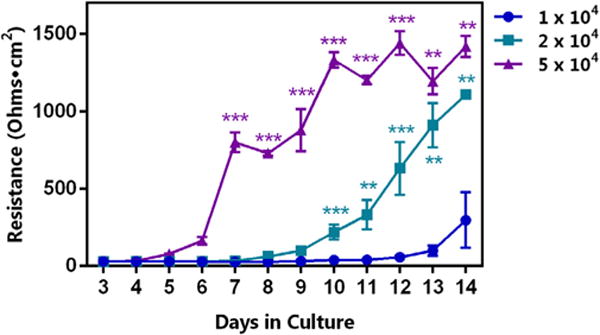
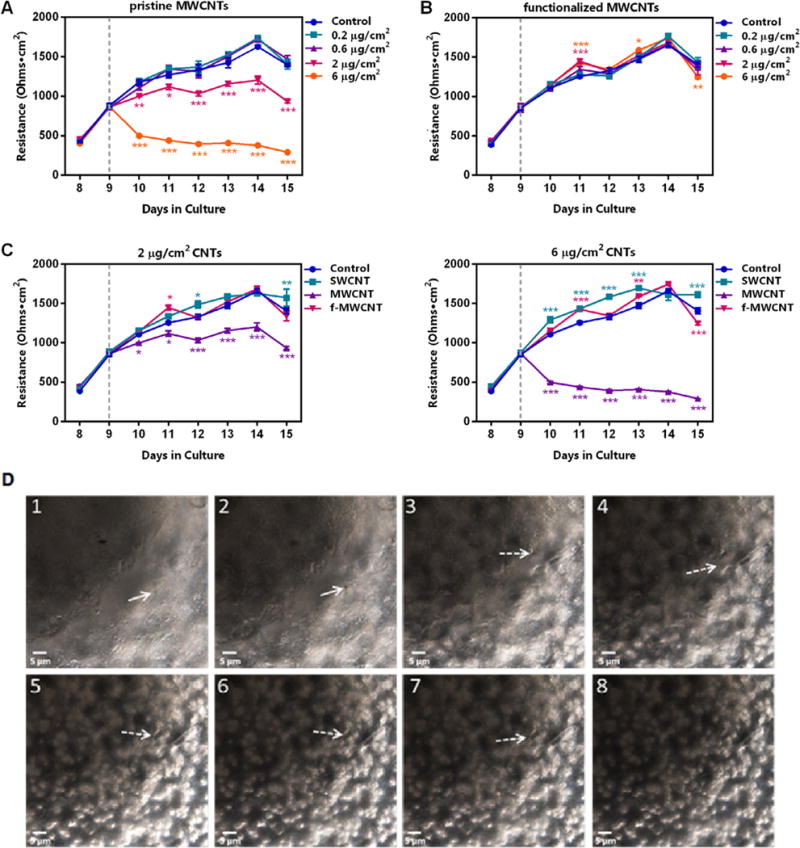
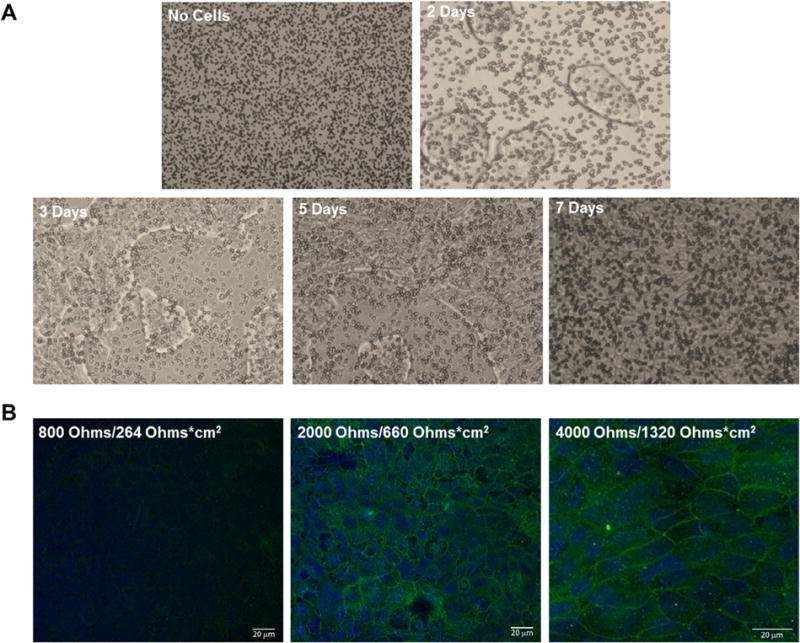
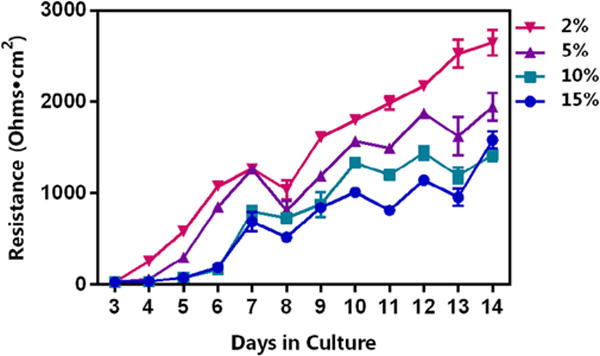
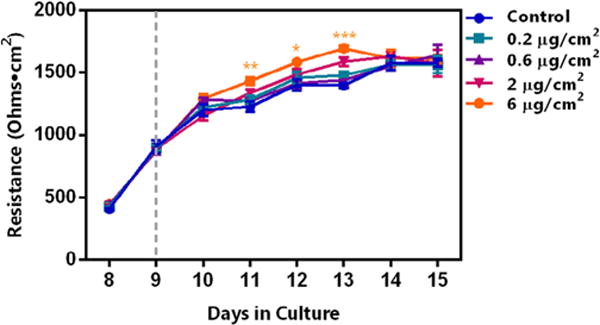
Pulmonary barrier function plays a pivotal role in protection from inhaled particles. However, some nano-scaled particles, such as carbon nanotubes (CNT), have demonstrated the ability to penetrate this barrier in animal models, resulting in an unusual, rapid interstitial fibrosis. To delineate the underlying mechanism and specific bio-effect of inhaled nanoparticles in respiratory toxicity, models of lung epithelial barriers are required that allow accurate representation of systems; however, there is currently a lack of consistent methods to do so. Thus, this work demonstrates a well-characterized model of pulmonary barrier function using Calu-3 cells, and provides the experimental conditions required for achieving tight junction complexes in cell culture, with trans-epithelial electrical resistance measurement used as a biosensor for proper barrier formation and integrity. The effects of cell number and serum constituents have been examined and we found that changes in each of these parameters can greatly affect barrier formation. Our data demonstrate that use of 5.0 × 10 Calu-3 cells/well in the Transwell cell culture system, with 10% serum concentrations in culture media is optimal for assessing epithelial barrier function. In addition, we have utilized CNT exposure to analyze the dose-, time-, and nanoparticle property-dependent alterations of epithelial barrier permeability as a means to validate this model. Such high throughput cell models of the epithelium could be used to predict the interaction of other nanoparticles with lung epithelial barriers to mimic respiratory behavior , thus providing essential tools and bio-sensing techniques that can be uniformly employed.
肺屏障功能在抵御吸入颗粒方面起着关键作用。然而,一些纳米级颗粒,如碳纳米管(CNT),已在动物模型中显示出穿透这一屏障的能力,导致异常快速的间质性纤维化。为了阐明吸入纳米颗粒在呼吸毒性中的潜在机制和特定生物效应,需要肺上皮屏障模型来准确呈现相关系统;然而,目前缺乏一致的方法来实现这一点。因此,这项工作展示了一种使用Calu - 3细胞的特征明确的肺屏障功能模型,并提供了在细胞培养中实现紧密连接复合物所需的实验条件,将跨上皮电阻测量用作适当屏障形成和完整性的生物传感器。研究了细胞数量和血清成分的影响,我们发现这些参数中的每一个变化都可能极大地影响屏障形成。我们的数据表明,在Transwell细胞培养系统中每孔使用5.0×10个Calu - 3细胞,培养基中血清浓度为10%,最适合评估上皮屏障功能。此外,我们利用碳纳米管暴露来分析上皮屏障通透性的剂量、时间和纳米颗粒特性依赖性变化,以此来验证该模型。这种上皮细胞的高通量模型可用于预测其他纳米颗粒与肺上皮屏障的相互作用以模拟呼吸行为,从而提供可统一应用的基本工具和生物传感技术。