Zhang Yang, Van den Berg Agnes E, Van Dijk Terry, Weitkamp Gerd
Department of Spatial Planning & Environment, Faculty of Spatial Sciences, University of Groningen, P.O. Box 800, 9700 AV Groningen, The Netherlands.
Department of Cultural Geography, Faculty of Spatial Sciences, University of Groningen, P.O. Box 800, 9700 AV Groningen, The Netherlands.
Int J Environ Res Public Health. 2017 May 16;14(5):535. doi: 10.3390/ijerph14050535.
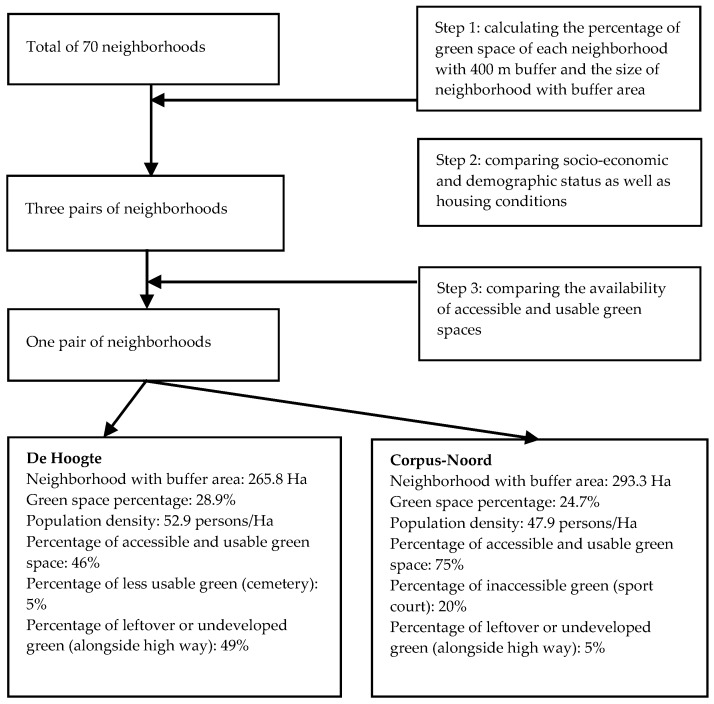
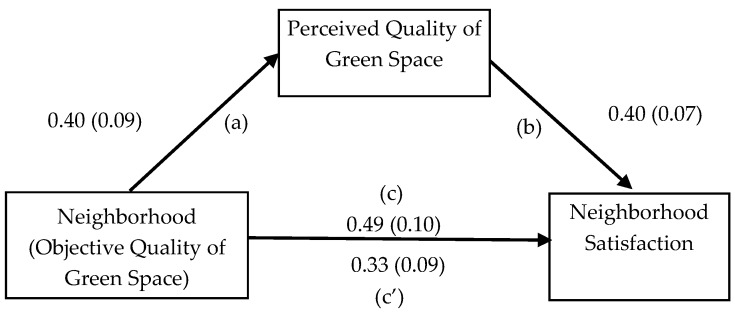
There is increasing evidence that the quality of green space significantly contributes to neighborhood satisfaction and well-being, independent of the mere amount of green space. In this paper, we examined residents' perceptions of the quality and beneficial affordances of green space in relation to objectively assessed accessibility and usability. We used data from a survey in two neighborhoods ( = 223) of a medium-sized city in the Netherlands, which were similar in the amount of green space and other physical and socio-demographic characteristics, but differed in the availability of accessible and usable green spaces. Results show that residents of the neighborhood with a higher availability of accessible and usable green spaces were more satisfied with their neighborhood. This difference was statistically mediated by the higher level of perceived green space quality. Neighborhood satisfaction was significantly positively related to well-being. However, residents of the two neighborhoods did not differ in self-reported well-being and beneficial affordances of green space. These analyses contribute to a further understanding of how the accessibility and usability of green spaces may increase people's neighborhood satisfaction. It highlights the importance of perceived quality in addition to the amount of green space when examining the beneficial effects of green space.
越来越多的证据表明,绿地质量对邻里满意度和幸福感有显著贡献,这与绿地的单纯数量无关。在本文中,我们研究了居民对绿地质量及其有益特性的认知,以及与之相关的客观评估的可达性和可用性。我们使用了荷兰一个中等城市两个社区(n = 223)的调查数据,这两个社区的绿地数量以及其他物理和社会人口特征相似,但可达且可用的绿地数量不同。结果表明,可达且可用绿地数量更多的社区居民对其社区更满意。这种差异在统计上是由更高水平的感知绿地质量介导的。邻里满意度与幸福感显著正相关。然而,两个社区的居民在自我报告的幸福感和绿地的有益特性方面没有差异。这些分析有助于进一步理解绿地的可达性和可用性如何提高人们的邻里满意度。它强调了在研究绿地的有益影响时,除了绿地数量外,感知质量的重要性。