Division of Reproductive Biology in Medicine, Department of Obstetrics and Gynecology, Feinberg School of Medicine, Northwestern University, Chicago, Illinois 60611, USA.
Center for Reproductive Science, Northwestern University, Chicago, Illinois 60611, USA.
Nat Commun. 2017 May 16;8:15261. doi: 10.1038/ncomms15261.
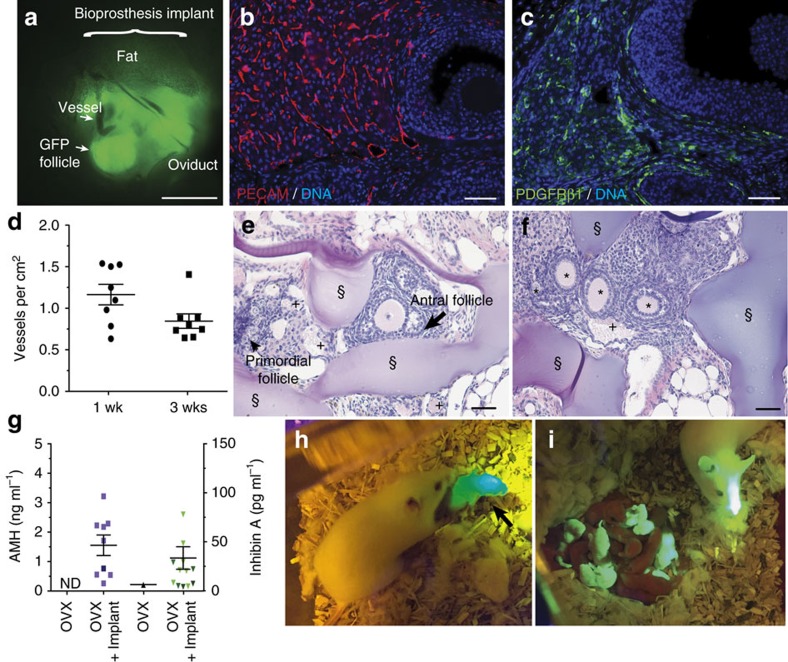
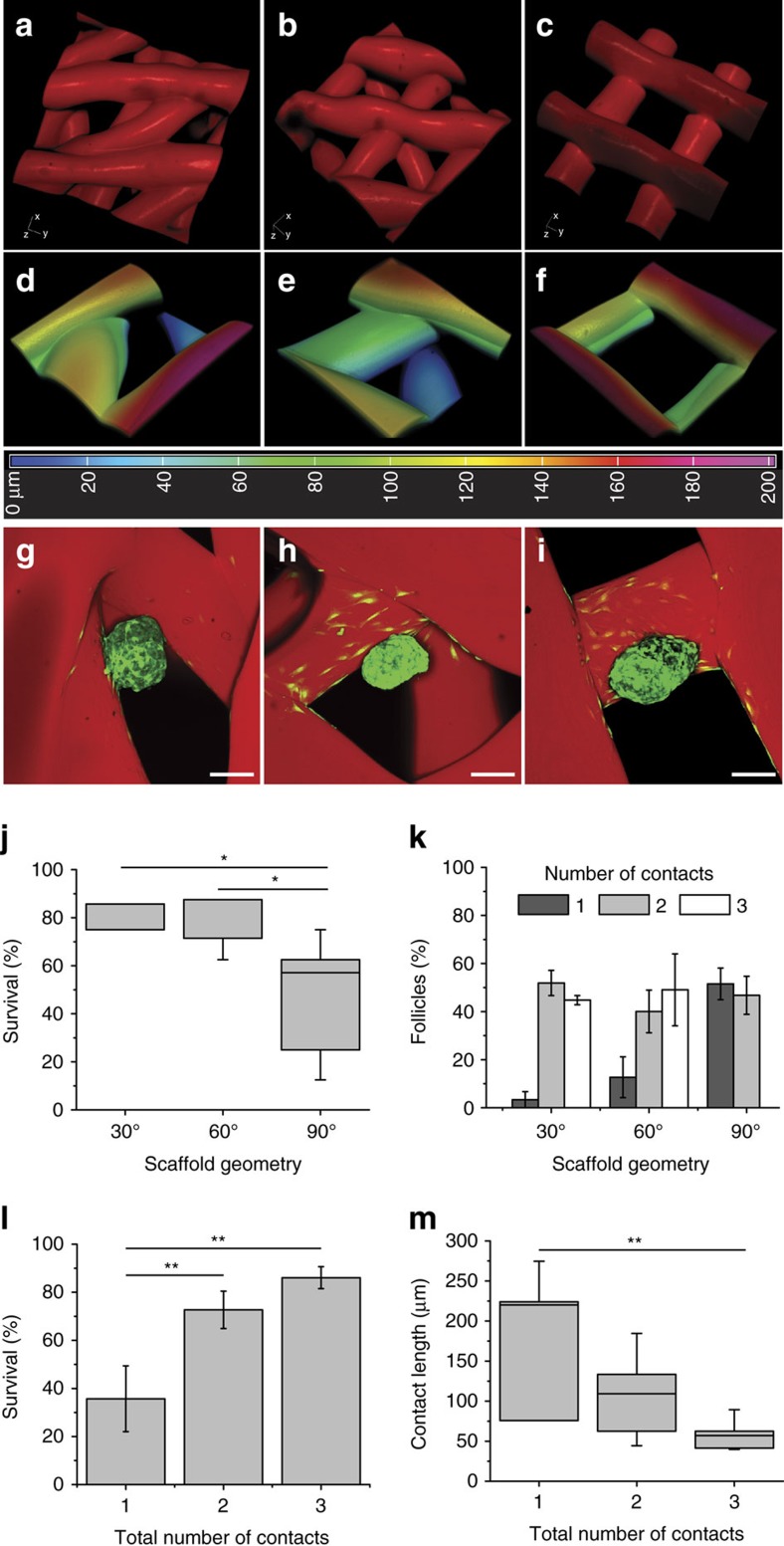
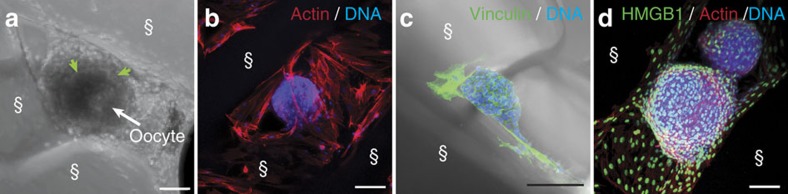
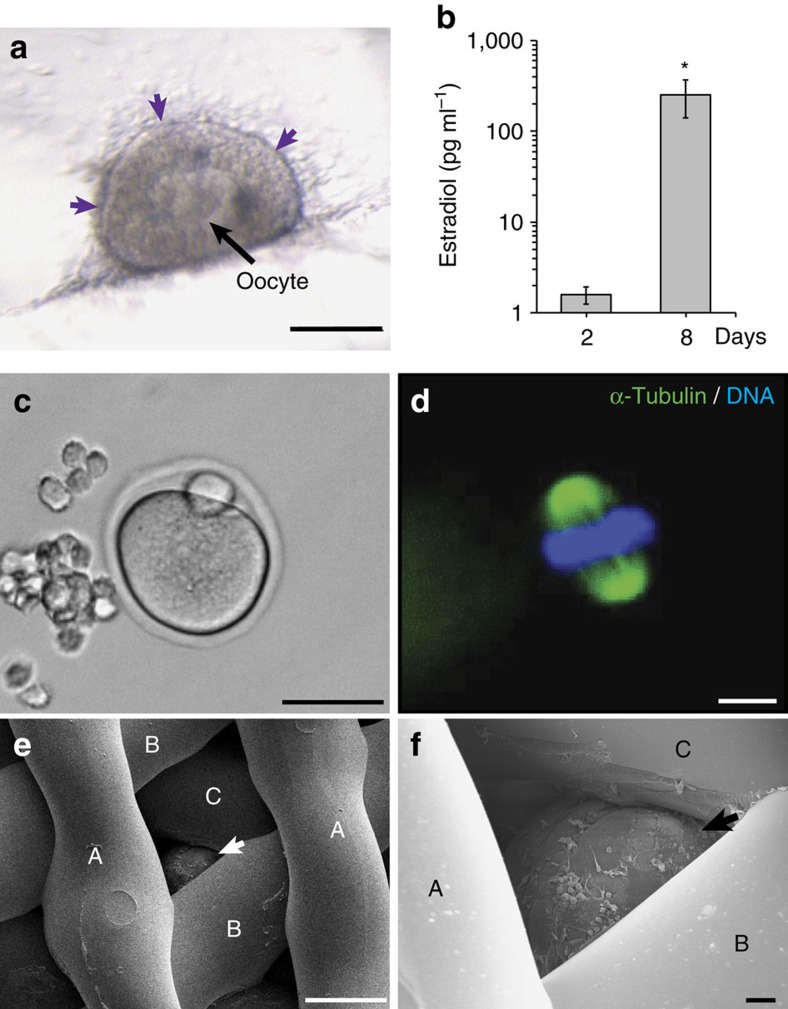
Emerging additive manufacturing techniques enable investigation of the effects of pore geometry on cell behavior and function. Here, we 3D print microporous hydrogel scaffolds to test how varying pore geometry, accomplished by manipulating the advancing angle between printed layers, affects the survival of ovarian follicles. 30° and 60° scaffolds provide corners that surround follicles on multiple sides while 90° scaffolds have an open porosity that limits follicle-scaffold interaction. As the amount of scaffold interaction increases, follicle spreading is limited and survival increases. Follicle-seeded scaffolds become highly vascularized and ovarian function is fully restored when implanted in surgically sterilized mice. Moreover, pups are born through natural mating and thrive through maternal lactation. These findings present an in vivo functional ovarian implant designed with 3D printing, and indicate that scaffold pore architecture is a critical variable in additively manufactured scaffold design for functional tissue engineering.
新兴的增材制造技术使研究孔隙几何形状对细胞行为和功能的影响成为可能。在这里,我们通过 3D 打印微孔水凝胶支架来测试改变孔隙几何形状(通过控制打印层之间的前进角度来实现)如何影响卵母细胞的存活率。30°和 60°支架在多个侧面形成包围卵母细胞的角,而 90°支架具有开放的孔隙率,限制了卵母细胞-支架的相互作用。随着支架相互作用的增加,卵母细胞的扩散受到限制,存活率提高。当植入经手术绝育的小鼠时,接种有卵母细胞的支架会迅速形成血管,并完全恢复卵巢功能。此外,幼崽通过自然交配出生并通过母乳喂养茁壮成长。这些发现提出了一种具有 3D 打印功能的体内功能性卵巢植入物,并表明支架孔结构是用于功能性组织工程的增材制造支架设计中的关键变量。