Medina-Medrano José Roberto, Almaraz-Abarca Norma, González-Elizondo M Socorro, Uribe-Soto José Natividad, González-Valdez Laura Silvia, Herrera-Arrieta Yolanda
Centro Interdisciplinario de Investigación para el Desarrollo Integral Regional, Unidad Durango, Instituto Politécnico Nacional, Sigma 119, Fraccionamiento 20 de Noviembre II, 34220, Durango, Dgo., Mexico.
Bot Stud. 2015 Dec;56(1):24. doi: 10.1186/s40529-015-0101-y. Epub 2015 Sep 18.
Fruits of wild species of the genus Physalis are consumed as food and calyces and leaves are used in traditional medicine. The phenolic composition of the species of this genus have been scarcely studied. To contribute to a better knowledge for the use of all the potential of these wild species of plants, leaves, fruits, and calyces of five wild species of the genus were analyzed for their phenolic composition and antioxidant properties.
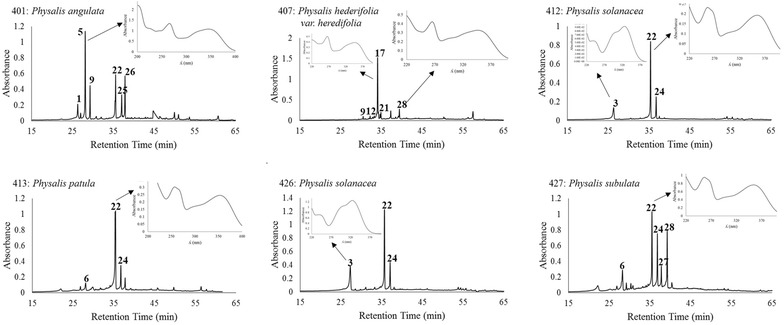
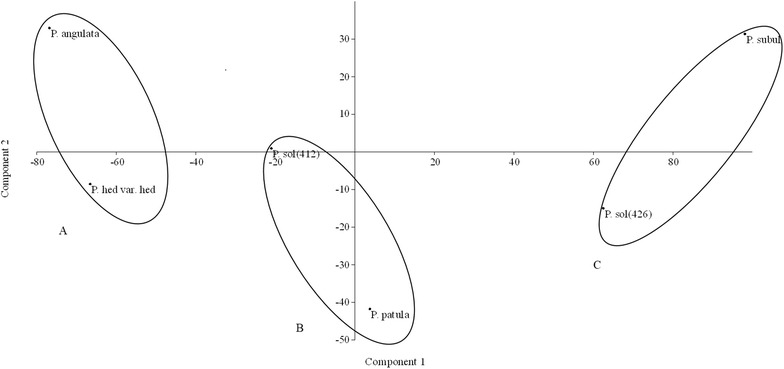
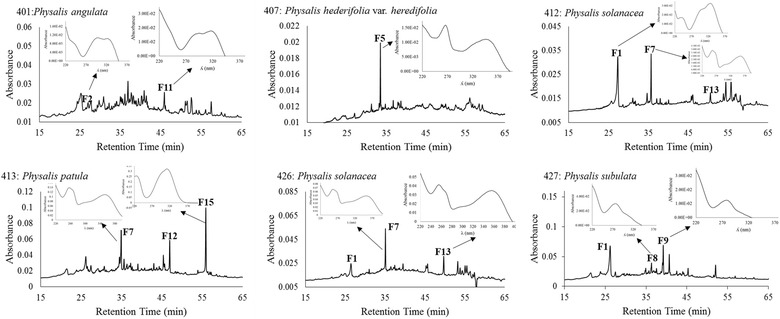
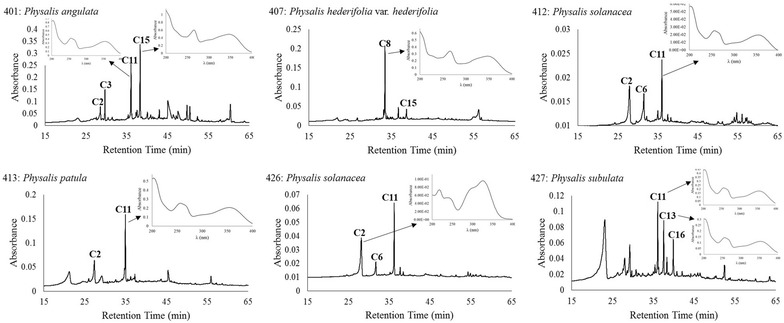
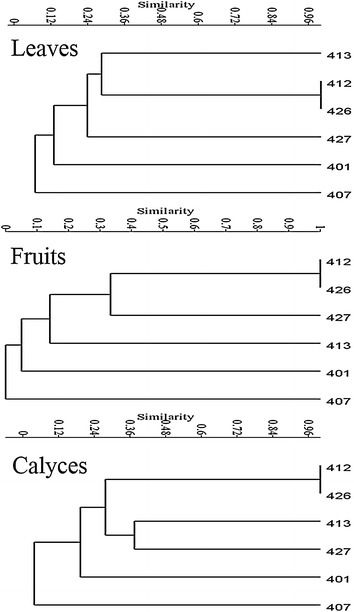
Important tissue- and species-dependent variations were found. Calyces of Physalis subulata showed the highest contents of phenolics (176.58 mg of gallic acid equivalents/g dry tissue), flavonoids (39.63 mg/g dry tissue), and phenolic acids (50.57 mg of quercitrin equivalents/g dry tissue), and its leaves displayed the highest total antioxidant capacity (3.59 mg of ascorbic acid equivalents/mL) and one of the highest reduction powers (0.54 µg of ascorbic acid equivalents/mL). A high performance liquid chromatography with photodiode array detection analysis revealed a total of 28 phenolic compounds in foliar tissues (mainly kaempferol-3-O-glycosides), 16 in fruits (mainly phenolic acids), and 16 in calyces (mainly kaempferol-3-O-glycosides); the profiles of these compounds in the three types of tissue were species-specific.
The studied species of Physalis are important sources of phenolics with relevant antioxidant activity. The current results indicate that phenolic profiles are valuable specific chemical markers and can be relevant as food tracing and authenticity indicators for plant-based preparations involving species of Physalis.
酸浆属野生种的果实可作为食物食用,花萼和叶子可用于传统医学。该属植物的酚类成分鲜有研究。为了更好地了解这些野生植物的所有潜在用途,对该属五个野生种的叶子、果实和花萼的酚类成分及抗氧化特性进行了分析。
发现了重要的组织和物种依赖性差异。小酸浆的花萼中酚类(176.58毫克没食子酸当量/克干组织)、黄酮类(39.63毫克/克干组织)和酚酸(50.57毫克槲皮苷当量/克干组织)含量最高,其叶子的总抗氧化能力最强(3.59毫克抗坏血酸当量/毫升),还原能力也最高之一(0.54微克抗坏血酸当量/毫升)。高效液相色谱-光电二极管阵列检测分析显示,叶组织中共有28种酚类化合物(主要是山奈酚-3-O-糖苷),果实中有16种(主要是酚酸),花萼中有16种(主要是山奈酚-3-O-糖苷);这三种组织中这些化合物的谱图具有物种特异性。
所研究的酸浆属物种是具有相关抗氧化活性的酚类物质的重要来源。目前的结果表明,酚类谱图是有价值的特定化学标记,对于涉及酸浆属物种的植物制剂的食品溯源和真实性指标可能具有相关性。