Sahyouni Ronald, Mahboubi Hossein, Tran Peter, Roufail John S, Chen Jefferson W
School of Medicine MSTP, University of California, Irvine, California, USA; Department of Biomedical Engineering, University of California, Irvine, California, USA.
Department of Otolaryngology-Head and Neck Surgery, University of California, Irvine, California, USA.
World Neurosurg. 2017 Aug;104:418-429. doi: 10.1016/j.wneu.2017.05.030. Epub 2017 May 13.
Initial management strategies of chronic subdural hematoma (cSDH) are controversial and range from bedside twist-drill or burr-hole drainage to craniotomy with membranectomy (CWM). We aim to 1) perform a meta-analysis of the available data on the outcomes of CWM for treatment of cSDH in published English-language literature and 2) evaluate collective outcomes of CWM with respect to morbidity, mortality, and recurrence rates.
A search of English-language literature performed in PubMed, Ovid, and Cochrane databases using key words ("subdural hematoma" or "chronic subdural hematoma") and ("membrane" or "membranectomy") from inception to December 2016 was conducted. Studies reporting outcomes of CWM in cSDH were included. Mortality, morbidity, follow-up duration, and recurrence rate data were extracted and analyzed. Pooled estimates and confidence intervals (CIs) were calculated for all outcomes using a random-effects model.
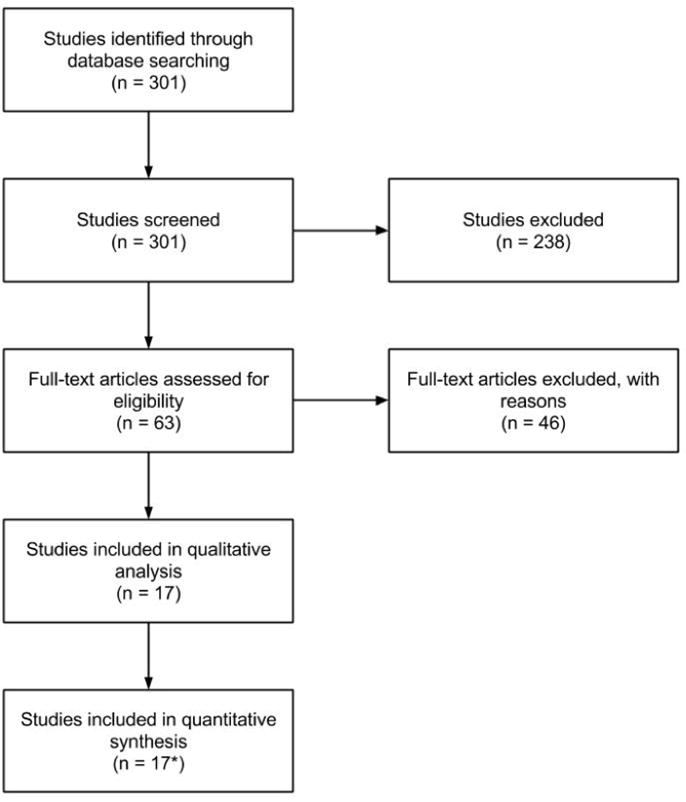
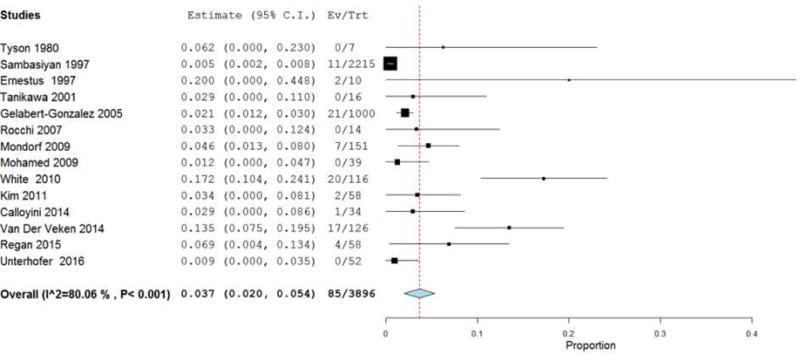
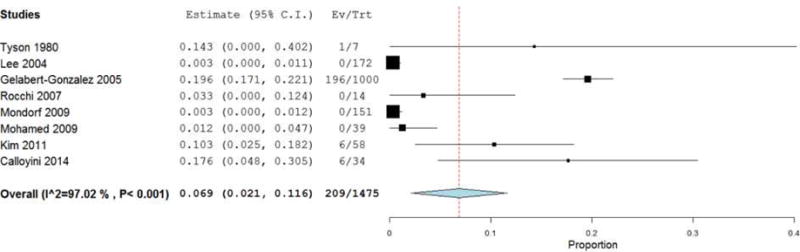
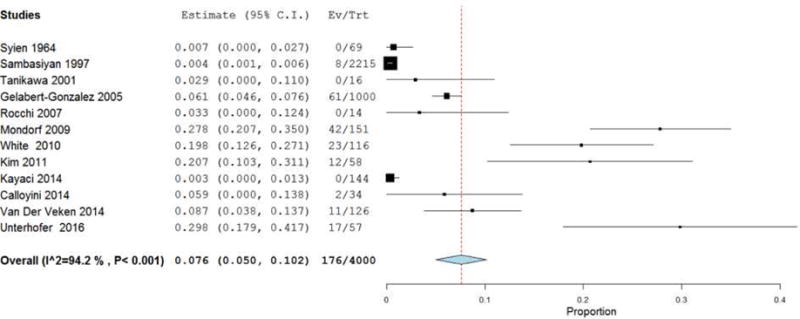
Of 301 articles found, 17 articles containing 5369 patients met our eligibility criteria. Mean follow-up duration ranged from 1-30.8 months. Collective mean mortality and morbidity rates were 3.7% and 6.9%, respectively (95% CI 2-5.4% and 2.1-11.6%; P < 0.001 and P = 0.004). The collective mean recurrence rate was 7.6% (95% CI: 5%-10.2%; P < 0.001).
Clinical data on outcomes of CWM in cSDH are limited to single institutional analyses, with considerable variation in recurrence rates and follow-up time. The rates we reported are comparable with the 5% mortality and 3%-12% morbidity rates and lower than the 10%-21% recurrence rate in the literature for burr holes or craniotomy without membranectomy. This meta-analysis provides an in-depth analysis of available data and reviews reported outcomes.
慢性硬膜下血肿(cSDH)的初始治疗策略存在争议,范围从床边扭转钻或钻孔引流到开颅并切除包膜(CWM)。我们旨在:1)对已发表的英文文献中关于CWM治疗cSDH的结果的现有数据进行荟萃分析;2)评估CWM在发病率、死亡率和复发率方面的总体结果。
在PubMed、Ovid和Cochrane数据库中使用关键词(“硬膜下血肿”或“慢性硬膜下血肿”)和(“包膜”或“包膜切除术”)对英文文献进行检索,检索时间从开始到2016年12月。纳入报告CWM治疗cSDH结果的研究。提取并分析死亡率、发病率、随访时间和复发率数据。使用随机效应模型计算所有结果的合并估计值和置信区间(CI)。
在找到的301篇文章中,17篇文章包含5369例患者,符合我们的纳入标准。平均随访时间为1至30.8个月。总体平均死亡率和发病率分别为3.7%和6.9%(95%CI:2%-5.4%和2.1%-11.6%;P<0.001和P=0.004)。总体平均复发率为7.6%(95%CI:5%-10.2%;P<0.001)。
关于CWM治疗cSDH结果的临床数据仅限于单机构分析,复发率和随访时间存在相当大的差异。我们报告的比率与文献中5%的死亡率和3%-12%的发病率相当,低于钻孔或未切除包膜的开颅手术10%-21%的复发率。这项荟萃分析对现有数据进行了深入分析并回顾了报告的结果。