Manszewski Tomasz, Szpotkowski Kamil, Jaskolski Mariusz
Center for Biocrystallographic Research, Institute of Bioorganic Chemistry, Polish Academy of Sciences, Poznan, Poland.
Department of Crystallography, Faculty of Chemistry, A. Mickiewicz University, Poznan, Poland.
IUCrJ. 2017 Apr 10;4(Pt 3):271-282. doi: 10.1107/S2052252517002433. eCollection 2017 May 1.
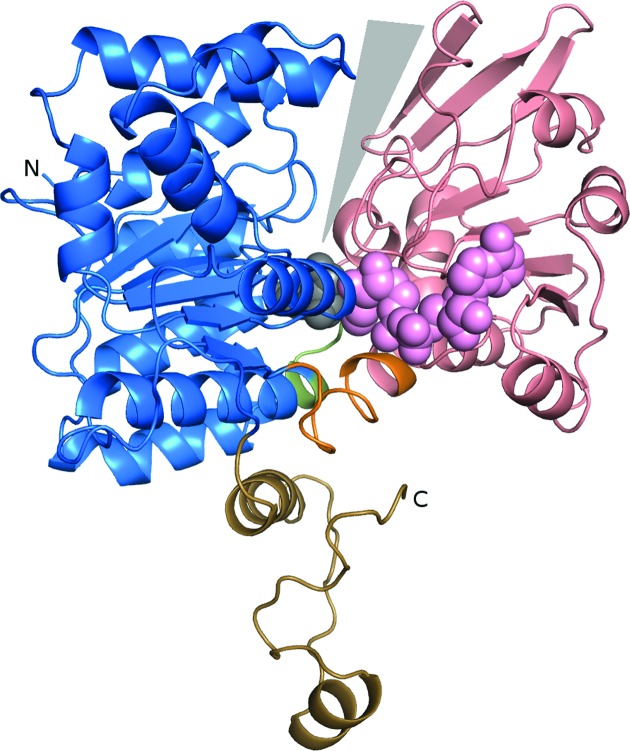
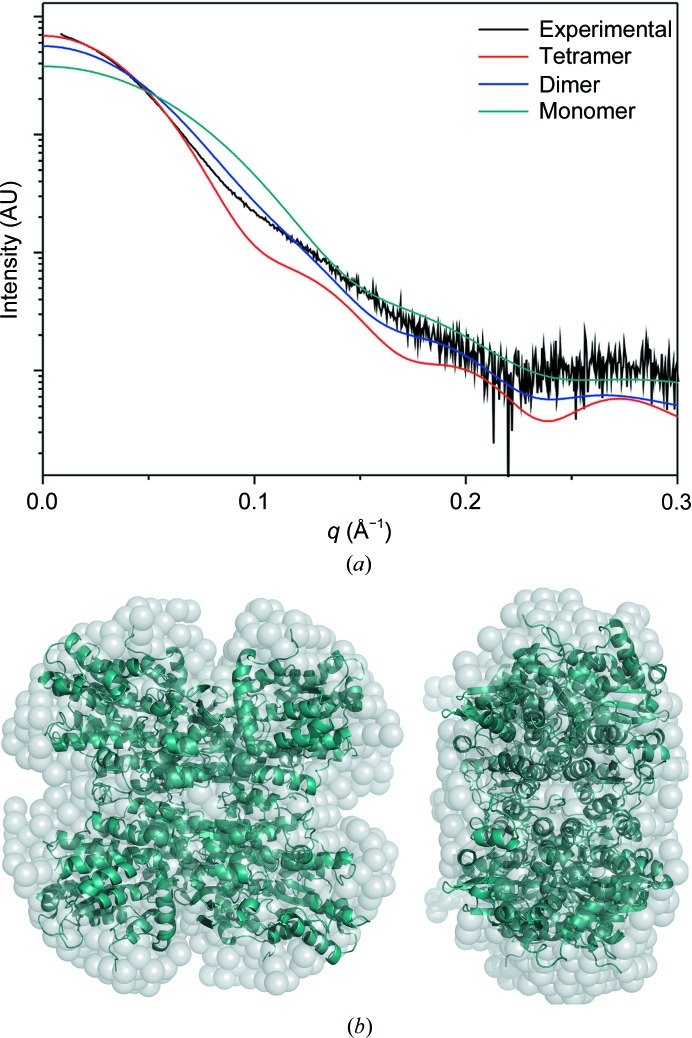
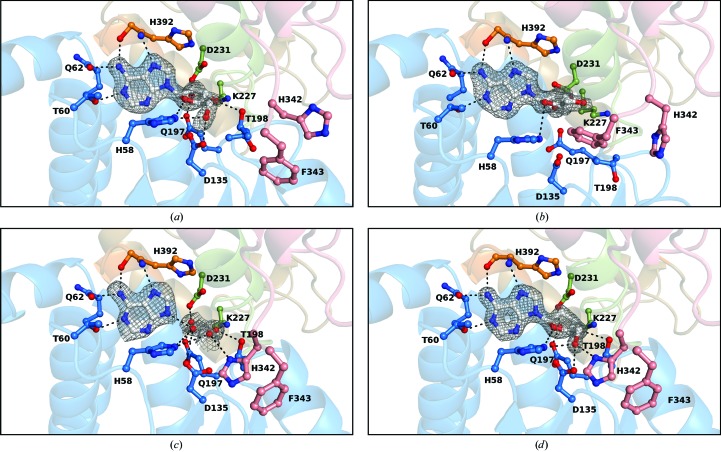
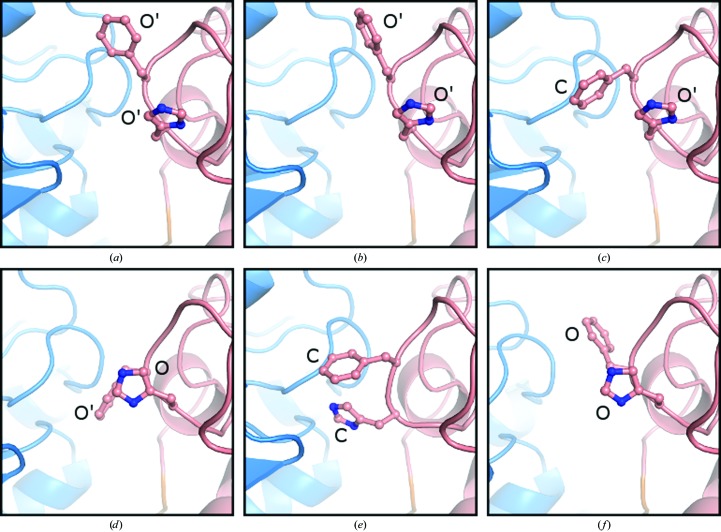
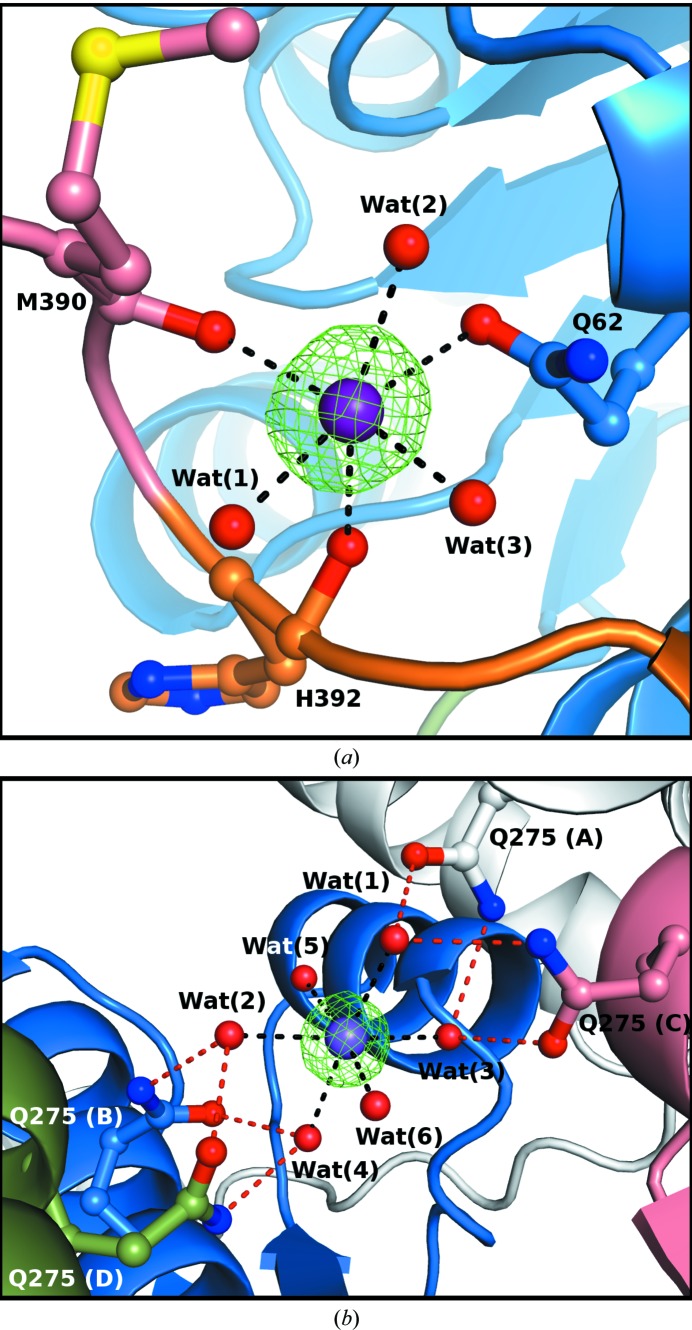
-Adenosyl-l-homocysteine hydrolase (SAHase) from the symbiotic bacterium (BeSAHase) was crystallized in four ligand complexes with (i) mixed adenosine (Ado) and cordycepin (Cord; 3'-deoxyadenosine), (ii) adenine (Ade), (iii) Ado and (iv) mixed 2'-deoxyadenosine (2'-dAdo) and Ade. The crystal structures were solved at resolutions of 1.84, 1.95, 1.95 and 1.54 Å, respectively. Only the Ade complex crystallized with a dimer in the asymmetric unit, while all of the other complexes formed a crystallographically independent tetrameric assembly. In the Ado/Cord complex, adenosine is found in three subunits while the fourth subunit has cordycepin bound in the active site. In the Ade and Ado complexes only these ligand molecules are present in the active sites. The 2'-dAdo/Ade complex has Ade bound in two subunits and 2'-dAdo bound in the other two subunits. The BeSAHase fold adopted a closed conformation in the complexes with Ado, Ade and 2'-dAdo, and a semi-open conformation when cordycepin occupied the active site. An SAHase-specific molecular gate, consisting of residues His342 and Phe343, behaves differently in the different complexes, but there is no simple correlation with the ligand type. Additional small-angle X-ray scattering (SAXS) experiments confirm the tetrameric state of the protein in solution. The main conclusions from this work are (i) that the SAHase subunit does not simply oscillate between two discrete conformational open/closed states in correlation with the absence/presence of a ligand in the active site, but can also assume an intermediate form for some ligands; (ii) that the shut/open state of the molecular gate in the access channel to the active site is not correlated in a simple way with the open/closed subunit conformation or empty/occupied status of the active site, but that a variety of states are possible even for the same ligand; (iii) that a cation (typically sodium) coordinated in an intersubunit loop rigidifies a molecular hinge and thus stabilizes the closed conformation; (iv) that BeSAHase in solution is a tetramer, consistent with the model derived from crystallography.
来自共生细菌的腺苷 - L - 高半胱氨酸水解酶(SAHase,即BeSAHase)在四种配体复合物中结晶,这些复合物分别为:(i)腺苷(Ado)和虫草素(Cord;3'-脱氧腺苷)的混合物,(ii)腺嘌呤(Ade),(iii)Ado,以及(iv)2'-脱氧腺苷(2'-dAdo)和Ade的混合物。晶体结构的解析分辨率分别为1.84、1.95、1.95和1.54 Å。只有Ade复合物在不对称单元中以二聚体形式结晶,而其他所有复合物均形成晶体学上独立的四聚体组装。在Ado/Cord复合物中,腺苷存在于三个亚基中,而第四个亚基的活性位点结合有虫草素。在Ade和Ado复合物中,只有这些配体分子存在于活性位点。2'-dAdo/Ade复合物中,Ade结合在两个亚基中,2'-dAdo结合在另外两个亚基中。BeSAHase折叠在与Ado、Ade和2'-dAdo形成的复合物中呈封闭构象,而当虫草素占据活性位点时呈半开放构象。由His342和Phe343残基组成的SAHase特异性分子门在不同复合物中的行为不同,但与配体类型没有简单的相关性。额外的小角X射线散射(SAXS)实验证实了该蛋白在溶液中的四聚体状态。这项工作的主要结论是:(i)SAHase亚基并非简单地根据活性位点中配体的有无在两种离散的构象开放/封闭状态之间振荡,对于某些配体还可以呈现中间形式;(ii)活性位点通道中分子门的关闭/开放状态与亚基的开放/封闭构象或活性位点的空/占据状态没有简单的相关性,即使对于相同的配体也可能存在多种状态;(iii)在亚基间环中配位的阳离子(通常是钠)使分子铰链刚性化,从而稳定封闭构象;(iv)溶液中的BeSAHase是四聚体,这与晶体学得出的模型一致。