Huang Yuxiang, Tan Hexin, Yu Jian, Chen Yue, Guo Zhiying, Wang Guoquan, Zhang Qinglei, Chen Junfeng, Zhang Lei, Diao Yong
School of Biomedical Sciences, Huaqiao UniversityQuanzhou, China.
School of Pharmacy, Quanzhou Medical CollegeQuanzhou, China.
Front Plant Sci. 2017 May 3;8:668. doi: 10.3389/fpls.2017.00668. eCollection 2017.
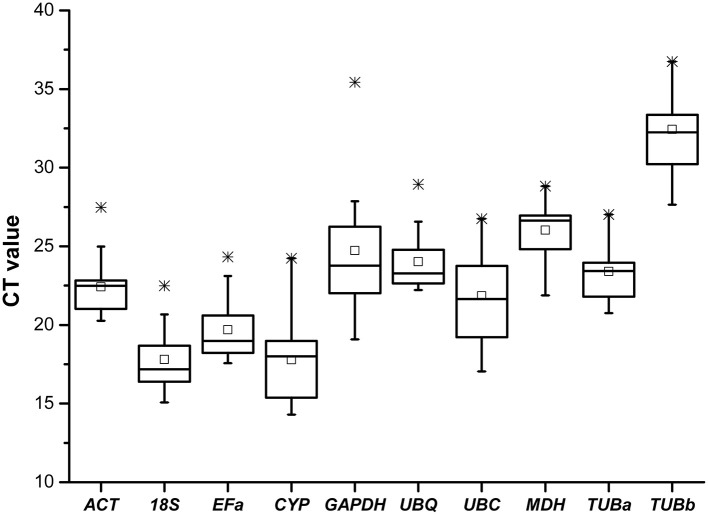
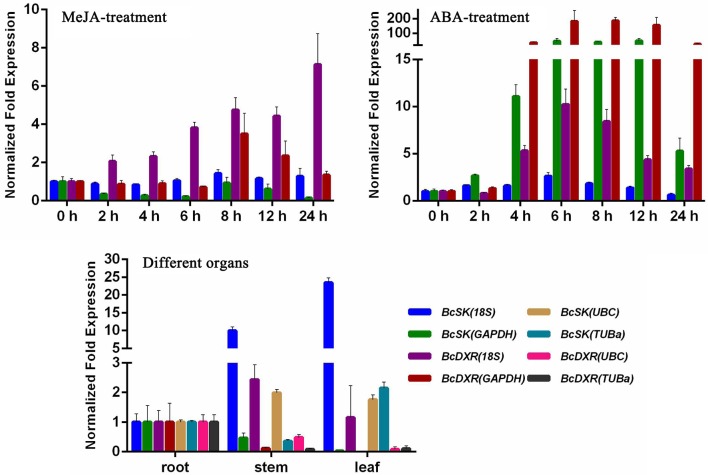
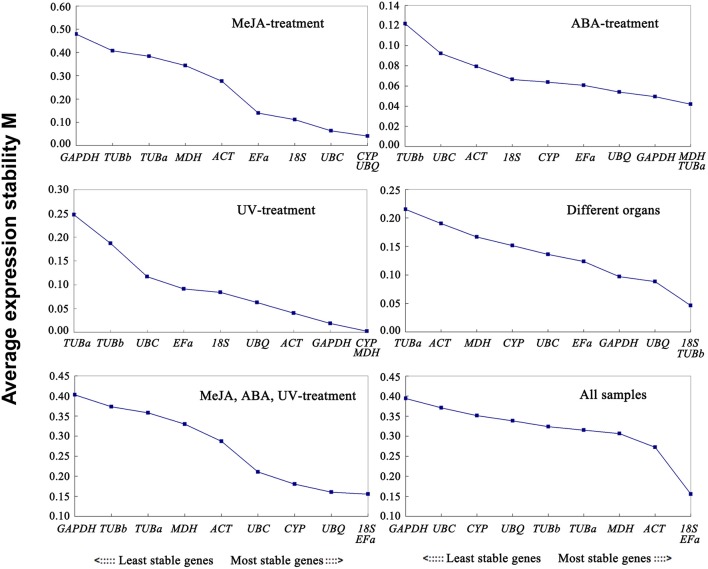
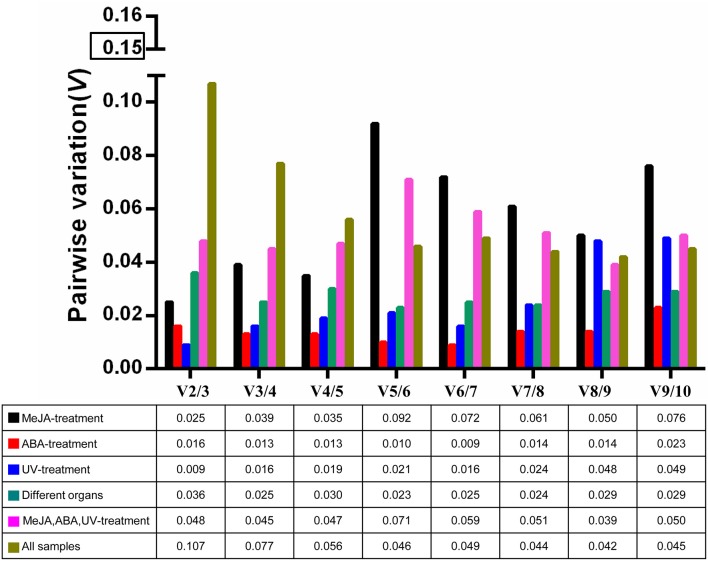
(Nees) Bremek, the plant source for many kinds of drugs in traditional Chinese medicine, is widely distributed in South China, especially in Fujian. Recent studies about mainly focus on its chemical composition and pharmacological effects, but further analysis of the plant's gene functions and expression is required to better understand the synthesis of its effective compounds. Real-time quantitative polymerase chain reaction (RT-qPCR) is a powerful method for gene expression analysis. It is necessary to select a suitable reference gene for expression normalization to ensure the accuracy of RT-qPCR results. Ten candidate reference genes were selected from the transcriptome datasets of in this study, and the expression stability was assessed across 60 samples representing different tissues and organs under various conditions, including ultraviolet (UV) irradiation, hormonal stimuli (jasmonic acid methyl ester and abscisic acid), and in different plant organs. By employing different algorithms, such as geNorm, NormFinder, and BestKeeper, which are complementary approaches based on different statistical procedures, rRNA was found to be the most stable gene under UV irradiation and hormonal stimuli, whereas ubiquitin-conjugating enzyme E2 was the best suitable gene for different plant organs. This novel study aimed to screen for suitable reference genes and corresponding primer pairs specifically designed for gene expression studies in , in particular for RT-qPCR analyses.
石荠苎是中药中多种药物的植物来源,广泛分布于中国南方,尤其是福建。最近关于它的研究主要集中在其化学成分和药理作用上,但需要进一步分析该植物的基因功能和表达,以更好地了解其有效化合物的合成。实时定量聚合酶链反应(RT-qPCR)是一种用于基因表达分析的强大方法。为确保RT-qPCR结果的准确性,有必要选择合适的内参基因进行表达标准化。本研究从石荠苎转录组数据集中选择了10个候选内参基因,并在60个代表不同组织和器官的样本中评估了它们在各种条件下的表达稳定性,这些条件包括紫外线(UV)照射、激素刺激(茉莉酸甲酯和脱落酸)以及不同的植物器官。通过使用不同的算法,如geNorm、NormFinder和BestKeeper,这些基于不同统计程序的互补方法,发现18S rRNA在UV照射和激素刺激下是最稳定的基因,而泛素结合酶E2是不同植物器官最合适的基因。这项新研究旨在筛选适合石荠苎基因表达研究的内参基因和专门设计用于RT-qPCR分析的相应引物对。