Department of Molecular and Cellular Biochemistry, School of Medicine, Kangwon National University, Chuncheon, Gangwon-do 24341, Republic of Korea.
Department of Immunology, School of Medicine, Kangwon National University, Chuncheon, Gangwon-do 24341, Republic of Korea.
Cell Death Dis. 2017 May 18;8(5):e2808. doi: 10.1038/cddis.2017.219.
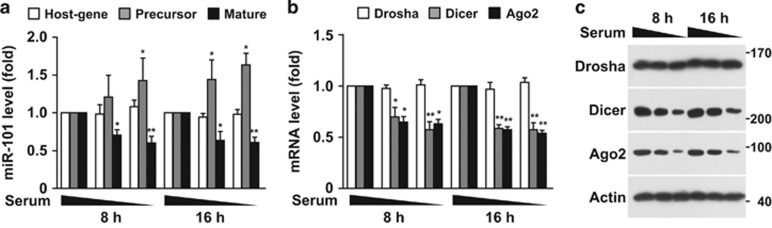
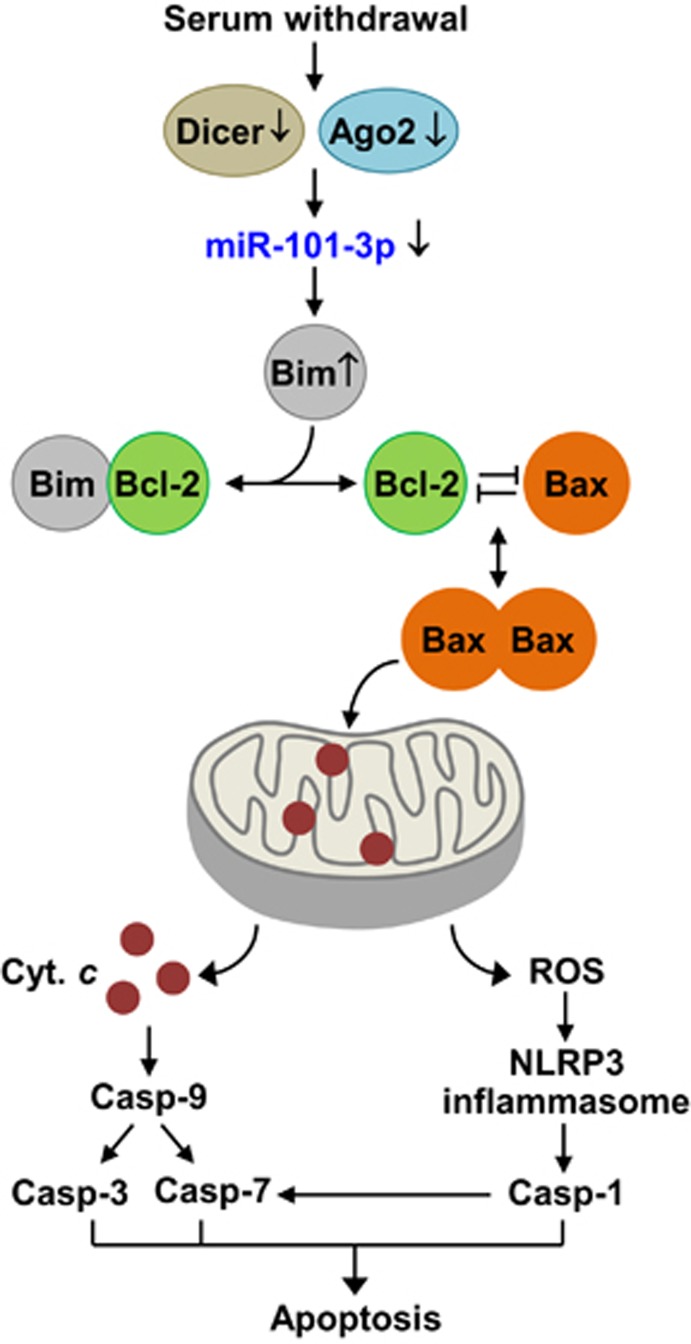
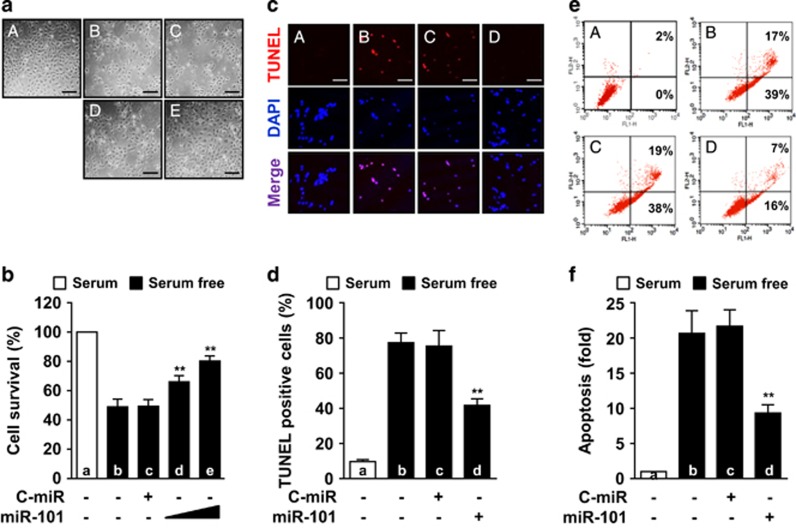
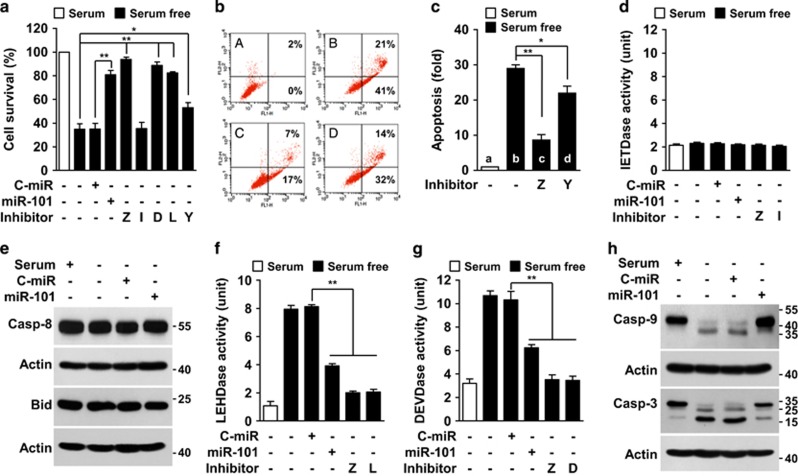
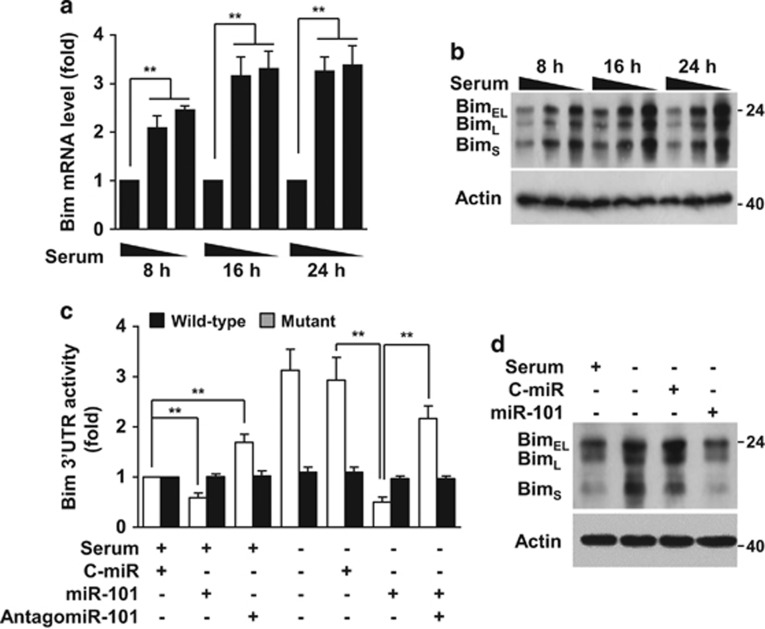
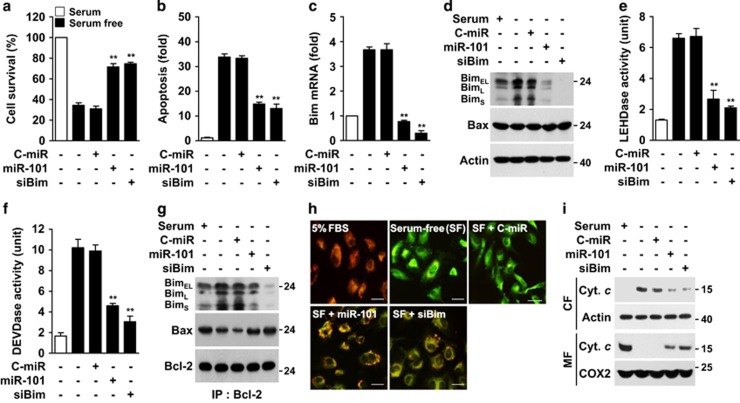
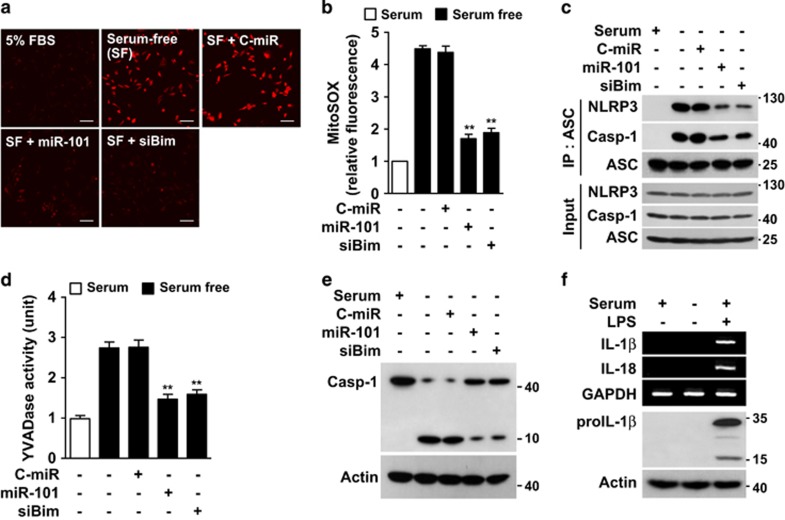
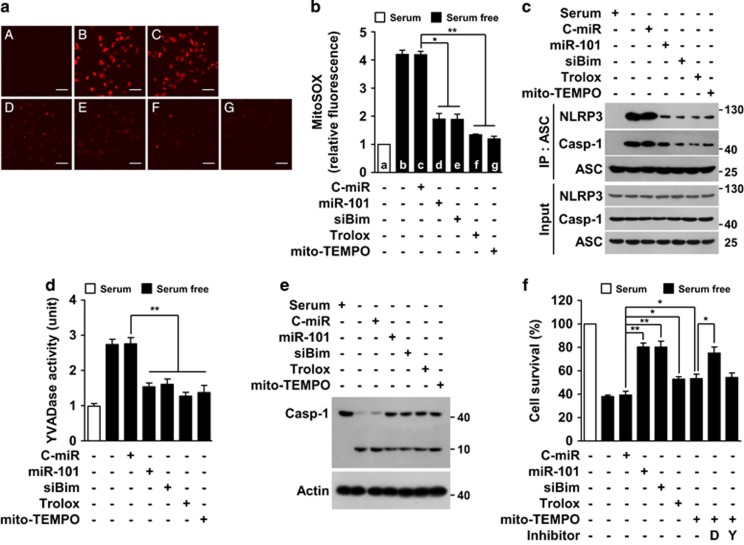
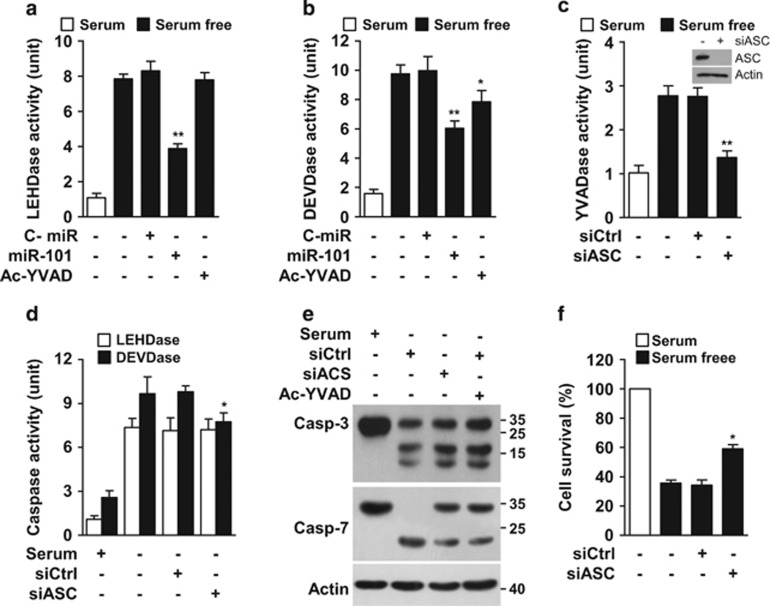
Serum deprivation or withdrawal induces apoptosis in endothelial cells, resulting in endothelial cell dysfunction that is associated with cardiovascular disease. However, there is still limited information on the role of miRNA in serum deprivation-induced apoptosis. Here we found that serum deprivation increased caspase-dependent apoptosis through miRNA-101-3p downregulation, without altering expression of its host gene RNA 3'-terminal phosphate cyclase-like 1, which was highly correlated with suppressed expression levels of Dicer and Argonaute 2 (Ago2), indicating that miR-101-3p is post-transcriptionally elevated in serum-deprived conditions. The decreased miR-101-3p caused elevated Bim expression by targeting its 3'-untranslated region (3'-UTR). This resulted in activation of the intrinsic pathway of apoptosis via interaction with Bcl-2, decreased mitochondrial membrane potential, cytochrome c release, mitochondrial reactive oxygen species (ROS) production, and caspase activation. These events were abrogated by miR-101-3p mimic and the proapoptotic Bim siRNA, which suggest a determinant role of the miR-101-3p/Bim axis in serum deprivation-induced apoptosis. The apoptosis induced by miR-101-3p-mediated Bim expression is mediated by both caspase-3 and -1, which are activated by two distinct intrinsic mechanisms, cytochrome c release and ROS-induced inflammasome activation, respectively. In other words, the antioxidant inhibited endothelial cell death mediated by caspase-1 that activated caspase-7, but not caspase-3. These findings provide mechanistic insight into a novel function of miR-101-3p in serum withdrawal-induced apoptosis triggered by activating two different intrinsic or mitochondrial apoptosis pathways, implicating miR-101-3p as a therapeutic target that limits endothelial cell death associated with vascular disorders.
血清剥夺或撤离会诱导内皮细胞凋亡,导致内皮细胞功能障碍,与心血管疾病相关。然而,miRNA 在血清剥夺诱导的细胞凋亡中的作用仍知之甚少。在这里,我们发现血清剥夺通过 miR-101-3p 的下调增加了 caspase 依赖性凋亡,而不改变其宿主基因 RNA 3′-末端磷酸环化酶样 1 的表达,后者与 Dicer 和 Argonaute 2 (Ago2) 的表达水平降低高度相关,表明 miR-101-3p 在血清剥夺条件下是转录后升高的。减少的 miR-101-3p 通过靶向其 3′-非翻译区 (3′-UTR) 引起 Bim 表达的升高。这通过与 Bcl-2 的相互作用导致凋亡的内在途径的激活,导致线粒体膜电位降低、细胞色素 c 释放、线粒体活性氧 (ROS) 产生和半胱天冬酶激活。这些事件被 miR-101-3p 模拟物和促凋亡的 Bim siRNA 阻断,这表明 miR-101-3p/Bim 轴在血清剥夺诱导的凋亡中起着决定作用。由 miR-101-3p 介导的 Bim 表达诱导的凋亡是由 caspase-3 和 -1 介导的,它们分别通过两种不同的内在机制(细胞色素 c 释放和 ROS 诱导的炎性小体激活)被激活。换句话说,抗氧化剂抑制了 caspase-1 激活的 caspase-7 介导的内皮细胞死亡,但不抑制 caspase-3。这些发现为 miR-101-3p 在激活两种不同的内在或线粒体凋亡途径引起的血清撤离诱导的凋亡中的新功能提供了机制上的见解,表明 miR-101-3p 是一种治疗靶点,可限制与血管疾病相关的内皮细胞死亡。