Xin Cuiyu, Xia Jiejing, Liu Yulan, Zhang Yongdong
Department of Geriatric Psychiatry, Qingdao Mental Health Center, Qingdao City, Shandong Province 266034, People's Republic of China.
Department of Psychosis Ⅶ, Qingdao Mental Health Center, Qingdao City, Shandong Province 266034, People's Republic of China.
Neuropsychiatr Dis Treat. 2020 Apr 23;16:1073-1083. doi: 10.2147/NDT.S241136. eCollection 2020.
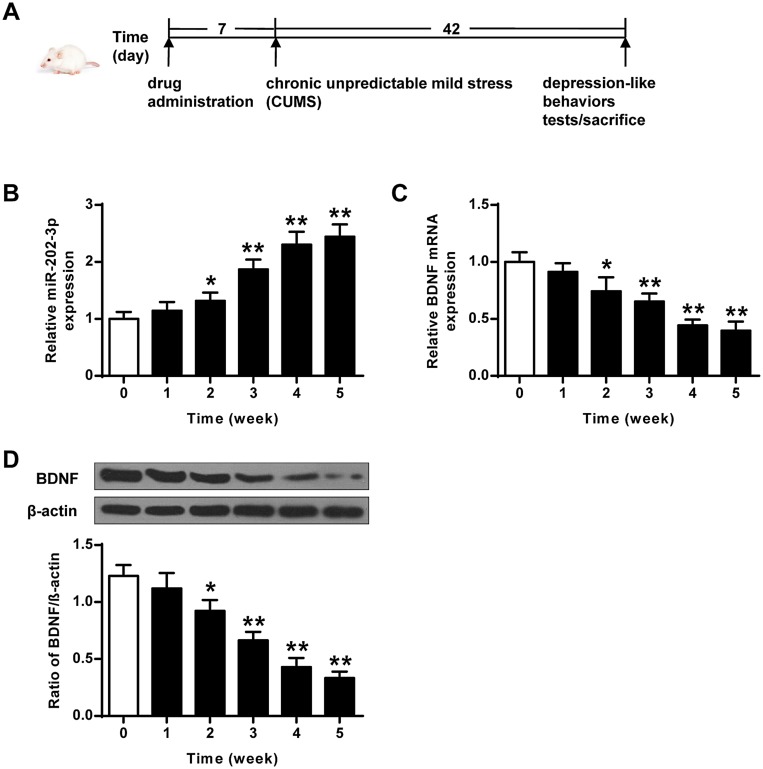
Brain-derived neurotrophic factor (BDNF) and microRNA (miRNA) play crucial roles in the etiology of depression. However, the molecular mechanisms underlying this disease are not fully understood. The primary objective of this study was to investigate the relationship between miR-202-3p and BDNF in a chronic unpredictable mild stress (CUMS) model.
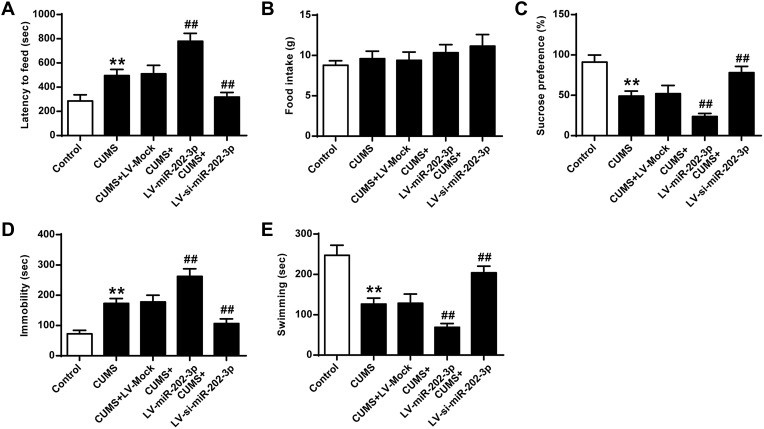
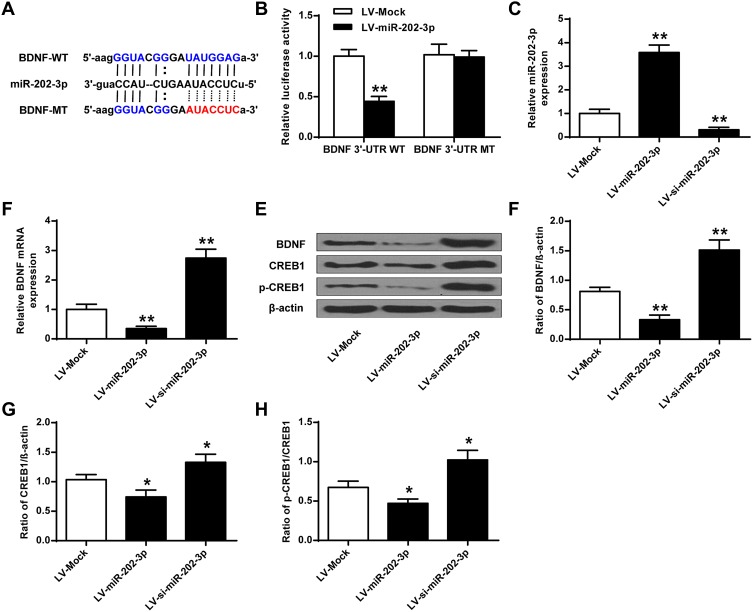
Depression model was established with chronic mild unpredictable mild stimulation (CUMS) combined with solitary feeding. The expression levels of miR-202-3p and BDNF in rat hippocampus were measured by qRT-PCR. The novelty inhibition feeding test (NSFT), sucrose preference test (SPT), and forced swimming test (FST) were used to evaluate the functions of miR-202-3p and BDNF. Target gene prediction and screening and luciferase reporter assay were used to verify the target of miR-202-3p. The expression levels of BNDF, CREB1 and p-CREB1 were detected by Western blot.
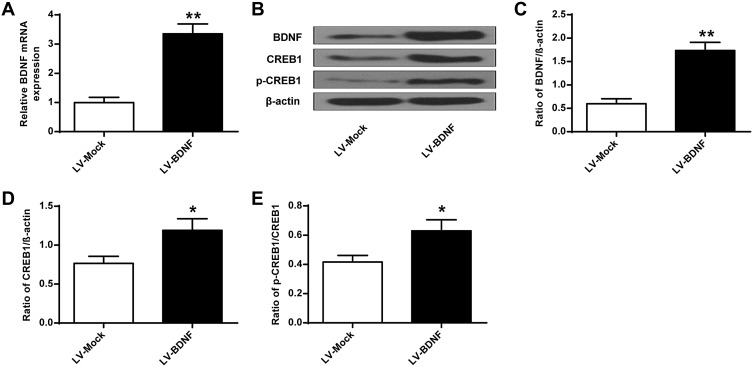
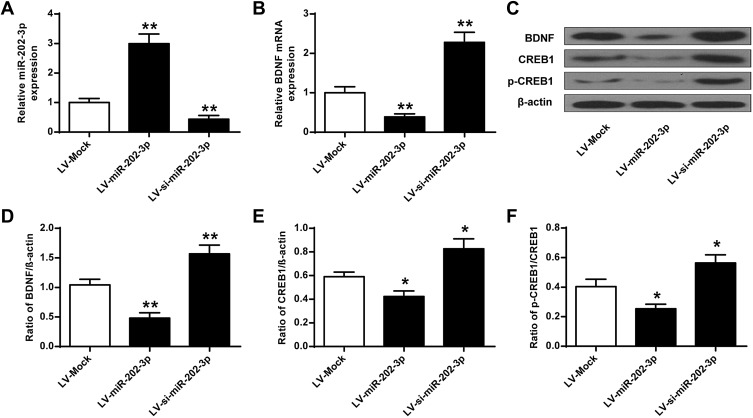
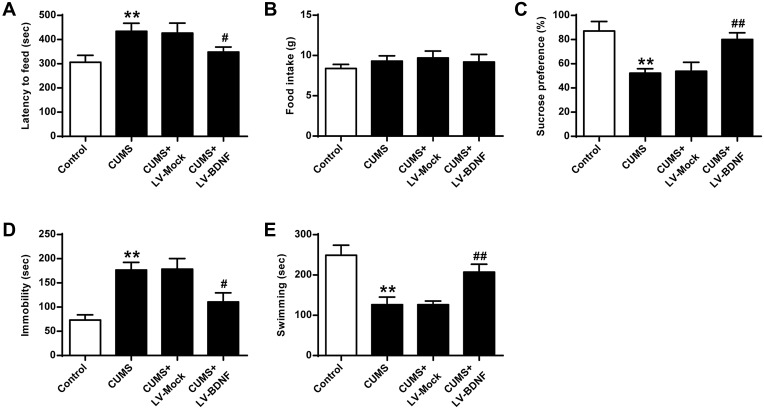
Upregulation of miR-202-3p was associated with decreased expression of BDNF in the hippocampus of the CUMS model. Antidepressant was observed when LV-BDNF or LV-si-miR-202-3p was injected into the hippocampus. In addition, in the rat hippocampus and cultured nerve cells, the expression levels of BDNF and cyclic AMP response element binding protein 1 (CREB1), which is a target gene of BDNF, were reduced after LV-miR-202-3p injection. Overexpression of miR-202-3p aggravated depressive behavior and decreased the expression levels of BDNF. Luciferase reporter assay also confirmed that BDNF was a target of miR-202-3p.
Silencing miR-202-3p can reduce the damage to hippocampal nerve in CUMS rats; the mechanism may be related to the upregulation of BNDF expression. miR-202-3p may be an effective target for the treatment of depression.
脑源性神经营养因子(BDNF)和微小RNA(miRNA)在抑郁症的病因学中发挥着关键作用。然而,该疾病的分子机制尚未完全明确。本研究的主要目的是在慢性不可预测轻度应激(CUMS)模型中探究miR-202-3p与BDNF之间的关系。
采用慢性轻度不可预测温和刺激(CUMS)联合孤养建立抑郁症模型。通过qRT-PCR检测大鼠海马中miR-202-3p和BDNF的表达水平。采用新奇抑制摄食试验(NSFT)、蔗糖偏好试验(SPT)和强迫游泳试验(FST)评估miR-202-3p和BDNF的功能。通过靶基因预测筛选和荧光素酶报告基因检测验证miR-202-3p的靶标。采用蛋白质免疫印迹法检测BDNF、CREB1和p-CREB1的表达水平。
在CUMS模型海马中,miR-202-3p的上调与BDNF表达降低有关。向海马注射LV-BDNF或LV-si-miR-202-3p时可观察到抗抑郁作用。此外,在大鼠海马和培养的神经细胞中,注射LV-miR-202-3p后,BDNF及其靶基因环磷腺苷反应元件结合蛋白1(CREB1)的表达水平降低。miR-202-3p的过表达加重了抑郁行为并降低了BDNF的表达水平。荧光素酶报告基因检测也证实BDNF是miR-202-3p的靶标。
沉默miR-202-3p可减轻CUMS大鼠海马神经损伤;其机制可能与BDNF表达上调有关。miR-202-3p可能是治疗抑郁症的有效靶点。