Monash University, Clayton Campus, Melbourne, Victoria 3800, Australia.
University of Warwick, Kirby Corner Road, Coventry CV4 8UW, UK.
Nat Rev Cardiol. 2017 Sep;14(9):550-559. doi: 10.1038/nrcardio.2017.70. Epub 2017 May 18.
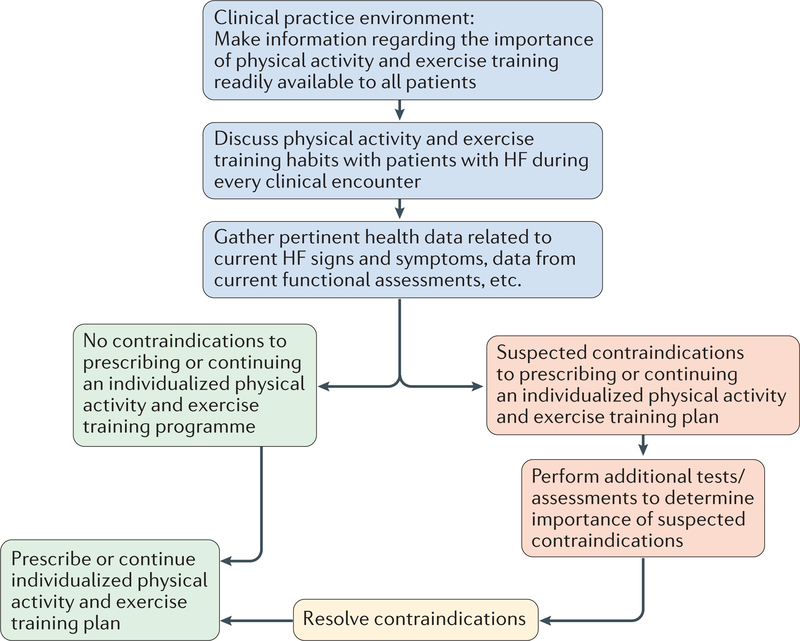
Heart failure (HF) is a common end point for numerous cardiovascular conditions, including coronary artery disease, valvular disease, and hypertension. HF predominantly affects older individuals (aged ≥70 years), particularly those living in developed countries. The pathophysiological sequelae of HF progression have a substantial negative effect on physical function. Diminished physical function in older patients with HF, which is the result of combined disease-related and age-related effects, has important implications on health. A large body of research spanning several decades has demonstrated the safety and efficacy of regular physical activity in improving outcomes among the HF population, regardless of age, sex, or ethnicity. However, patients with HF, especially those who are older, are less likely to engage in regular exercise training compared with the general population. To improve initiation of regular exercise training and subsequent long-term compliance, there is a need to rethink the dialogue between clinicians and patients. This Review discusses the need to improve physical function and exercise habits in patients with HF, focusing on the older population.
心力衰竭(HF)是多种心血管疾病的共同终点,包括冠状动脉疾病、瓣膜疾病和高血压。HF 主要影响老年人(年龄≥70 岁),尤其是生活在发达国家的老年人。HF 进展的病理生理后果对身体功能有很大的负面影响。HF 老年患者身体功能下降,是疾病相关和年龄相关影响共同作用的结果,对健康有重要影响。几十年来的大量研究表明,定期体育活动对于改善 HF 人群的预后是安全且有效的,无论年龄、性别或种族如何。然而,与普通人群相比,HF 患者,尤其是老年患者,更不可能进行定期运动训练。为了提高定期运动训练的开始率和随后的长期依从性,需要重新思考临床医生和患者之间的对话。本综述讨论了改善 HF 患者,尤其是老年患者的身体功能和运动习惯的必要性。