Niedermeier Martin, Einwanger Jürgen, Hartl Arnulf, Kopp Martin
Department of Sport Science, University of Innsbruck, Innsbruck, Austria.
Austrian Alpine Association, Innsbruck, Austria.
PLoS One. 2017 May 16;12(5):e0177719. doi: 10.1371/journal.pone.0177719. eCollection 2017.
Affective responses during physical activity (PA) are important for engagement in PA programs and for adherence to a physically active lifestyle. Little is known about the affective responses to PA bouts lasting longer than 45 minutes. Therefore, the aims of the present study were to analyse acute effects on affective responses of a three-hour outdoor PA intervention (mountain hiking) compared to a sedentary control situation and to an indoor treadmill condition.
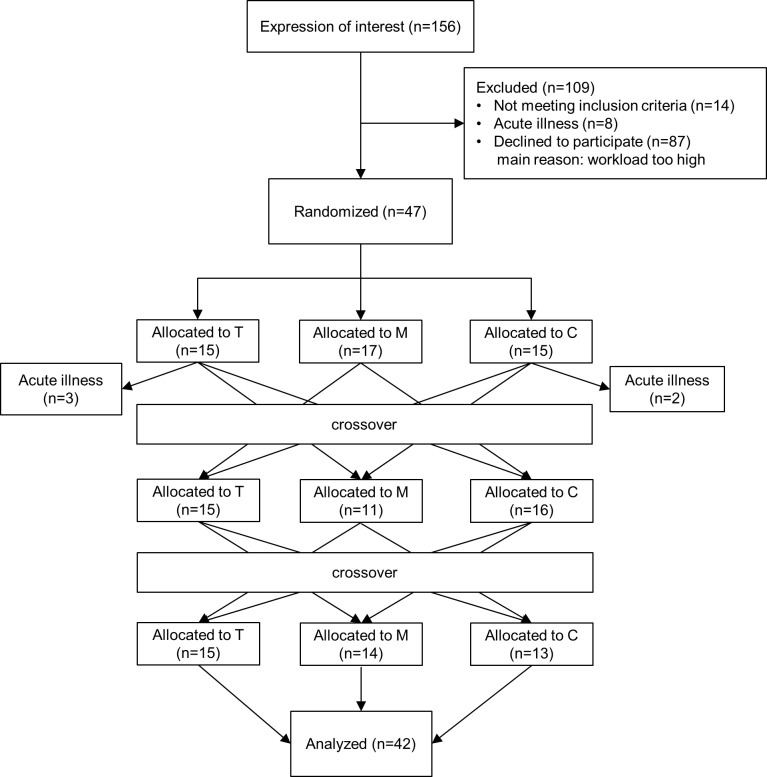
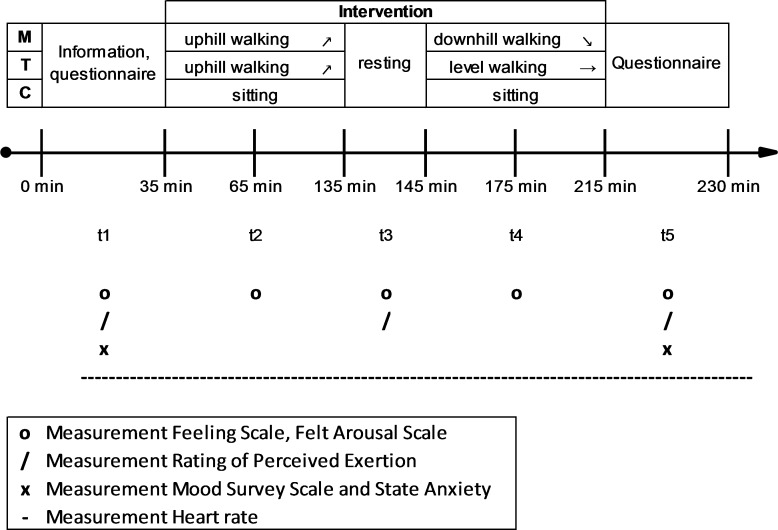
Using a randomized crossover design, 42 healthy participants were randomly exposed to three different conditions: outdoor mountain hiking, indoor treadmill walking, and sedentary control situation (approximately three hours each). Measures included the Feeling Scale, Felt Arousal Scale and a Mood Survey Scale. Repeated measures ANOVAs were used to analyse differences between the conditions.
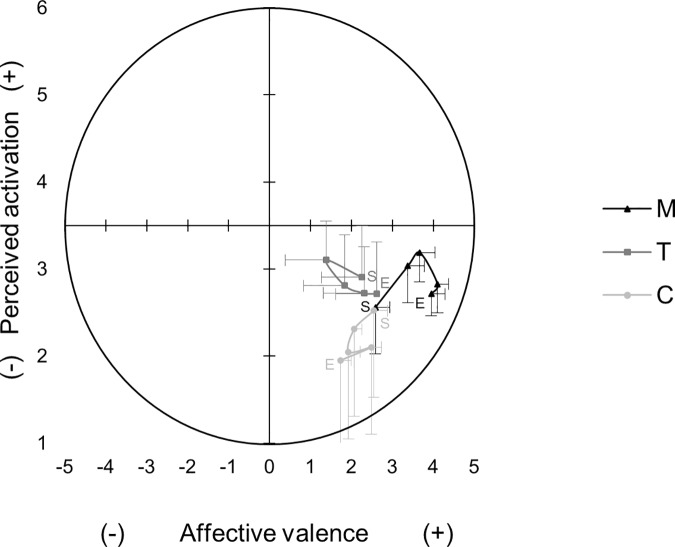
Compared to the control situation, the participants showed a significant increase in affective valence (d = 1.21, p < .001), activation (d = 0.81, p = .004), elation (d = 1.07, p < .001), and calmness (d = 0.84, p = .004), and a significant decrease in fatigue (d = -1.19, p < .001) and anxiety (d = -.79, p < .001) after mountain hiking. Outdoor mountain hiking showed significantly greater positive effects on affective valence, activation, and fatigue compared to indoor treadmill walking.
The results indicate that a three-hour PA intervention (mountain hiking) elicits higher positive and lower negative affective responses compared to a sedentary control situation and to an indoor PA condition. Outdoor mountain hiking can be recommended by health professionals as a form of PA with the potential to positively influence affective responses.
ClinicalTrials.gov NCT02853760. https://clinicaltrials.gov/. Date of registration: 08/02/2016 (retrospectively registered). Date of enrolment of the first participant to the trial: 05/01/2014.
体育活动(PA)过程中的情感反应对于参与PA项目以及坚持积极的生活方式至关重要。对于持续时间超过45分钟的PA活动的情感反应,我们了解甚少。因此,本研究的目的是分析与久坐对照情况和室内跑步机运动条件相比,三小时户外PA干预(登山)对情感反应的急性影响。
采用随机交叉设计,42名健康参与者被随机暴露于三种不同条件下:户外登山、室内跑步机行走和久坐对照情况(每种情况约三小时)。测量指标包括情感量表、唤醒感量表和情绪调查问卷量表。采用重复测量方差分析来分析不同条件之间的差异。
与对照情况相比,参与者在登山后情感效价显著增加(d = 1.21,p <.001)、激活水平显著增加(d = 0.81,p =.004)、愉悦感显著增加(d = 1.07,p <.001)、平静感显著增加(d = 0.84,p =.004),疲劳感显著降低(d = -1.19,p <.001)和焦虑感显著降低(d = -.79,p <.001)。与室内跑步机行走相比,户外登山对情感效价、激活水平和疲劳感的积极影响显著更大。
结果表明,与久坐对照情况和室内PA条件相比,三小时的PA干预(登山)会引发更高的积极情感反应和更低的消极情感反应。健康专业人员可以推荐户外登山作为一种PA形式,它有可能对情感反应产生积极影响。
ClinicalTrials.gov NCT02853760。https://clinicaltrials.gov/。注册日期:2016年2月8日(追溯注册)。试验第一名参与者的入组日期:2014年1月5日。