Wang Hai, Li Shengyan, Teng Shouzhen, Liang Haisheng, Xin Hongjia, Gao Hongjiang, Huang Dafang, Lang Zhihong
Biotechnology Research Institute, Chinese Academy of Agricultural Sciences, Beijing, P. R. China.
PLoS One. 2017 May 16;12(5):e0177739. doi: 10.1371/journal.pone.0177739. eCollection 2017.
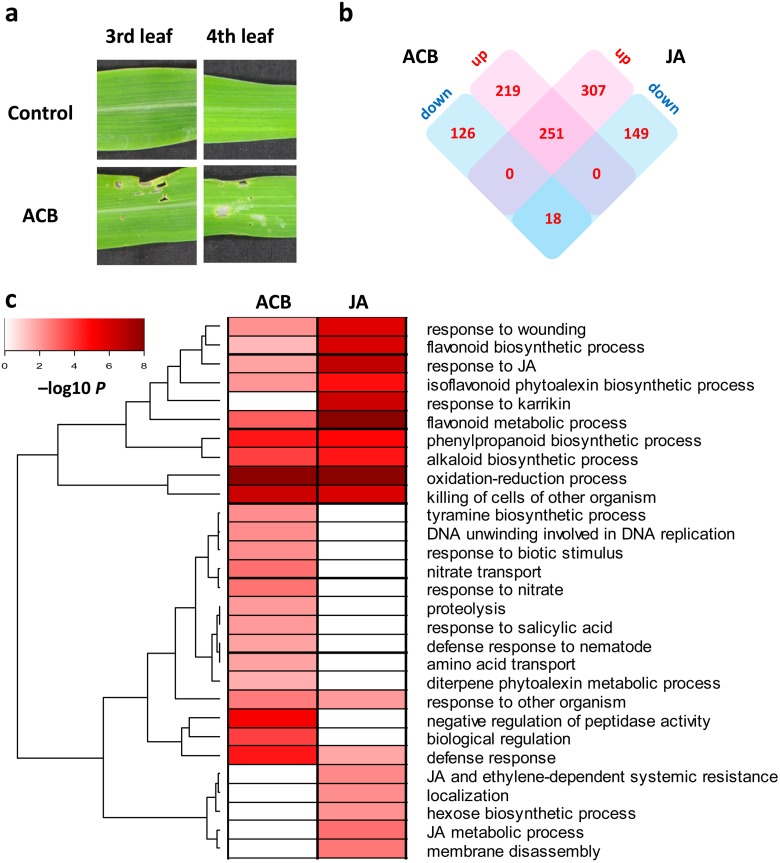
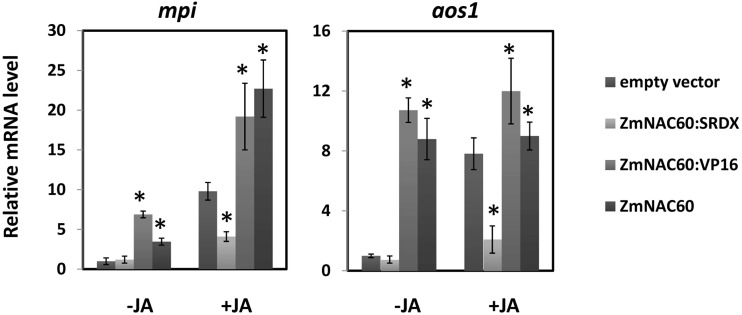
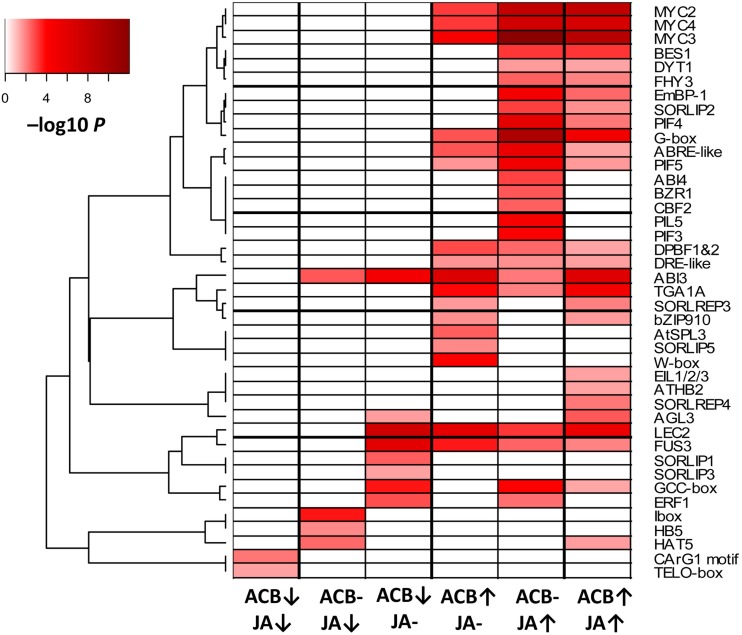
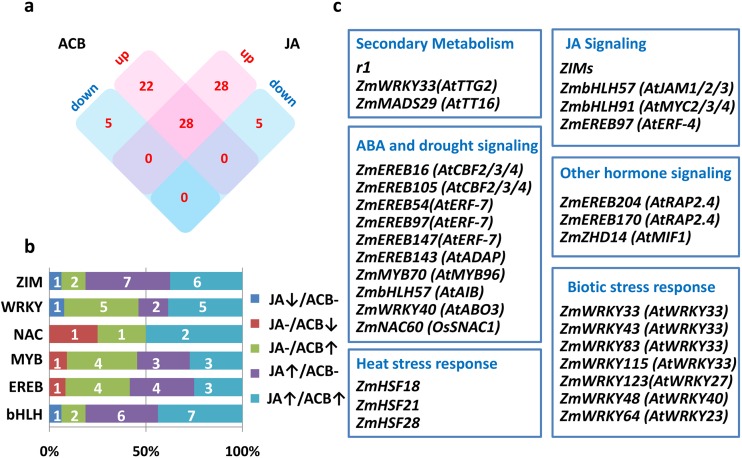
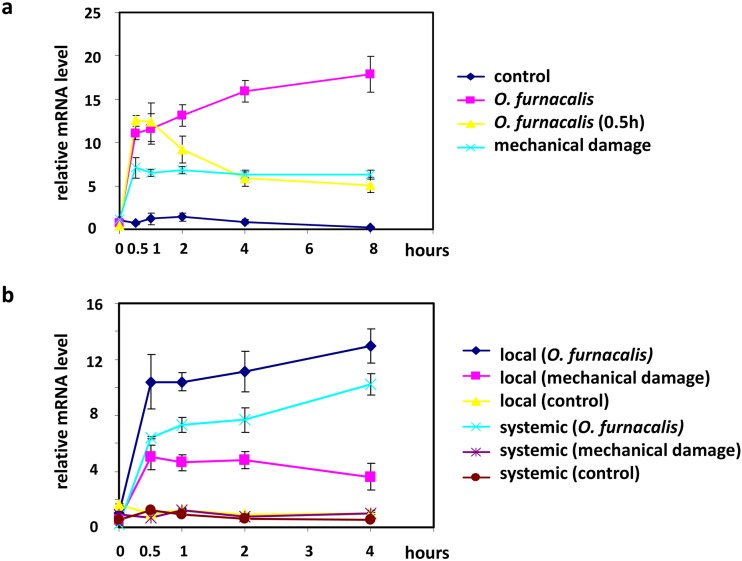
Chewing insects cause severe yield losses in crop production worldwide. Crop plants counteract chewing insects by transcriptionally promoting a repertoire of defense gene products that are either toxic to, or attractive to the natural enemies of, pest insects. However, the complexity of the transcriptional reprogramming in plant defense response against chewing insects is still not well understood. In this study, the genome-wide early responses in maize seedlings to Asian corn borer (ACB, Ostrinia furnacalis) and also to jasmonic acid(JA), the pivotal phytohormone controlling plant defense response against herbivory, were transcriptionally profiled by RNA-Seq. Clustering of differentially expressed genes (DEGs) along with functional enrichment analysis revealed important biological processes regulated in response to ACB infestation and/or jasmonic acid. Moreover, DEGs with distinct expression patterns were differentially enriched with diverse families of cis-elements on their promoters. Multiple inventories of differentially expressed transcription factors (DETFs) in each DEG group were also analyzed. A transient expression assay using transfected maize protoplastswas established to examine the potential roles of DETFs in maize defense response and JA signaling, and this was used to show that ZmNAC60, an ACB- and JA-inducible DETF, represented a novel positive regulator of JA and defense pathway genes. This study provided a comprehensive transcriptional picture for the early dynamics of maize defense responses and JA signaling, and the identification of DETFs offered potential targets for further functional genomics investigation of master regulators in maize defense responses against herbivory.
咀嚼式昆虫在全球农作物生产中造成严重的产量损失。作物通过转录促进一系列防御基因产物来对抗咀嚼式昆虫,这些产物要么对害虫有毒,要么对害虫的天敌有吸引力。然而,植物对咀嚼式昆虫防御反应中转录重编程的复杂性仍未得到充分理解。在本研究中,通过RNA测序对玉米幼苗对亚洲玉米螟(ACB,Ostrinia furnacalis)以及对茉莉酸(JA)(控制植物对食草动物防御反应的关键植物激素)的全基因组早期反应进行了转录分析。差异表达基因(DEG)的聚类以及功能富集分析揭示了响应ACB侵染和/或茉莉酸而调控的重要生物学过程。此外,具有不同表达模式的DEG在其启动子上不同程度地富集了不同家族的顺式元件。还分析了每个DEG组中差异表达转录因子(DETF)的多个清单。利用转染的玉米原生质体建立了瞬时表达试验,以研究DETF在玉米防御反应和JA信号传导中的潜在作用,结果表明ZmNAC60(一种受ACB和JA诱导的DETF)代表JA和防御途径基因的新型正调控因子。本研究为玉米防御反应和JA信号传导的早期动态提供了全面的转录图谱,DETF的鉴定为进一步对玉米抗食草动物防御反应中的主调控因子进行功能基因组学研究提供了潜在靶点。