Vargas-Blanco Diego, Lynn Aung, Rosch Jonah, Noreldin Rony, Salerni Anthony, Lambert Christopher, Rao Reeta P
Life Science and Bioengineering Center, Worcester Polytechnic Institute, 60 Prescott Street, Worcester, MA, 01609, USA.
Ann Clin Microbiol Antimicrob. 2017 May 19;16(1):41. doi: 10.1186/s12941-017-0215-z.
Hospital acquired fungal infections are defined as "never events"-medical errors that should never have happened. Systemic Candida albicans infections results in 30-50% mortality rates. Typically, adhesion to abiotic medical devices and implants initiates such infections. Efficient adhesion initiates formation of aggressive biofilms that are difficult to treat. Therefore, inhibitors of adhesion are important for drug development and likely to have a broad spectrum efficacy against many fungal pathogens. In this study we further the development of a small molecule, Filastatin, capable of preventing C. albicans adhesion. We explored the potential of Filastatin as a pre-therapeutic coating of a diverse range of biomaterials.
Filastatin was applied on various biomaterials, specifically bioactive glass (cochlear implants, subcutaneous drug delivery devices and prosthetics); silicone (catheters and other implanted devices) and dental resin (dentures and dental implants). Adhesion to biomaterials was evaluated by direct visualization of wild type C. albicans or a non-adherent mutant edt1 that were stained or fluorescently tagged. Strains grown overnight at 30 °C were harvested, allowed to attach to surfaces for 4 h and washed prior to visualization. The adhesion force of C. albicans cells attached to surfaces treated with Filastatin was measured using Atomic Force Microscopy. Effectiveness of Filastatin was also demonstrated under dynamic conditions using a flow cell bioreactor. The effect of Filastatin under microfluidic flow conditions was quantified using electrochemical impedance spectroscopy. Experiments were typically performed in triplicate.
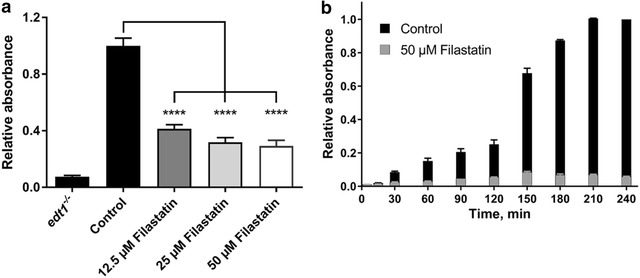
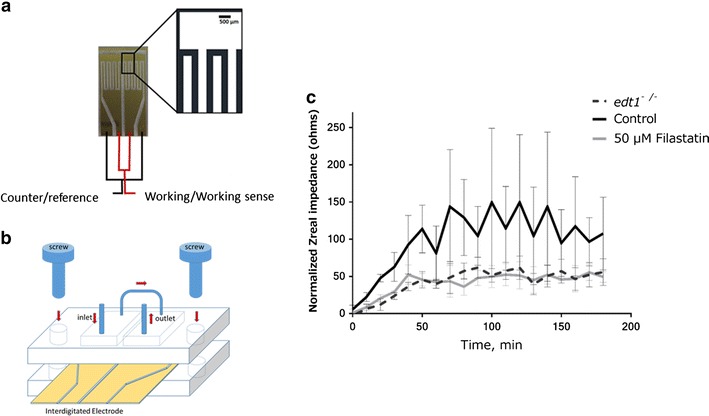
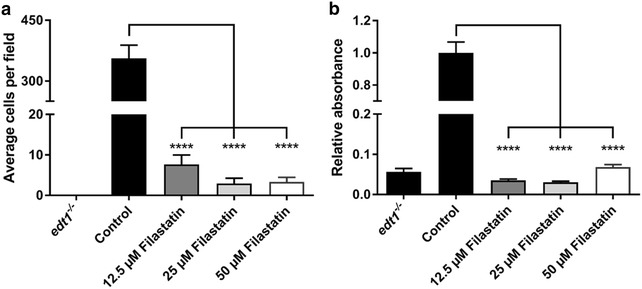
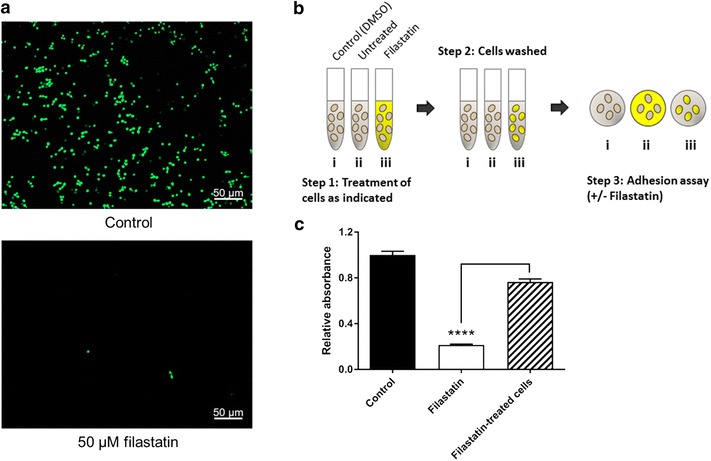
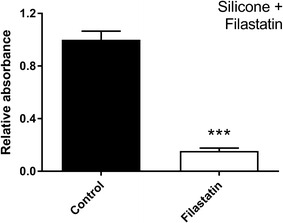
Treatment with Filastatin significantly inhibited the ability of C. albicans to adhere to bioactive glass (by 99.06%), silicone (by 77.27%), and dental resin (by 60.43%). Atomic force microcopy indicated that treatment with Filastatin decreased the adhesion force of C. albicans from 0.23 to 0.017 nN. Electrochemical Impedance Spectroscopy in a microfluidic device that mimic physiological flow conditions in vivo showed lower impedance for C. albicans when treated with Filastatin as compared to untreated control cells, suggesting decreased attachment. The anti-adhesive properties were maintained when Filastatin was included in the preparation of silicone materials.
We demonstrate that Filastatin treated medical devices prevented adhesion of Candida, thereby reducing nosocomial infections.
医院获得性真菌感染被定义为“绝不应该发生的事件”——即医疗失误。全身性白色念珠菌感染导致的死亡率为30%-50%。通常,白色念珠菌黏附于非生物医学设备和植入物会引发此类感染。有效的黏附会引发难以治疗的侵袭性生物膜的形成。因此,黏附抑制剂对于药物开发很重要,并且可能对许多真菌病原体具有广谱疗效。在本研究中,我们进一步研发了一种能够防止白色念珠菌黏附的小分子Filastatin。我们探索了Filastatin作为多种生物材料治疗前涂层的潜力。
将Filastatin应用于各种生物材料,具体包括生物活性玻璃(人工耳蜗、皮下给药装置和假体);硅酮(导管和其他植入装置)和牙科树脂(假牙和牙种植体)。通过直接观察野生型白色念珠菌或经染色或荧光标记的非黏附突变体edt1对生物材料的黏附情况来进行评估。将在30°C下过夜培养的菌株收获后,使其附着于表面4小时,然后在观察前进行清洗。使用原子力显微镜测量附着于经Filastatin处理的表面的白色念珠菌细胞的黏附力。还使用流动池生物反应器在动态条件下证明了Filastatin的有效性。使用电化学阻抗谱对微流控流动条件下Filastatin的效果进行定量。实验通常重复进行三次。
用Filastatin处理显著抑制了白色念珠菌黏附于生物活性玻璃(抑制率达99.06%)、硅酮(抑制率达77.27%)和牙科树脂(抑制率达60.43%)的能力。原子力显微镜显示,用Filastatin处理后,白色念珠菌的黏附力从0.23 nN降至0.017 nN。在模拟体内生理流动条件的微流控装置中进行的电化学阻抗谱显示,与未处理的对照细胞相比,用Filastatin处理的白色念珠菌的阻抗更低,表明其附着减少。当在硅酮材料的制备中加入Filastatin时,其抗黏附特性得以保持。
我们证明,经Filastatin处理的医疗设备可防止念珠菌黏附,从而减少医院感染。