Sahoo Prasanta Kumar, Fiaz Shamsa
P.G. Dept. of Shalakya Tantra, National Institute of Ayurveda, Jaipur, India.
P.G. Dept. of Shalakya Tantra, National Institute of Ayurveda, Jaipur, India.
J Ayurveda Integr Med. 2017 Apr-Jun;8(2):122-131. doi: 10.1016/j.jaim.2016.12.003. Epub 2017 May 16.
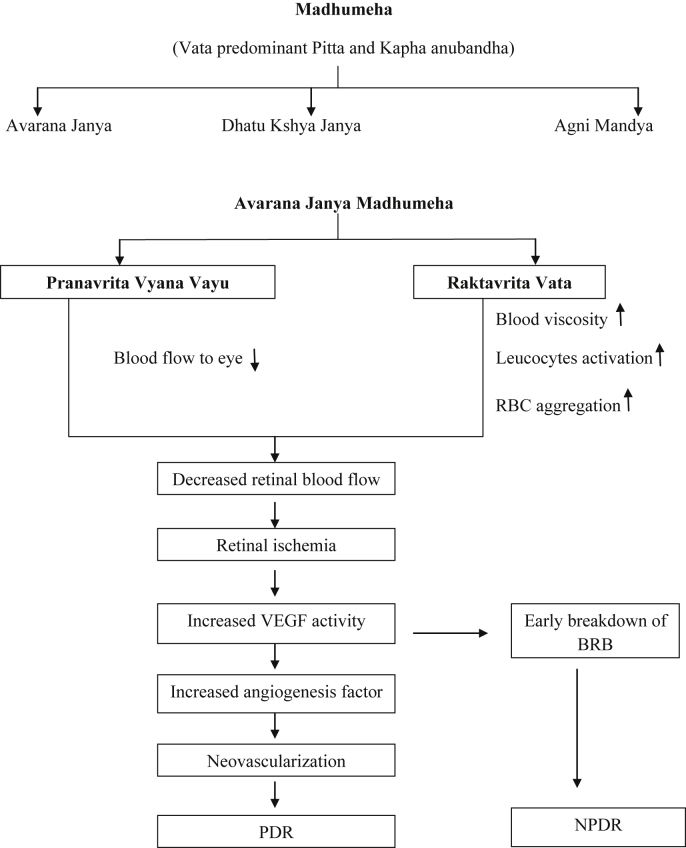
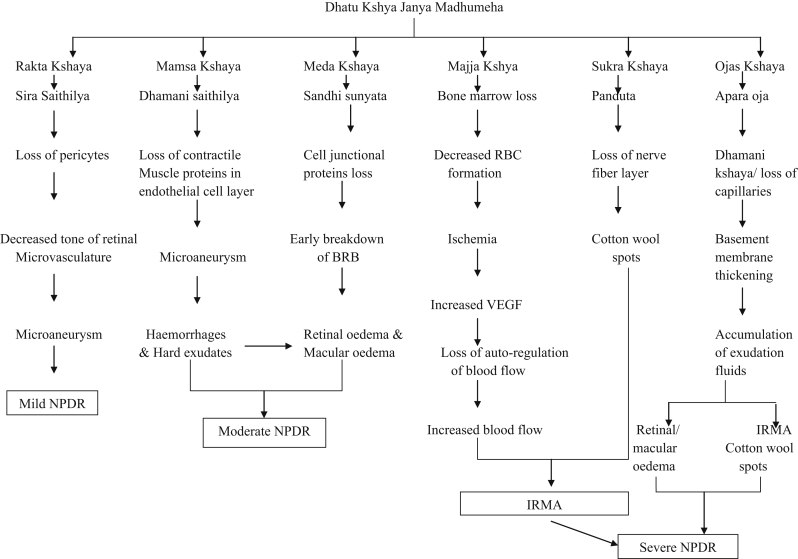
Inclusion of Prameha among the eight major disorders in Charaka Samhita shows the importance of the disease given by ancient seers. The risk of development of blindness in diabetics increases by 20-25 times as compared to the normal population. High prevalence rate of Diabetic Retinopathy (34.6%), proliferative diabetic retinopathy (7%), diabetic macular edema (6.8%), and Vision threatening Diabetic retinopathy (10.2%) in diabetics was great concerns which led to search and analyze the disease process on the basis of modern pathogenesis and different Timirvyadhi mentioned in Ayurvedic authoritative texts. Thus the present study endeavors to discuss the similarities and differences among the various components of Prameha/Madhumehajanya Timir with Diabetic retinopathy and its stages. To establish a probable etiopathogenesis of the disease from Ayurveda prospective, all the important literature of both modern medicine and Ayurveda along with online sources were searched and analyzed. All the three dosha along with Raktadosha and Saptadhatu with four internal Dristipatals of eye are affected in Madhumehajanya timir in different stages of the disease. Avarana and Dhatu kshaya too have important role in development of diabetic retinopathy due to prolonged and uncontrolled hyperglycemia. Agnimandya related Ama formation has a role in pathology of diabetic retinopathy which is quite similar to oxidative theory of diabetic retinopathy explained in modern pathology. Urdhwaga raktapitta, Ojas kshaya, Raktavritta vata, and Pranavritta vyana are other causes in development of diabetic retinopathy.
《阇罗迦本集》将糖尿病纳入八大主要疾病之中,这表明了古代先知所提及疾病的重要性。与正常人群相比,糖尿病患者失明的风险增加了20至25倍。糖尿病视网膜病变(34.6%)、增殖性糖尿病视网膜病变(7%)、糖尿病性黄斑水肿(6.8%)以及威胁视力的糖尿病视网膜病变(10.2%)在糖尿病患者中的高患病率令人高度关注,这促使人们基于现代发病机制以及阿育吠陀权威典籍中提及的不同眼疾来研究和分析该疾病进程。因此,本研究致力于探讨糖尿病/糖尿病性眼疾与糖尿病视网膜病变及其各阶段不同组成部分之间的异同。为了从阿育吠陀的角度确立该疾病可能的病因病机,我们检索并分析了现代医学和阿育吠陀的所有重要文献以及网络资源。在糖尿病性眼疾的不同阶段,所有三种生命能量(风、火、水)以及血液失调和七种人体组织连同眼睛的四种内在视觉因素都会受到影响。由于长期血糖控制不佳,遮盖和组织耗损在糖尿病视网膜病变的发展中也起着重要作用。与消化功能减弱相关的毒素形成在糖尿病视网膜病变的病理过程中发挥作用,这与现代病理学中解释的糖尿病视网膜病变的氧化理论颇为相似。逆行性出血、精气耗损、血热动风以及呼吸相关的气逆是糖尿病视网膜病变发展的其他原因。