Yan Huaming, Romero-López Mónica, Benitez Lesly I, Di Kaijun, Frieboes Hermann B, Hughes Christopher C W, Bota Daniela A, Lowengrub John S
Department of Mathematics, University of California, Irvine, California.
Department of Biomedical Engineering, University of California, Irvine, California.
Cancer Res. 2017 Aug 1;77(15):4171-4184. doi: 10.1158/0008-5472.CAN-16-3094. Epub 2017 May 23.
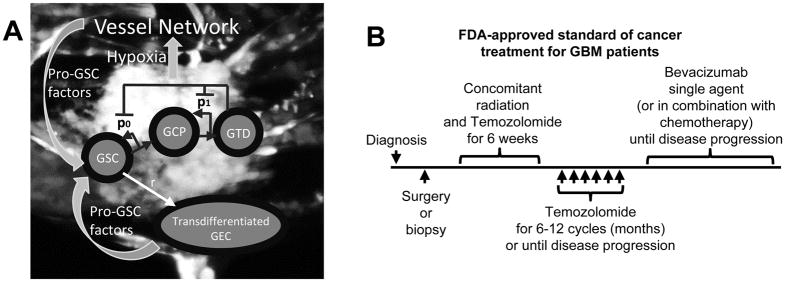
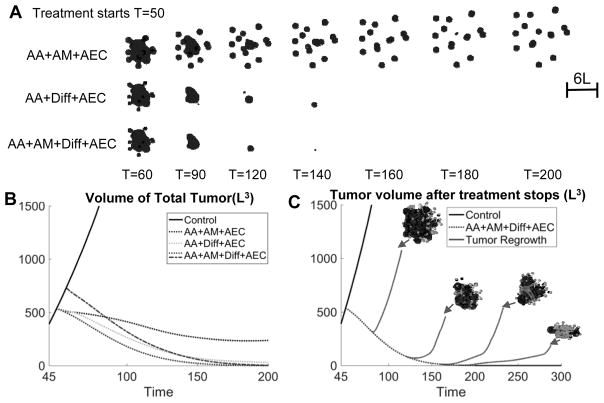
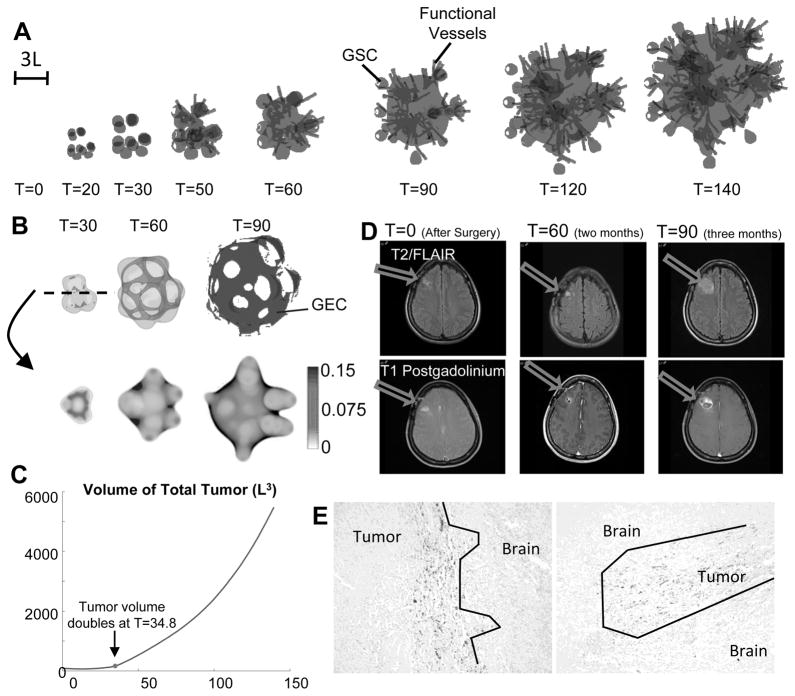
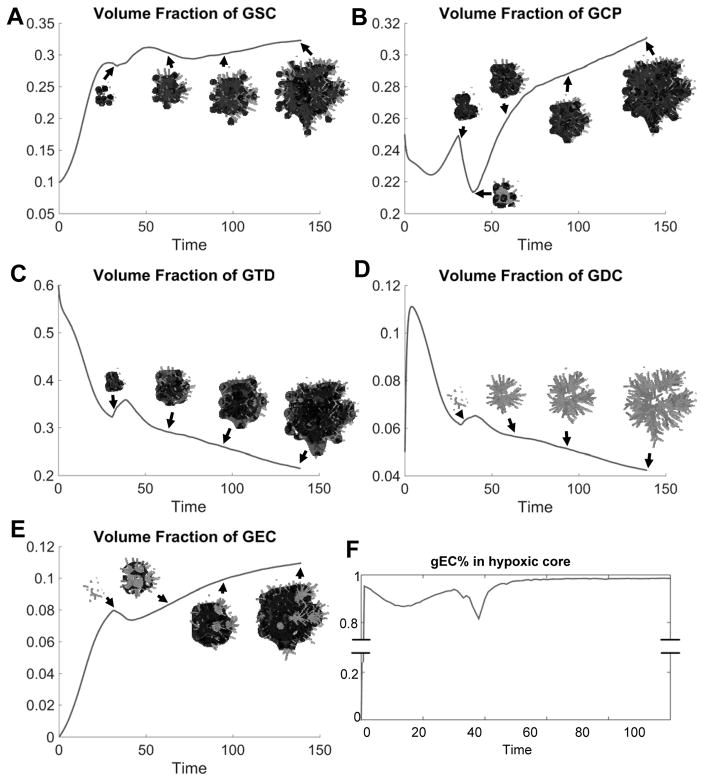
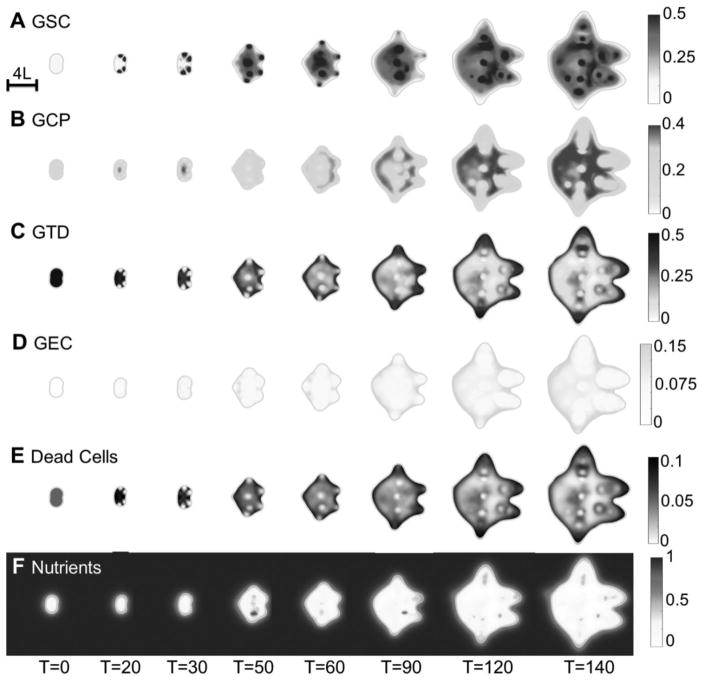
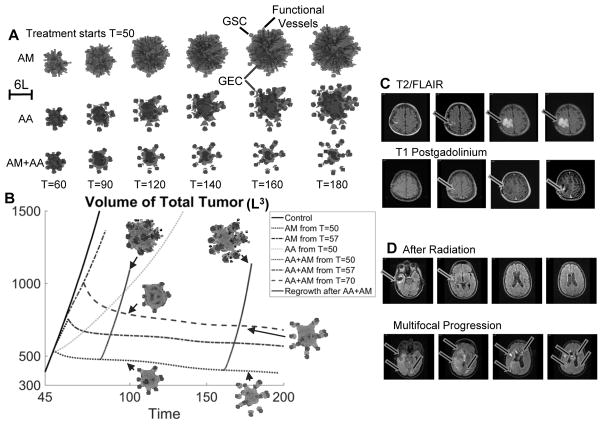
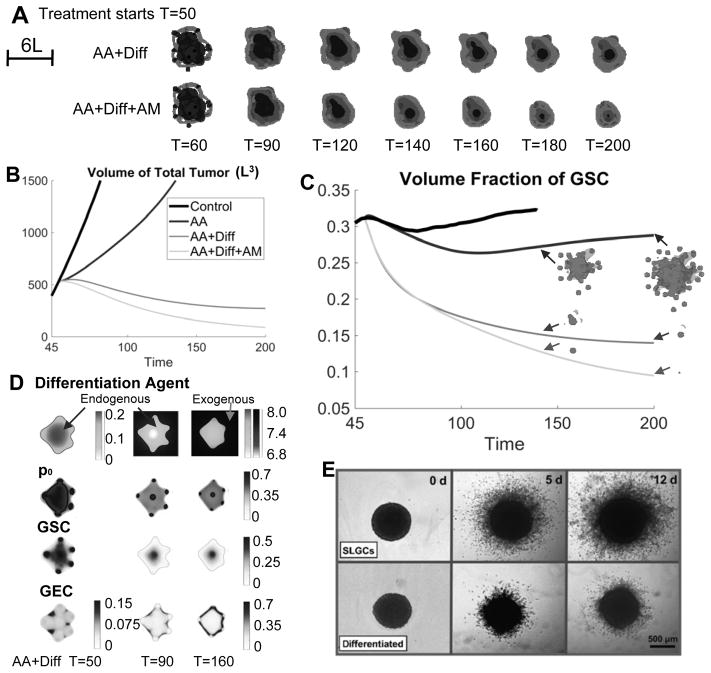
Glioblastoma (GBM), the most aggressive brain tumor in human patients, is decidedly heterogeneous and highly vascularized. Glioma stem/initiating cells (GSC) are found to play a crucial role by increasing cancer aggressiveness and promoting resistance to therapy. Recently, cross-talk between GSC and vascular endothelial cells has been shown to significantly promote GSC self-renewal and tumor progression. Furthermore, GSC also transdifferentiate into bona fide vascular endothelial cells (GEC), which inherit mutations present in GSC and are resistant to traditional antiangiogenic therapies. Here we use three-dimensional mathematical modeling to investigate GBM progression and response to therapy. The model predicted that GSCs drive invasive fingering and that GEC spontaneously form a network within the hypoxic core, consistent with published experimental findings. Standard-of-care treatments using DNA-targeted therapy (radiation/chemo) together with antiangiogenic therapies reduced GBM tumor size but increased invasiveness. Anti-GEC treatments blocked the GEC support of GSCs and reduced tumor size but led to increased invasiveness. Anti-GSC therapies that promote differentiation or disturb the stem cell niche effectively reduced tumor invasiveness and size, but were ultimately limited in reducing tumor size because GECs maintain GSCs. Our study suggests that a combinatorial regimen targeting the vasculature, GSCs, and GECs, using drugs already approved by the FDA, can reduce both tumor size and invasiveness and could lead to tumor eradication. .
胶质母细胞瘤(GBM)是人类患者中最具侵袭性的脑肿瘤,具有明显的异质性且血管高度丰富。胶质瘤干细胞/起始细胞(GSC)被发现通过增加癌症侵袭性和促进对治疗的抗性而发挥关键作用。最近,已表明GSC与血管内皮细胞之间的相互作用可显著促进GSC自我更新和肿瘤进展。此外,GSC还可转分化为真正的血管内皮细胞(GEC),这些细胞继承了GSC中存在的突变,并且对传统的抗血管生成疗法具有抗性。在此,我们使用三维数学模型来研究GBM的进展和对治疗的反应。该模型预测,GSC驱动侵袭性指状生长,并且GEC在缺氧核心内自发形成网络,这与已发表的实验结果一致。使用DNA靶向疗法(放疗/化疗)与抗血管生成疗法的标准治疗方法可减小GBM肿瘤大小,但会增加侵袭性。抗GEC治疗可阻断GEC对GSC的支持并减小肿瘤大小,但会导致侵袭性增加。促进分化或扰乱干细胞生态位的抗GSC疗法可有效降低肿瘤侵袭性和大小,但最终在减小肿瘤大小方面受到限制,因为GEC维持GSC。我们的研究表明,使用已获美国食品药品监督管理局(FDA)批准的药物,针对脉管系统、GSC和GEC的联合治疗方案可同时减小肿瘤大小和侵袭性,并可能导致肿瘤根除。