Zeng Shengquan, Zhao Jie, Xia Liming
Key Laboratory of Biomass Chemical Engineering of Ministry of Education, College of Chemical and Biological Engineering, Zhejiang University, Hangzhou, 310027, China.
Bioprocess Biosyst Eng. 2017 Aug;40(8):1237-1245. doi: 10.1007/s00449-017-1783-1. Epub 2017 May 23.
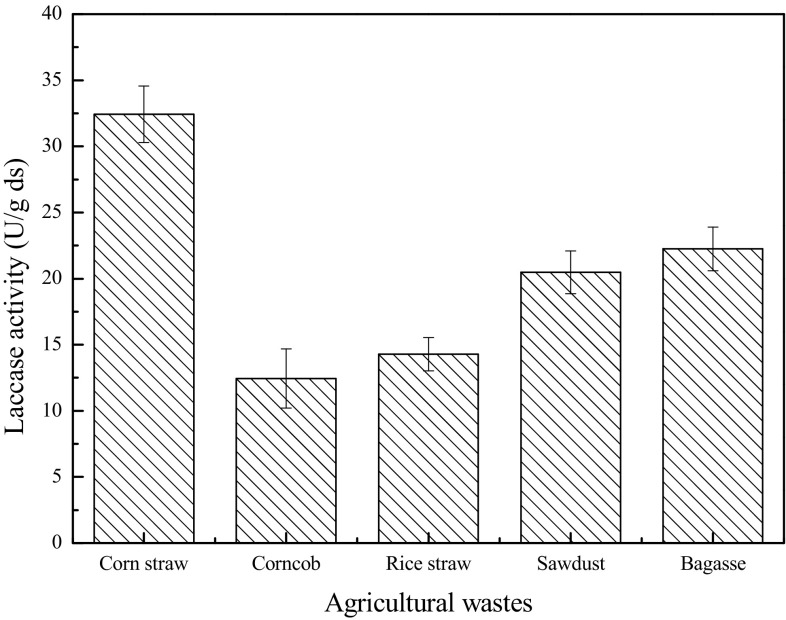
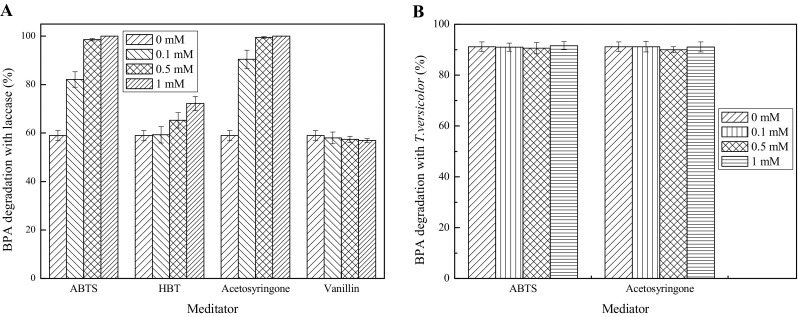
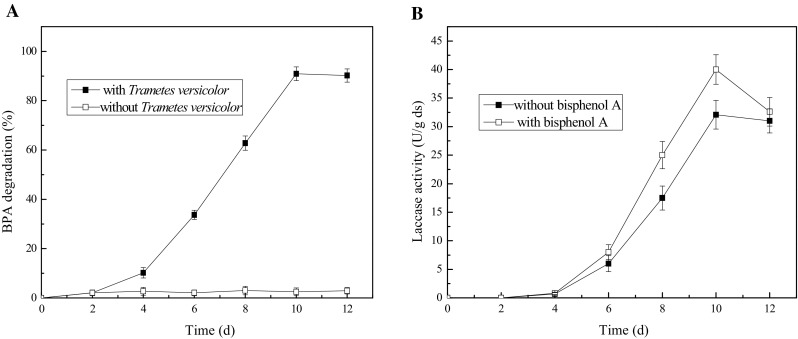
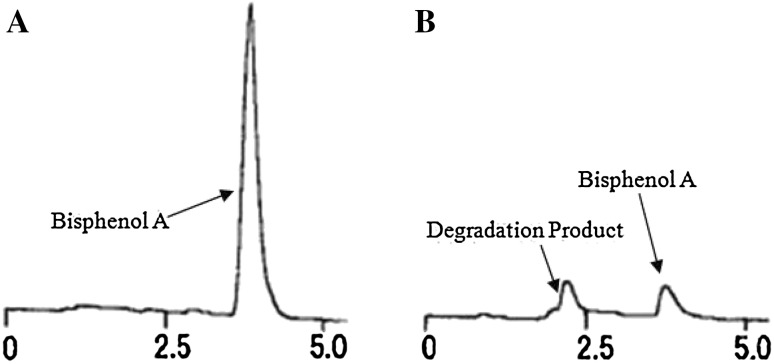
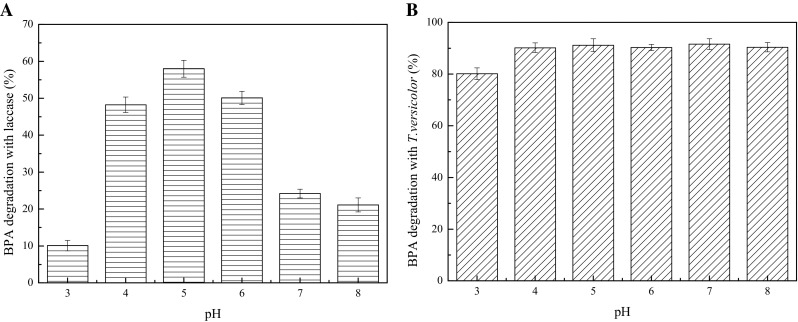
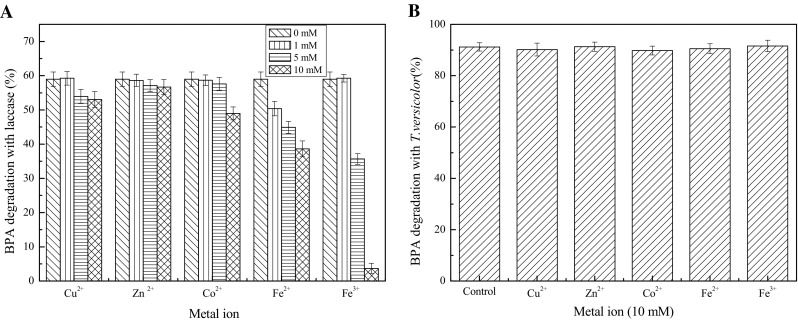
Solid state fermentation with Trametes versicolor was carried out on agricultural wastes containing bisphenol A (BPA). It was found that BPA degradation was along with the occurrence of laccase production, and wheat bran and corn straw were identified as suitable mixed substrates for laccase production. In the process of BPA degradation with T. versicolor, laccase activity increased rapidly at the 6th-10th day after inoculation. Moreover, BPA can enhance the production of laccase. After 10 days of fermentation, degradation rate of BPA exceeded 90% without the usage of mediators ABTS and acetosyringone at pH 4.0-8.0. In addition, metal ions did not affect the BPA degradation with T. versicolor. In vitro, the optimum pH range of BPA degradation with laccase was in the acidic region with the optimal performance of pH 5.0. Metal ions Cu, Zn, and Co showed little effect on BPA degradation. However, Fe and Fe substantially inhibited the BPA degradation. Natural mediator acetosyringone showed optimum enhancement on BPA degradation. Greater than 90% of the estrogenic activity of BPA was removed by T. versicolor and its laccase. Compared to in vitro degradation with laccase, this study shows that the process of simultaneous laccase production and BPA degradation with T. versicolor was more advantageous since BPA can enhance the laccase production, mediators were unnecessary, degradation rate was not affected by metal ions, and the applicable pH range was broader. This study concludes that T. versicolor and laccase have great potential to treat industrial wastewater containing BPA.
以杂色云芝进行固态发酵处理含双酚A(BPA)的农业废弃物。研究发现,BPA的降解伴随着漆酶的产生,且麦麸和玉米秸秆被确定为适合产漆酶的混合底物。在杂色云芝降解BPA的过程中,接种后第6 - 10天漆酶活性迅速增加。此外,BPA可促进漆酶的产生。发酵10天后,在pH 4.0 - 8.0条件下,无需使用介体ABTS和乙酰丁香酮,BPA的降解率超过90%。此外,金属离子不影响杂色云芝对BPA的降解。在体外,漆酶降解BPA的最佳pH范围在酸性区域,pH 5.0时性能最佳。金属离子Cu、Zn和Co对BPA降解影响不大。然而,Fe和Fe显著抑制BPA的降解。天然介体乙酰丁香酮对BPA降解表现出最佳增强作用。杂色云芝及其漆酶去除了超过90%的BPA雌激素活性。与漆酶体外降解相比,本研究表明杂色云芝同时产漆酶和降解BPA的过程更具优势,因为BPA可促进漆酶产生,无需介体,降解率不受金属离子影响,且适用pH范围更广。本研究得出结论,杂色云芝和漆酶在处理含BPA的工业废水方面具有巨大潜力。