Yang Chang-Ching, Chen Yi-Tung, Chang Yi-Feng, Liu Hsuan, Kuo Yu-Ping, Shih Chieh-Tien, Liao Wei-Chao, Chen Hui-Wen, Tsai Wen-Sy, Tan Bertrand Chin-Ming
Graduate Institute of Biomedical Sciences, College of Medicine, Chang Gung University, Kueishan, Taoyuan, Taiwan.
Department of Biomedical Sciences, College of Medicine, Chang Gung University, Kueishan, Taoyuan, Taiwan.
Cell Death Dis. 2017 May 25;8(5):e2833. doi: 10.1038/cddis.2017.12.
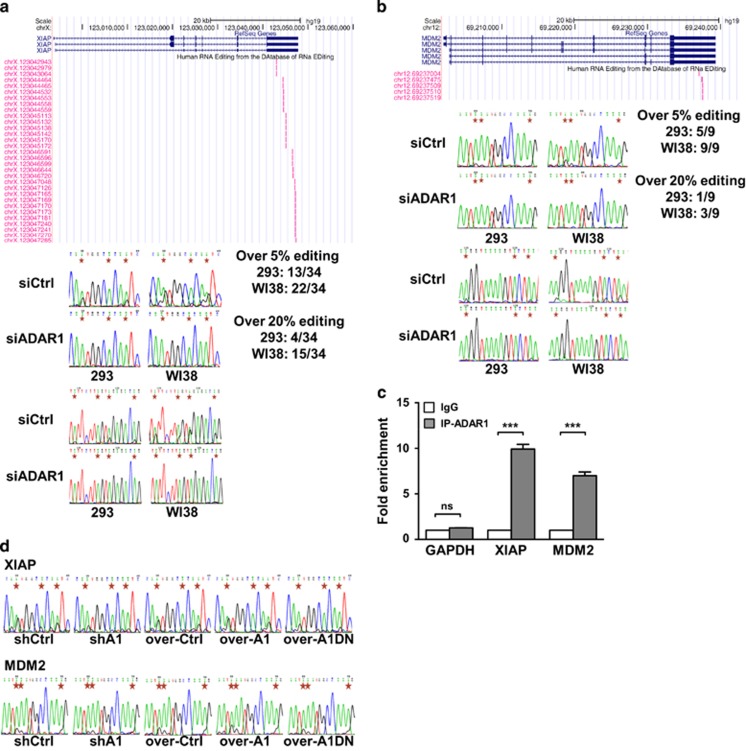
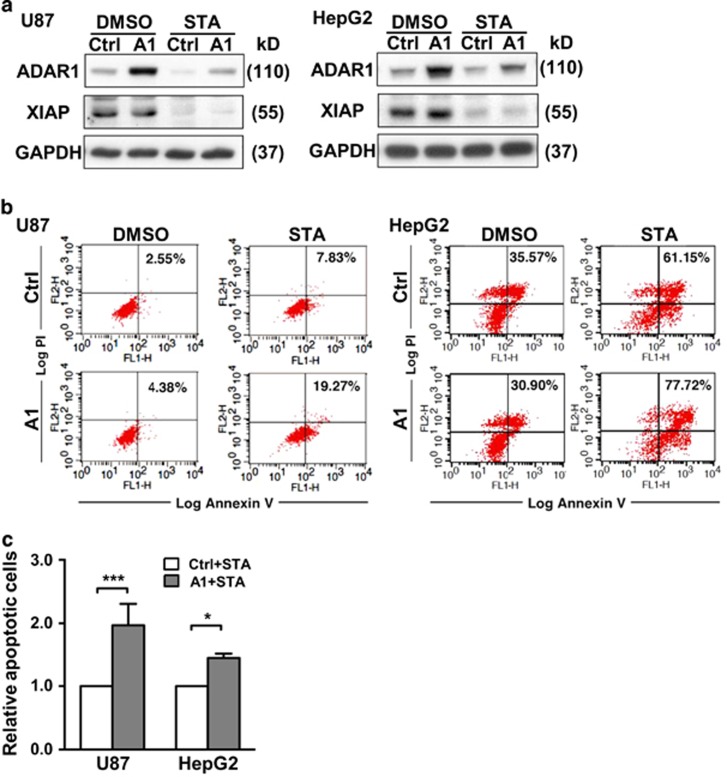
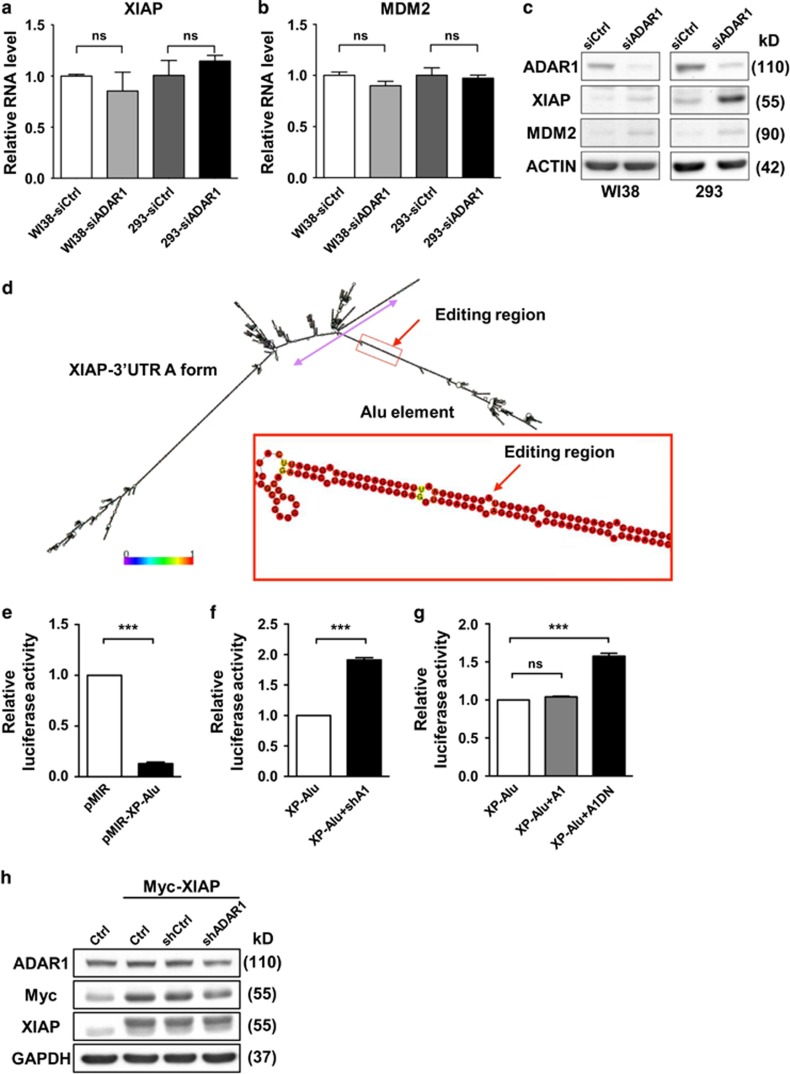
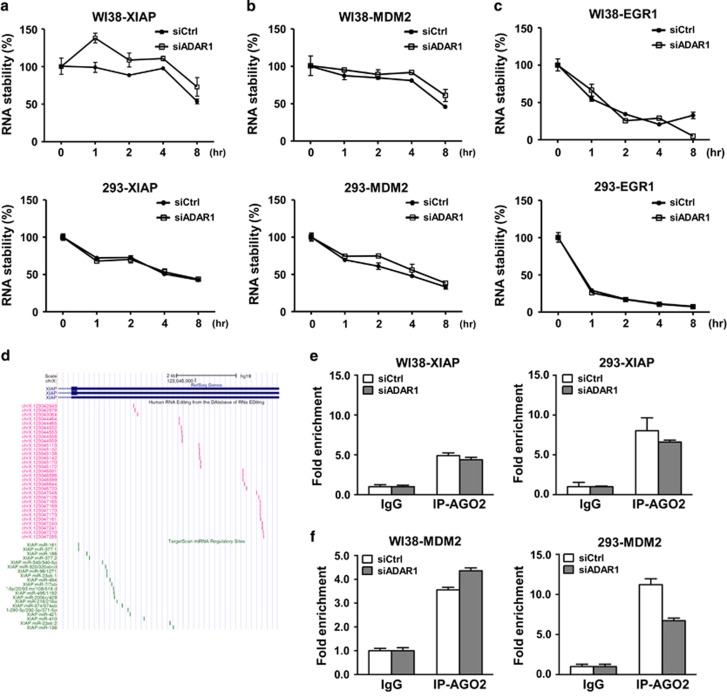
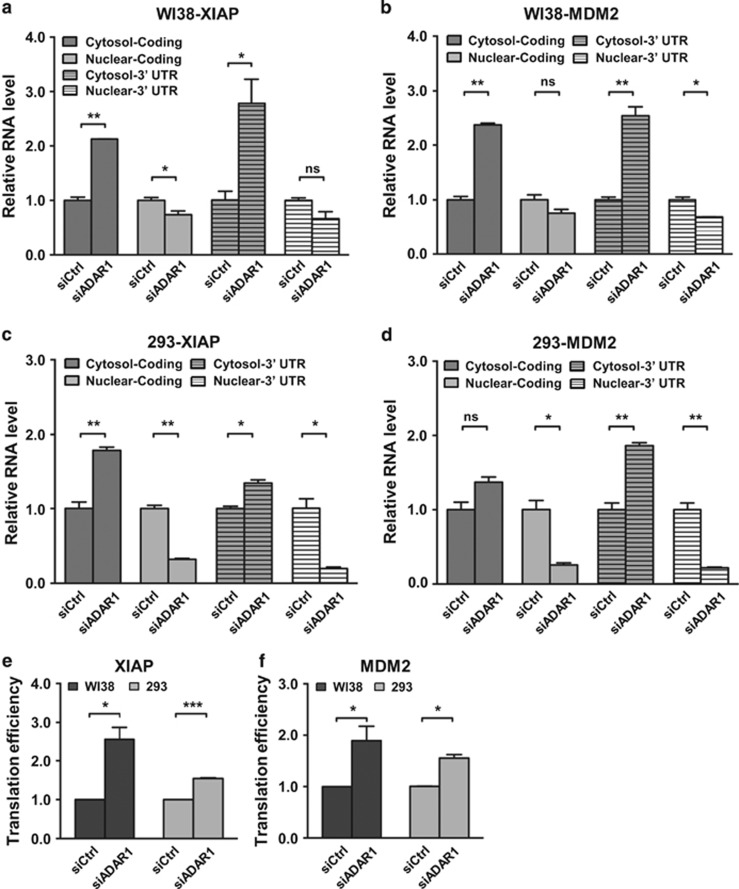
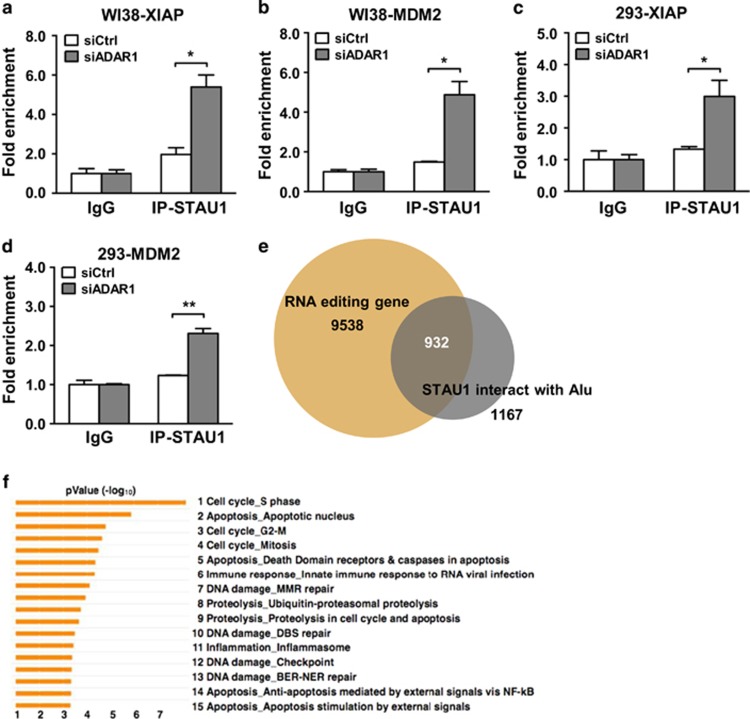
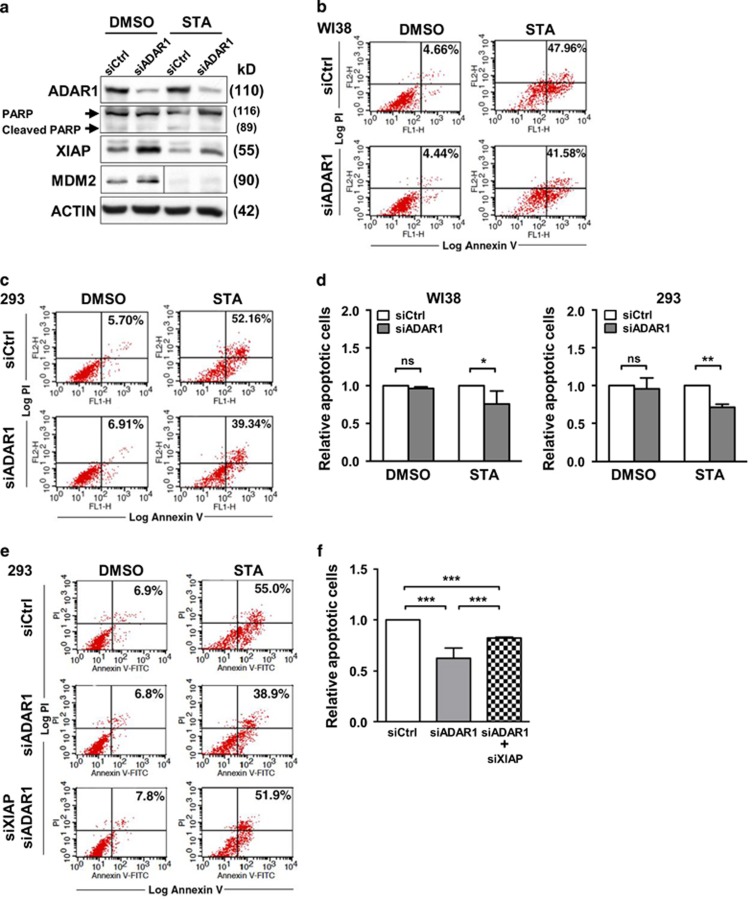
Adenosine-to-inosine RNA editing constitutes a crucial component of the cellular transcriptome and critically underpins organism survival and development. While recent high-throughput approaches have provided comprehensive documentation of the RNA editome, its functional output remains mostly unresolved, particularly for events in the non-coding regions. Gene ontology analysis of the known RNA editing targets unveiled a preponderance of genes related to apoptosis regulation, among which proto-oncogenes XIAP and MDM2 encode two the most abundantly edited transcripts. To further decode this potential functional connection, here we showed that the main RNA editor ADAR1 directly targets this 3' UTR editing of XIAP and MDM2, and further exerts a negative regulation on the expression of their protein products. This post-transcriptional silencing role was mediated via the inverted Alu elements in the 3' UTR but independent of alteration in transcript stability or miRNA targeting. Rather, we discovered that ADAR1 competes transcript occupancy with the RNA shuttling factor STAU1 to facilitate nuclear retention of the XIAP and MDM2 mRNAs. As a consequence, ADAR1 may acquire functionality in part by conferring spatial distribution and translation efficiency of the target transcripts. Finally, abrogation of ADAR1 expression or catalytic activity elicited a XIAP-dependent suppression of apoptotic response, whereas ectopic expression reversed this protective effect on cell death. Together, our results extended the known functions of ADAR1 and RNA editing to the critical fine-tuning of the intracellular apoptotic signaling and also provided mechanistic explanation for ADAR1's roles in development and tumorigenesis.
腺苷到肌苷的RNA编辑是细胞转录组的关键组成部分,对生物体的生存和发育至关重要。虽然最近的高通量方法已经全面记录了RNA编辑组,但其功能输出大多仍未得到解决,特别是对于非编码区域的事件。对已知RNA编辑靶点的基因本体分析揭示了与细胞凋亡调控相关的基因占优势,其中原癌基因XIAP和MDM2编码两个编辑最丰富的转录本。为了进一步解读这种潜在的功能联系,我们在此表明,主要的RNA编辑器ADAR1直接靶向XIAP和MDM2的3'UTR编辑,并进一步对其蛋白质产物的表达发挥负调控作用。这种转录后沉默作用是通过3'UTR中的反向Alu元件介导的,但与转录本稳定性的改变或miRNA靶向无关。相反,我们发现ADAR1与RNA穿梭因子STAU1竞争转录本占据,以促进XIAP和MDM2 mRNA的核滞留。因此,ADAR1可能部分通过赋予靶转录本的空间分布和翻译效率来获得功能。最后,ADAR1表达或催化活性的消除引发了XIAP依赖的凋亡反应抑制,而异位表达则逆转了这种对细胞死亡的保护作用。总之,我们的结果将ADAR1和RNA编辑的已知功能扩展到细胞内凋亡信号的关键微调,也为ADAR1在发育和肿瘤发生中的作用提供了机制解释。