Department of Systems Biophysics, AMOLF , Amsterdam 1009 DB, The Netherlands.
Langmuir. 2017 Jun 27;33(25):6342-6352. doi: 10.1021/acs.langmuir.7b00527. Epub 2017 Jun 13.
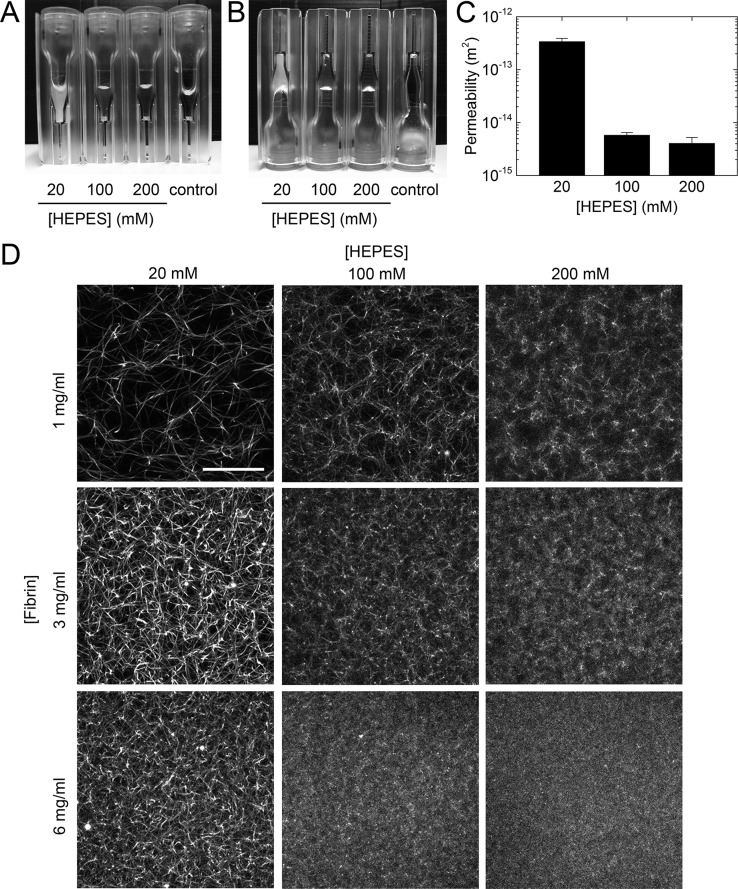
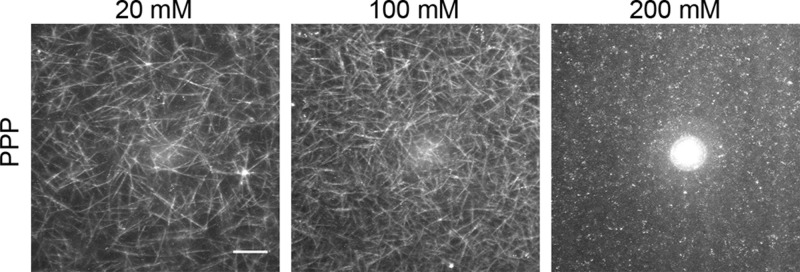
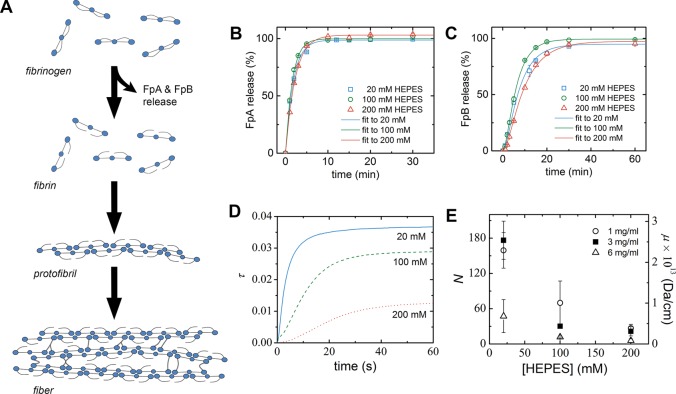
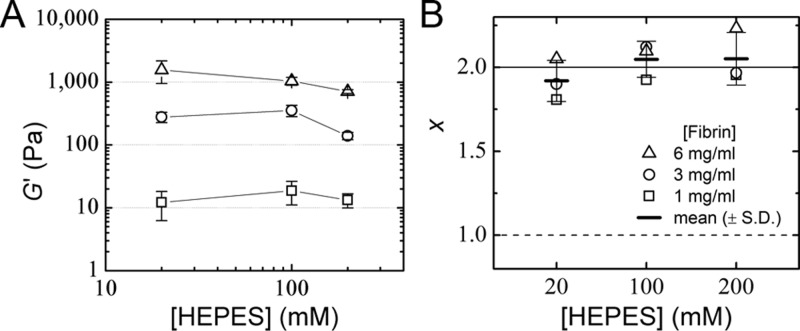
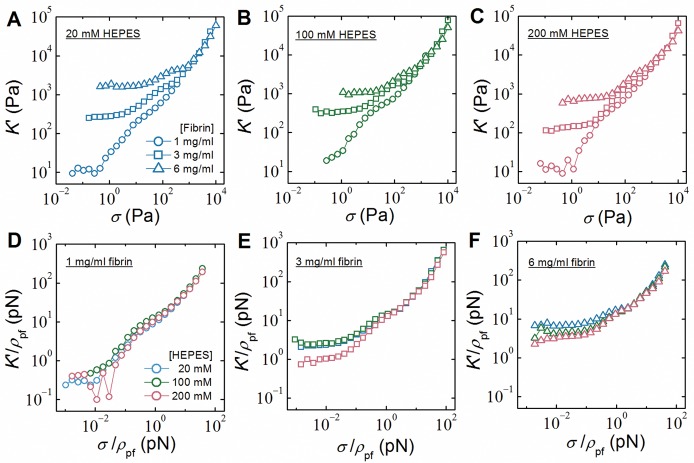
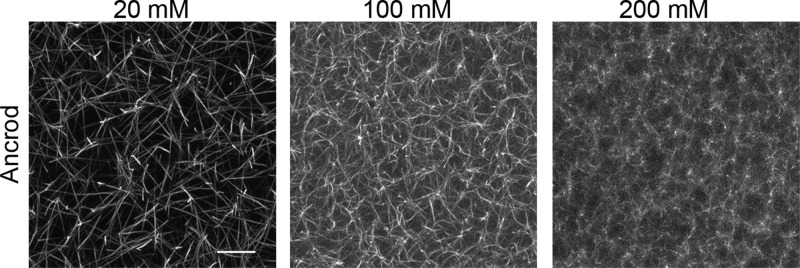
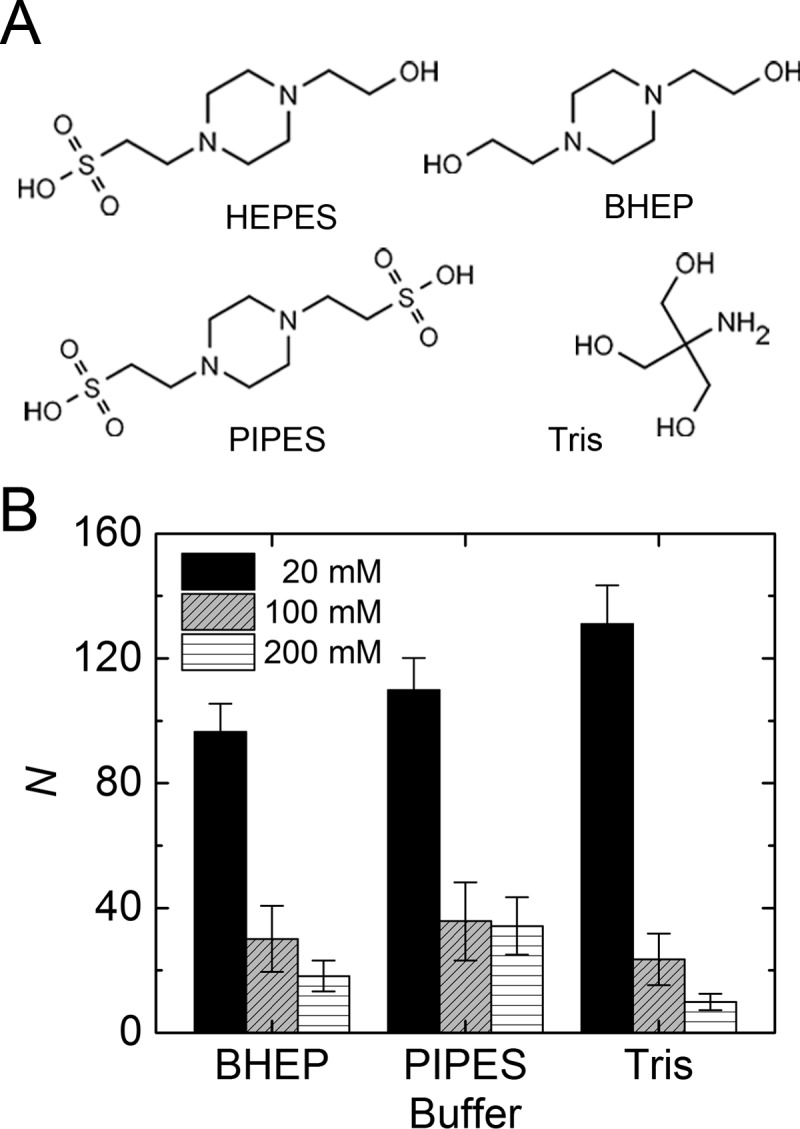
Fibrin is a plasma protein with a central role in blood clotting and wound repair. Upon vascular injury, fibrin forms resilient fibrillar networks (clots) via a multistep self-assembly process, from monomers, to double-stranded protofibrils, to a branched network of thick fibers. In vitro, fibrin self-assembly is sensitive to physicochemical conditions like the solution pH and ionic strength, which tune the strength of the noncovalent driving forces. Here we report a surprising finding that the buffer-which is necessary to control the pH and is typically considered to be inert-also significantly influences fibrin self-assembly. We show by confocal microscopy and quantitative light scattering that various common buffering agents have no effect on the initial assembly of fibrin monomers into protofibrils but strongly hamper the subsequent lateral association of protofibrils into thicker fibers. We further find that the structural changes are independent of the molecular structure of the buffering agents as well as of the activation mechanism and even occur in fibrin networks formed from platelet-poor plasma. This buffer-mediated decrease in protofibril bundling results in a marked reduction in the permeability of fibrin networks but only weakly influences the elastic modulus of fibrin networks, providing a useful tuning parameter to independently control the elastic properties and the permeability of fibrin networks. Our work raises the possibility that fibrin assembly in vivo may be regulated by variations in the acute-phase levels of bicarbonate and phosphate, which act as physiological buffering agents of blood pH. Moreover, our findings add a new example of buffer-induced effects on biomolecular self-assembly to recent findings for a range of proteins and lipids.
纤维蛋白是一种在血液凝结和伤口修复中起核心作用的血浆蛋白。在血管损伤时,纤维蛋白通过多步自组装过程从单体形成有弹性的纤维状网络(凝块),形成双链原纤维,再形成分支的厚纤维网络。在体外,纤维蛋白的自组装对物理化学条件(如溶液 pH 值和离子强度)敏感,这些条件会调节非共价驱动力的强度。在这里,我们报告了一个令人惊讶的发现,即缓冲液(用于控制 pH 值且通常被认为是惰性的)也会显著影响纤维蛋白的自组装。通过共聚焦显微镜和定量光散射,我们发现各种常见的缓冲剂对纤维蛋白单体初始组装成原纤维没有影响,但强烈阻碍原纤维随后侧向聚集形成更厚的纤维。我们进一步发现,结构变化与缓冲剂的分子结构、激活机制无关,甚至发生在由血小板少的血浆形成的纤维蛋白网络中。这种缓冲介导的原纤维束减少导致纤维蛋白网络的渗透性显著降低,但对纤维蛋白网络的弹性模量只有较弱的影响,为独立控制纤维蛋白网络的弹性特性和渗透性提供了一个有用的调节参数。我们的工作提出了一种可能性,即体内纤维蛋白的组装可能受到碳酸氢盐和磷酸盐的急性期水平变化的调节,这两种物质是血液 pH 值的生理缓冲剂。此外,我们的发现为一系列蛋白质和脂质的近期发现增加了缓冲诱导对生物分子自组装影响的新实例。