Kihal-Talantikite Wahida, Zmirou-Navier Denis, Padilla Cindy, Deguen Séverine
LIVE UMR 7362 CNRS (Laboratoire Image Ville Environnement), University of Strasbourg, 3 Rue de l'argonne, 6700, Strasbourg, France.
Department of Environmental and Occupational Health, School of Public Health (EHESP), Rennes and Sorbonne Paris Cité, Paris, France.
Int J Health Geogr. 2017 May 30;16(1):20. doi: 10.1186/s12942-017-0091-y.
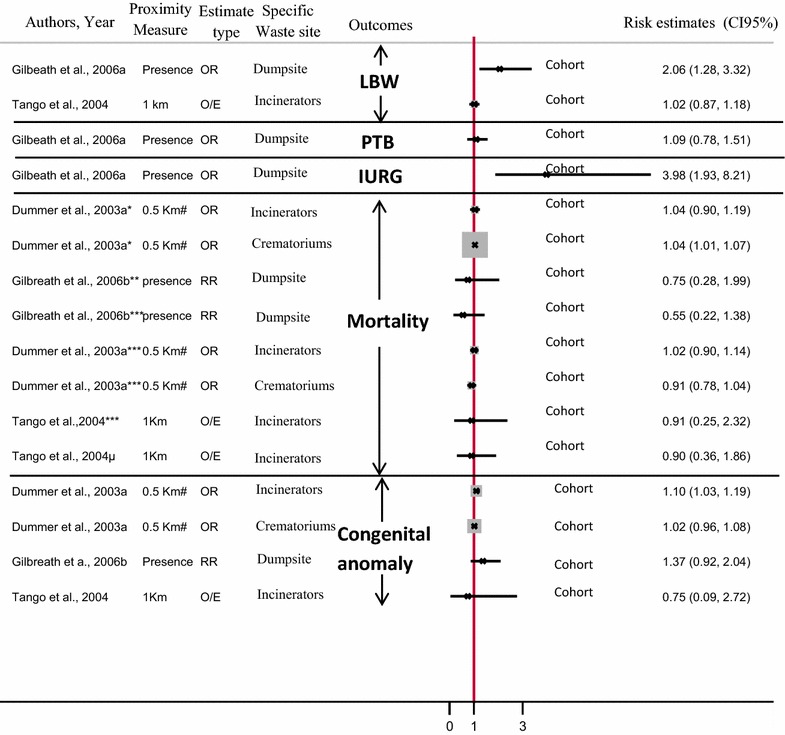
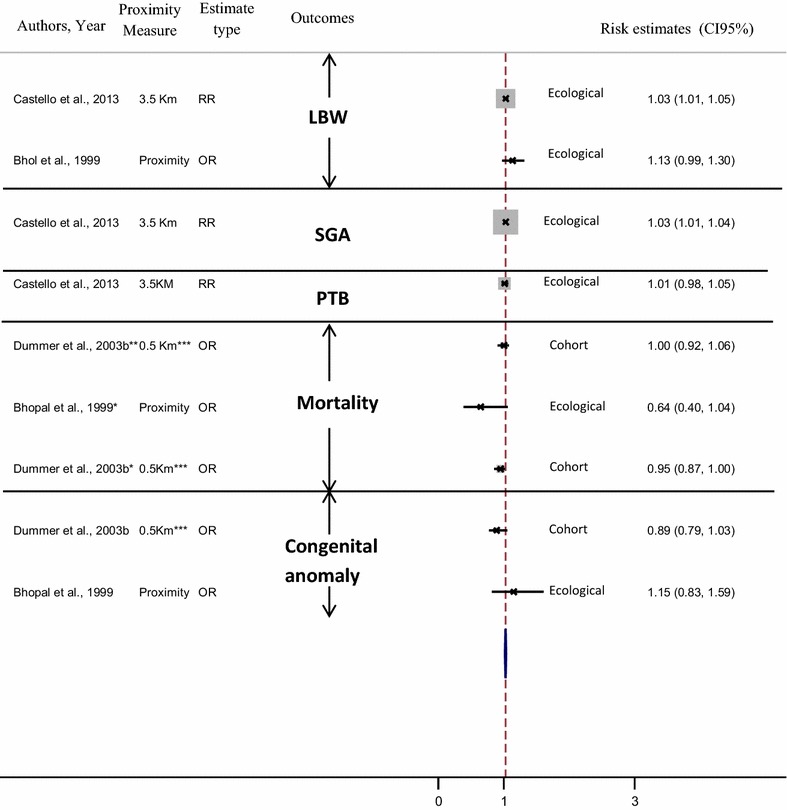
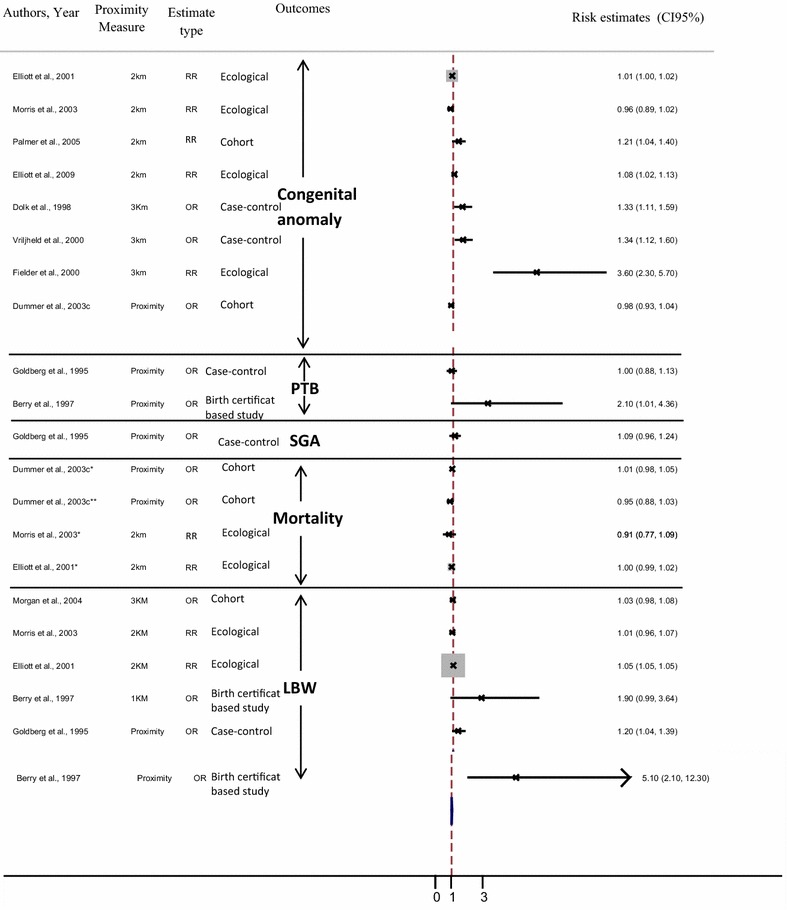
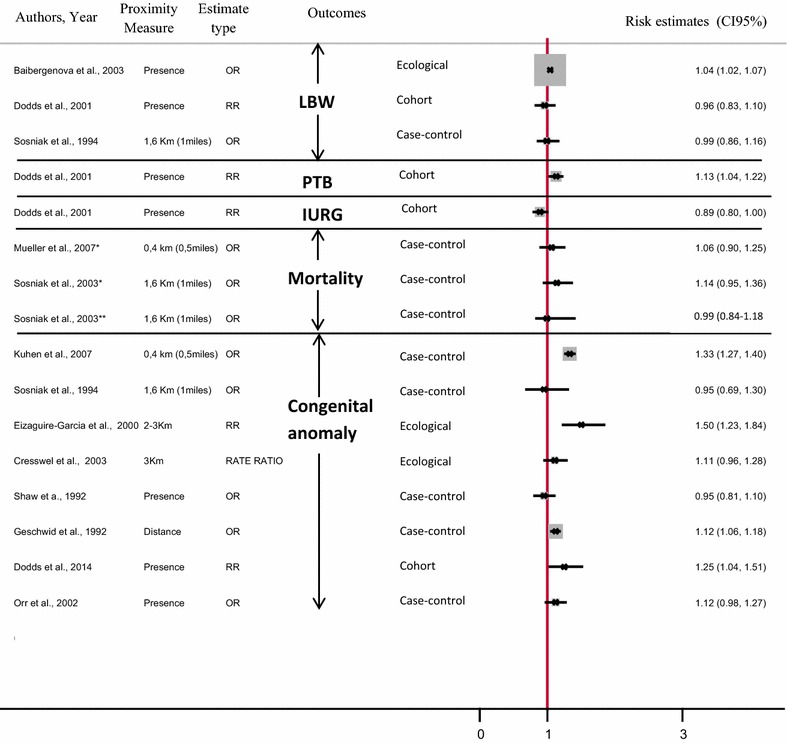
This study aims to assess the evidence on adverse pregnancy outcome associated with living close to polluted industrial sites, and identify the strengths and weaknesses of published epidemiological studies. A systematic literature search has been performed on all epidemiological studies published in developed countries since 1990, on the association between residential proximity to industrial sites (hazardous waste sites, industrial facilities and landfill sites) and adverse pregnancy outcome (low birth weight, preterm birth, small for gestational age, intrauterine growth retardation, infant mortality, congenital malformation). Based on 41 papers, our review reveals an excess risk of reproductive morbidity. However, no studies show significant excess risk of mortality including fetal death, neonatal or infant mortality and stillbirth. All published studies tend to show an increased risk of congenital abnormalities, yet not all are statistically significant. All but two of these studies revealed an excess risk of low birth weight. Results for preterm birth, small for gestational age and intrauterine growth retardation show the same pattern. There is suggestive evidence from the post-1990 literature that residential proximity to polluted sites (including landfills, hazardous waste sites and industrial facilities) might contribute to adverse reproductive outcomes, especially congenital malformations and low birth weight-though not mortality. This body of evidence has limitations that impede the formulation of firm conclusions, and new, well-focused studies are called for. The review findings suggest that continued strengthening of rules governing industrial emissions as well as industrial waste management and improved land use planning are needed.
本研究旨在评估与居住在受污染工业场地附近相关的不良妊娠结局的证据,并确定已发表的流行病学研究的优势与不足。对1990年以来发达国家发表的所有关于居住在工业场地(危险废物场地、工业设施和垃圾填埋场)附近与不良妊娠结局(低出生体重、早产、小于胎龄、宫内生长受限、婴儿死亡率、先天性畸形)之间关联的流行病学研究进行了系统的文献检索。基于41篇论文,我们的综述揭示了生殖发病率的额外风险。然而,没有研究表明包括胎儿死亡、新生儿或婴儿死亡率以及死产在内的死亡率存在显著的额外风险。所有已发表的研究都倾向于表明先天性异常的风险增加,但并非所有研究在统计学上都具有显著性。除两项研究外,所有这些研究都揭示了低出生体重的额外风险。早产、小于胎龄和宫内生长受限的结果显示出相同的模式。1990年以后的文献中有提示性证据表明,居住在受污染场地(包括垃圾填埋场、危险废物场地和工业设施)附近可能会导致不良生殖结局,尤其是先天性畸形和低出生体重——但不包括死亡率。这一证据体系存在局限性,妨碍得出确凿结论,因此需要开展新的、重点明确的研究。综述结果表明,需要持续加强工业排放以及工业废物管理方面的规则,并改进土地利用规划。