Department of Molecular Microbiology and Immunology, Norris Comprehensive Cancer Center, Keck School of Medicine, University of Southern California, Los Angeles, 90033, CA, USA.
Fu Foundation School of Engineering and Applied Science, Columbia University, New York, 10023, NY, USA.
Nat Commun. 2020 Mar 13;11(1):1395. doi: 10.1038/s41467-020-15229-5.
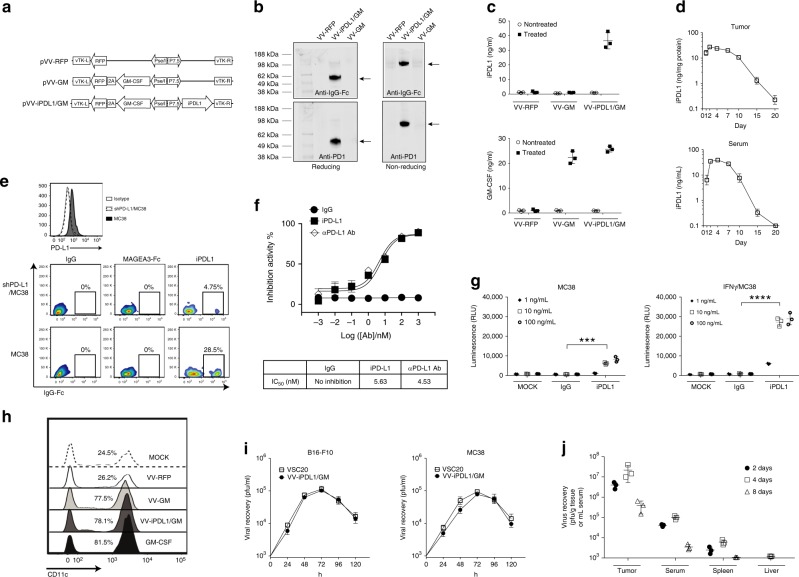
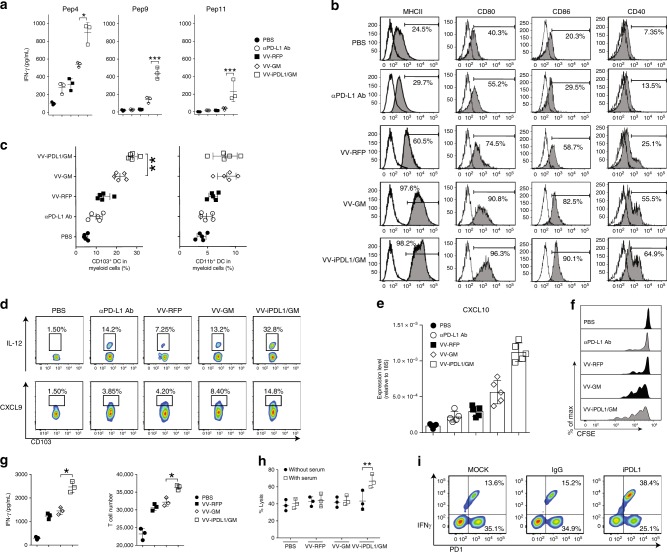
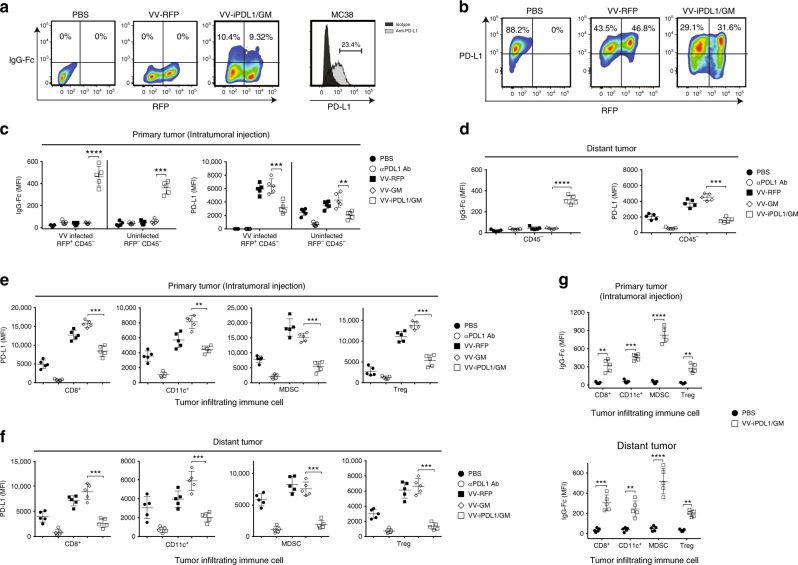
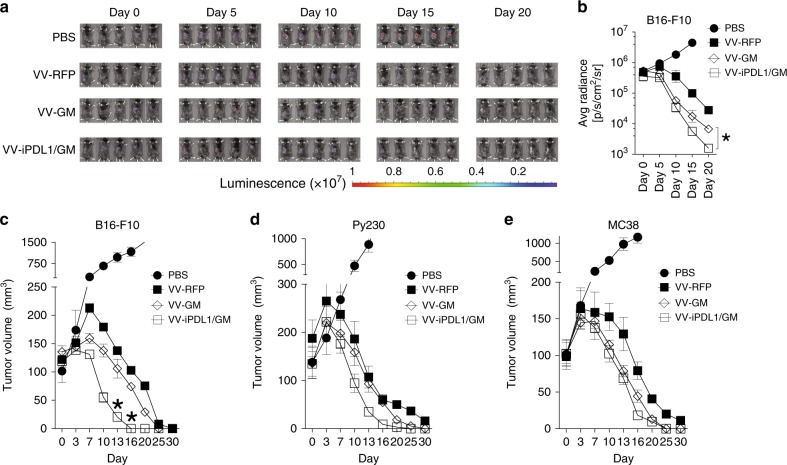
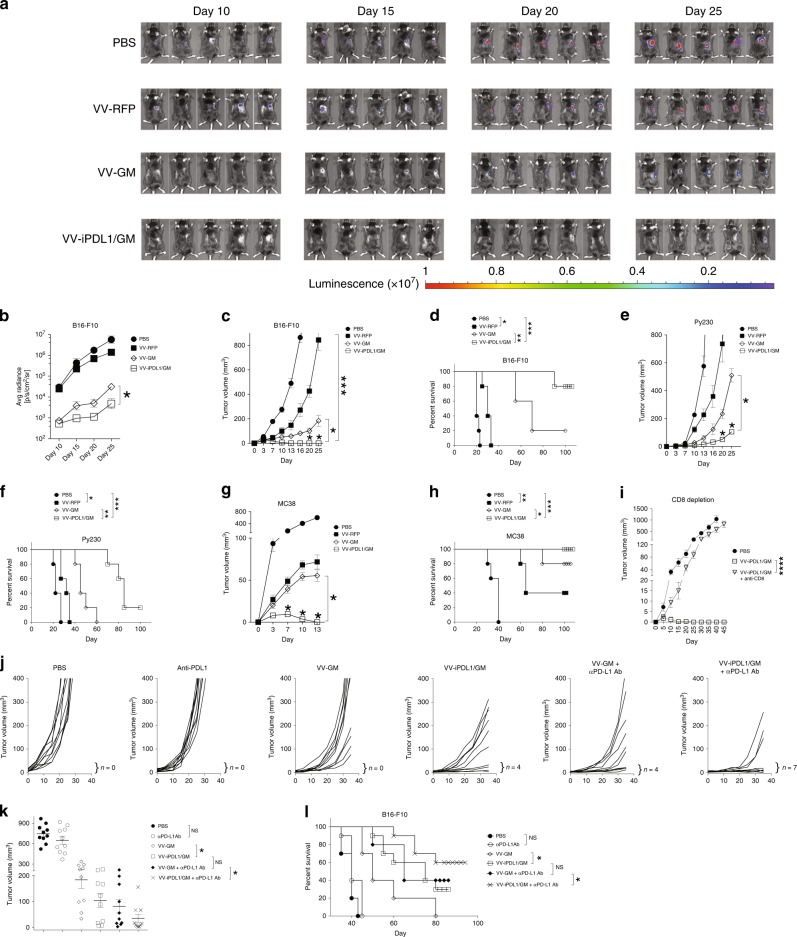
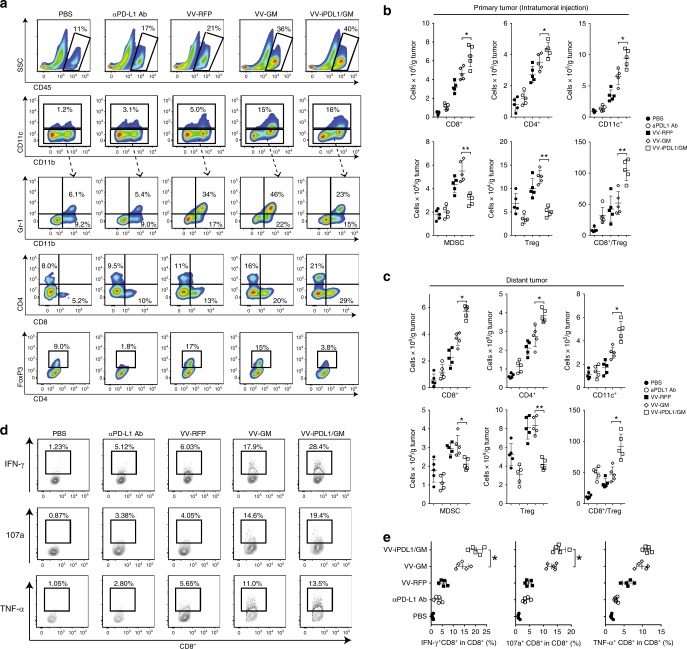
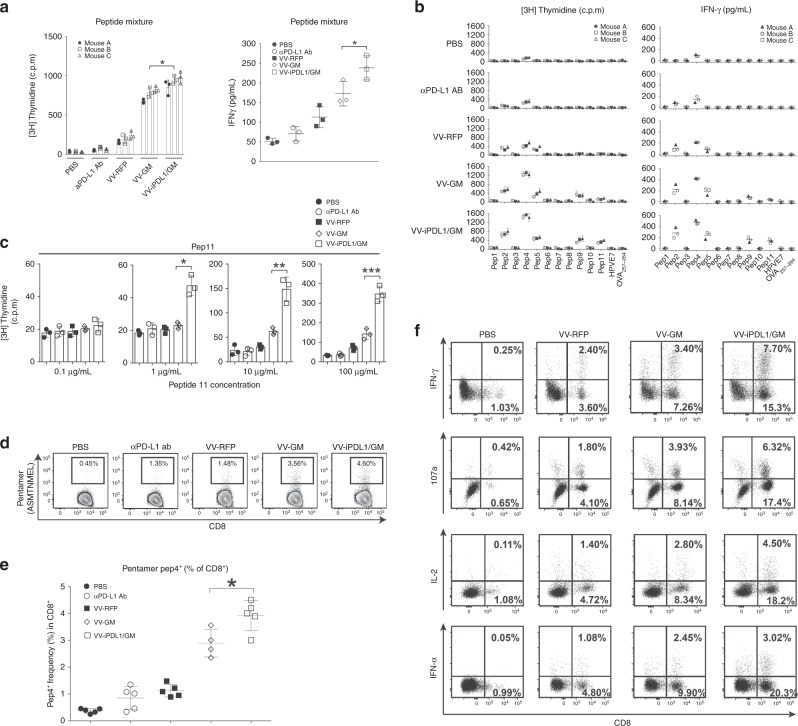
Oncolytic viruses offer an in situ vaccination approach to activate tumor-specific T cell responses. However, the upregulation of PD-L1 expression on tumor cells and immune cells leads to tumor resistance to oncolytic immunotherapy. In this study, we generate an engineered oncolytic virus that coexpresses a PD-L1 inhibitor and GM-CSF. We find that the oncolytic virus is able to secrete the PD-L1 inhibitor that systemically binds and inhibits PD-L1 on tumor cells and immune cells. Importantly, the intratumoral injection with the oncolytic virus overcomes PD-L1-mediated immunosuppression during both the priming and effector phases, provokes systemic T cell responses against dominant and subdominant neoantigen epitopes derived from mutations, and leads to an effective rejection of both virus-injected and distant tumors. In summary, this engineered oncolytic virus is able to activate tumor neoantigen-specific T cell responses, providing a potent, individual tumor-specific oncolytic immunotherapy for cancer patients, especially those resistant to PD-1/PD-L1 blockade therapy.
溶瘤病毒提供了一种原位疫苗接种方法,可激活针对肿瘤特异性 T 细胞的反应。然而,肿瘤细胞和免疫细胞中 PD-L1 表达的上调导致肿瘤对溶瘤免疫疗法产生抵抗。在这项研究中,我们构建了一种共表达 PD-L1 抑制剂和 GM-CSF 的工程溶瘤病毒。我们发现,该溶瘤病毒能够分泌 PD-L1 抑制剂,该抑制剂能够系统性地结合并抑制肿瘤细胞和免疫细胞上的 PD-L1。重要的是,肿瘤内注射该溶瘤病毒可克服 PD-L1 介导的免疫抑制作用,包括在初始和效应阶段,引发针对源自突变的显性和亚显性新抗原表位的系统性 T 细胞反应,并有效排斥病毒注射的肿瘤和远处肿瘤。总之,这种工程化的溶瘤病毒能够激活肿瘤新抗原特异性 T 细胞反应,为癌症患者提供一种强大的、个体化的肿瘤特异性溶瘤免疫疗法,尤其适用于对 PD-1/PD-L1 阻断疗法耐药的患者。