Aziz Muhammad, Kandimalla Yugandhar, Machavarapu Archana, Saxena Anshul, Das Sankalp, Younus Adnan, Nguyen Michelle, Malik Rehan, Anugula Dixitha, Latif Muhammad A, Humayun Choudhry, Khan Idrees M, Adus Ali, Rasool Aisha, Veledar Emir, Nasir Khurram
Center for Healthcare Advancement & Outcomes, Baptist Health South Florida.
Benedictine University, Department of Public Health.
J Atheroscler Thromb. 2017 Jul 1;24(7):643-659. doi: 10.5551/jat.39917. Epub 2017 May 31.
Research shows that subclinical hypothyroidism (SCH) is related to an increased carotid intima-media thickness (CIMT), a surrogate marker of subclinical cardiovascular disease (CVD). It is controversial whether or not SCH should be treated to reduce CVD morbidity and mortality. This meta-analysis aimed to determine whether SCH is associated with an increase in CIMT as compared to Euthyroidism (EU) and whether thyroxin (T4) treatment in SCH can reverse the change in CIMT.
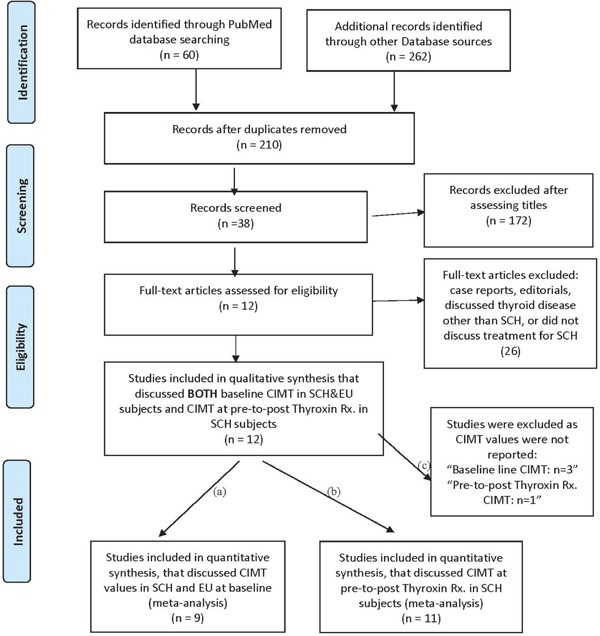
Two independent reviewers conducted an extensive database research up to December 2016. A total of 12 clinical trials discussed the effect of Thyroxin on CIMT values at pre- and post-treatment in subjects with SCH.
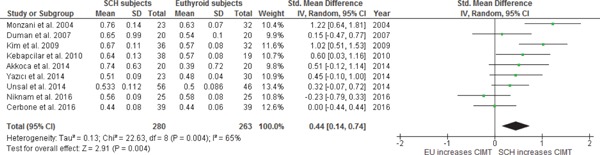
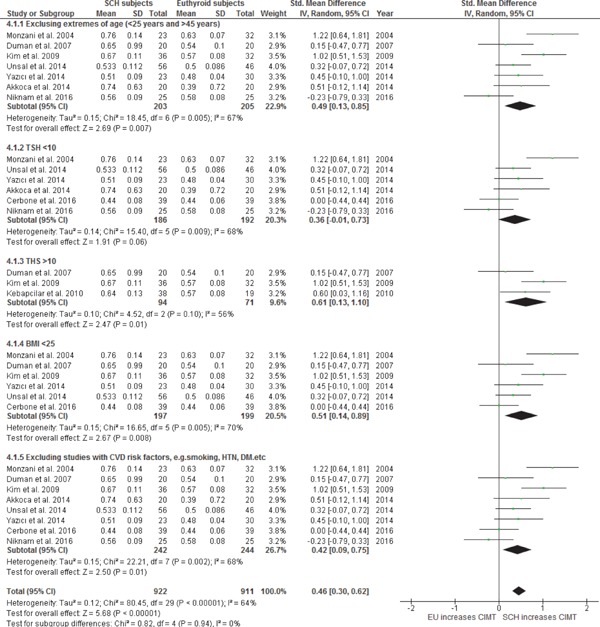
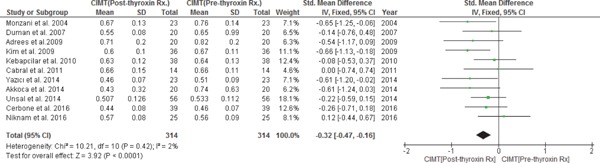
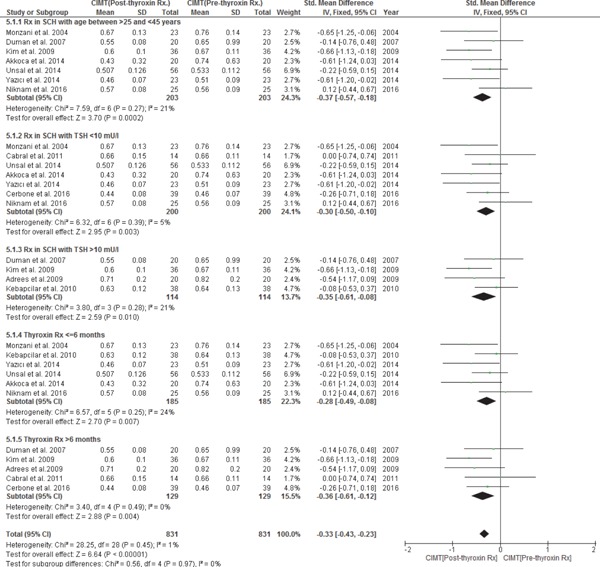
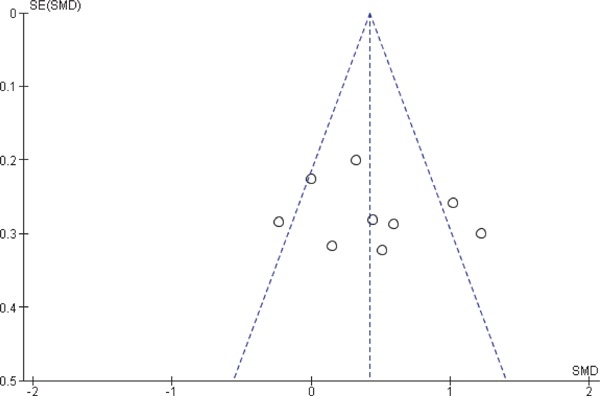
CIMT was significantly higher among SCH (n=280) as compared to EU controls (n=263) at baseline; the pooled weighted mean difference (WMD) of CIMT was 0.44 mm [95% confidence interval (CI) 0.14, 0.74], p=0.004; I=65%. After treatment with thyroxin in subjects with SCH (n=314), there was a statistically significant decrease in CIMT from pre- to post-treatment; the pooled WMD of CIMT decrease was [WMD -0.32; 95% CI (-0.47, -0.16), p=<0.0001; I=2%], and it was no longer different from EU controls [WMD 0.13 mm; 95% CI (-0.04, 0.30); p=0.14; I=27%]. The total cholesterol (TC), triglycerides (TG), and low-density lipoprotein (LDL) were higher in SCH as compared to EU controls and decreased significantly after treatment with thyroxin.
This meta-analysis shows that thyroxin therapy in subjects with SCH significantly decreases CIMT and improves lipid profile, modifiable CVD risk factors. Thyroid hormone replacement in subjects with SCH may play a role in slowing down or preventing the progression of atherosclerosis.
研究表明,亚临床甲状腺功能减退症(SCH)与颈动脉内膜中层厚度(CIMT)增加有关,CIMT是亚临床心血管疾病(CVD)的一个替代标志物。对于SCH是否应接受治疗以降低CVD的发病率和死亡率存在争议。这项荟萃分析旨在确定与甲状腺功能正常(EU)相比,SCH是否与CIMT增加相关,以及SCH患者接受甲状腺素(T4)治疗是否能逆转CIMT的变化。
两名独立的评审员对截至2016年12月的广泛数据库进行了研究。共有12项临床试验讨论了甲状腺素对SCH患者治疗前后CIMT值的影响。
在基线时,与EU对照组(n = 263)相比,SCH组(n = 280)的CIMT显著更高;CIMT的合并加权平均差(WMD)为0.44毫米[95%置信区间(CI)0.14,0.74],p = 0.004;I = 65%。SCH患者(n = 314)接受甲状腺素治疗后,治疗前后CIMT有统计学意义的下降;CIMT下降的合并WMD为[WMD -0.32;95% CI(-0.47,-0.16),p =<0.0001;I = 2%],且与EU对照组不再有差异[WMD 0.13毫米;95% CI(-0.04,0.30);p = 0.14;I = 27%]。与EU对照组相比,SCH患者的总胆固醇(TC)、甘油三酯(TG)和低密度脂蛋白(LDL)更高,接受甲状腺素治疗后显著下降。
这项荟萃分析表明,SCH患者接受甲状腺素治疗可显著降低CIMT并改善血脂谱,血脂谱是可改变的CVD危险因素。SCH患者进行甲状腺激素替代治疗可能在减缓或预防动脉粥样硬化进展中起作用。