State Key Laboratory of Biocontrol, Sun Yat-sen University, Guangzhou, 510006, Guangdong, China.
General Station of Animal Husbandry Technology Extension, Department of Agriculture of Guangdong Province, Guangzhou, 510500, Guangdong, China.
Sci Rep. 2017 May 31;7(1):2516. doi: 10.1038/s41598-017-02558-7.
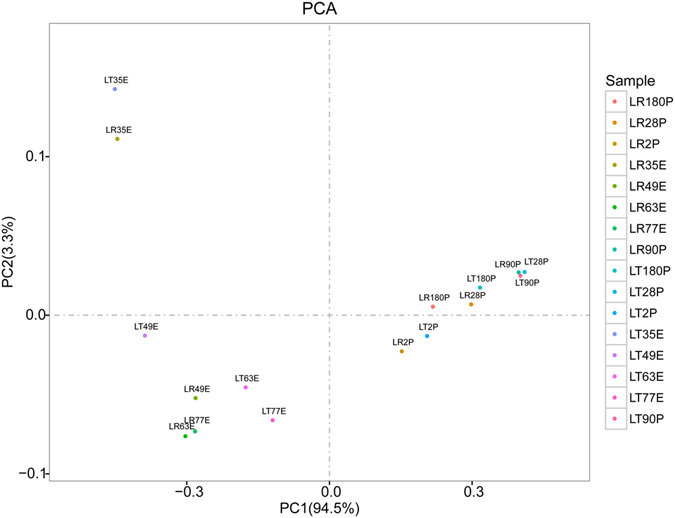
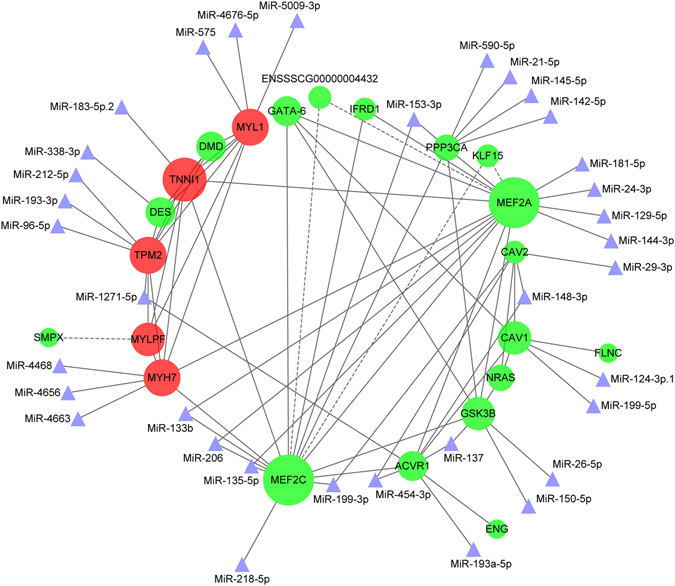
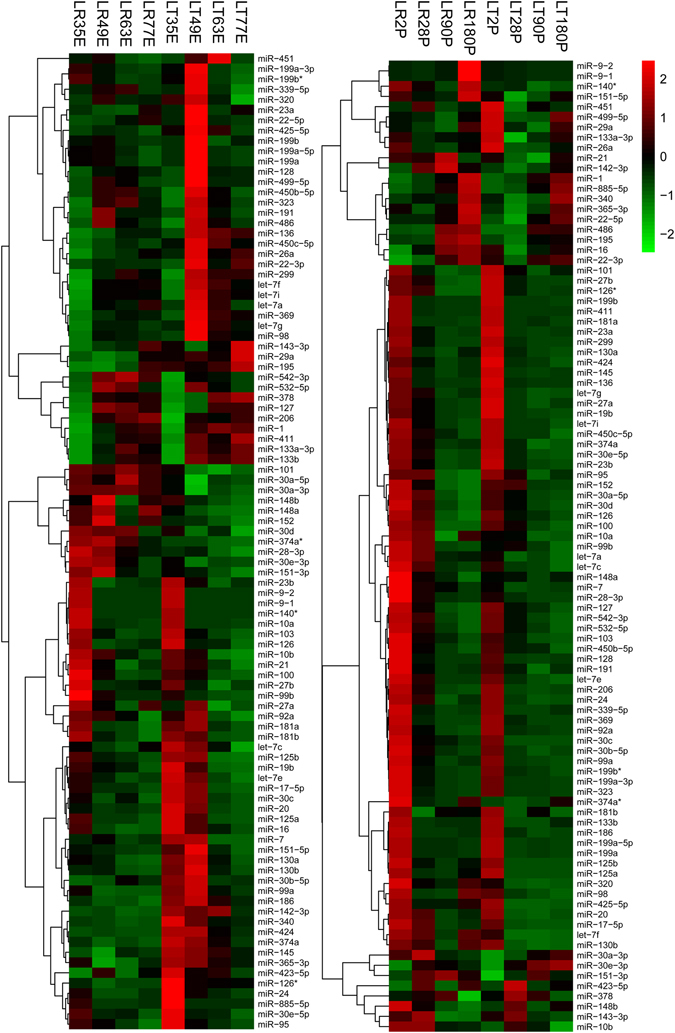
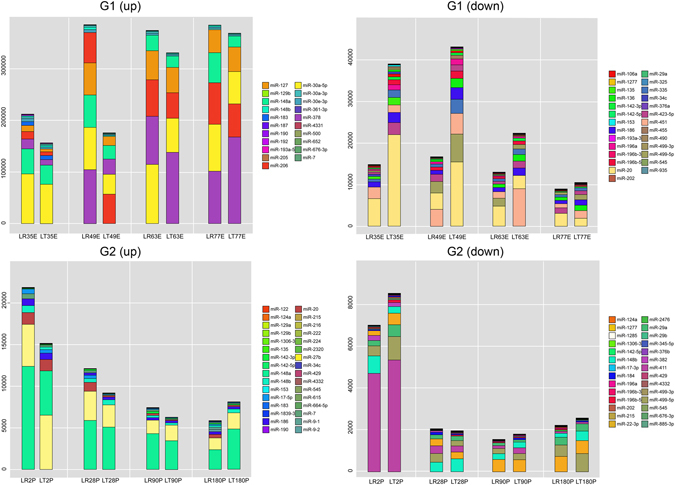
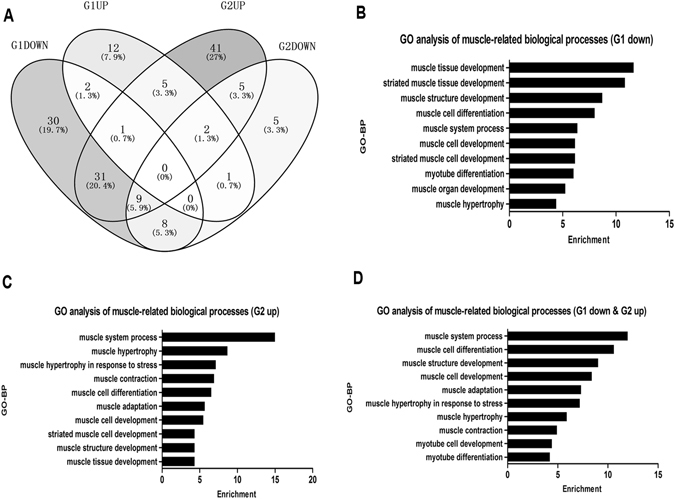
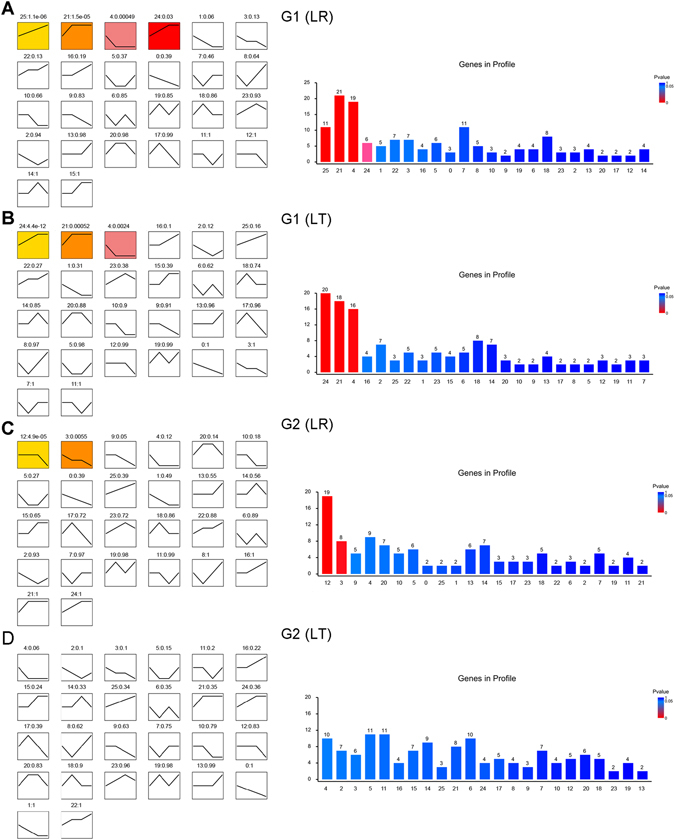
Pigs supply vital dietary proteins for human consumption, and their economic value depends largely on muscle production. MicroRNAs are known to play important roles in skeletal muscle development. However, their relationship to distinct muscle production between pig breeds remains unknown. Here, we performed an integrated analysis of microRNA-mRNA expression profiles for Landrace (LR, lean) pigs and the Chinese indigenous Lantang pig (LT, lard-type) during 8 stages of skeletal muscle developmental, including at 35, 49, 63, 77 dpc (days post coitum) and 2, 28, 90, 180 dpn (days postnatal). As differentially expressed-miRNA expression profiles can be well classified into two clusters by PCA analysis, we grouped the embryonic stages as G1 and the postnatal stages as G2. A total of 203 genes were predicted miRNA targets, and a STEM analysis showed distinct expression patterns between G1 and G2 in both breeds based on their transcriptomic data. Furthermore, a STRING analysis predicted interactions between 22 genes and 35 miRNAs, including some crucial myogenic factors and myofibrillar genes. Thus, it can be reasonably speculated that myogenic miRNAs may regulate myofibrillar genes in myofiber formation during embryonic stages and muscle hypertrophy during postnatal stages, leading to distinct differences in muscle production between breeds.
猪为人类提供重要的膳食蛋白质,其经济价值在很大程度上取决于肌肉产量。已知 microRNA 在骨骼肌发育中发挥重要作用。然而,它们与不同猪品种之间的特定肌肉产量之间的关系尚不清楚。在这里,我们对 8 个骨骼肌发育阶段的长白猪(LR,瘦肉型)和中国本土蓝塘猪(LT,脂肪型)的 microRNA-mRNA 表达谱进行了综合分析,包括在 35、49、63、77 dpc(受精后天数)和 2、28、90、180 dpn(出生后天数)。由于差异表达的-miRNA 表达谱可以通过 PCA 分析很好地分为两类,我们将胚胎阶段分为 G1,出生后阶段分为 G2。总共预测了 203 个基因是 miRNA 的靶标,并且基于转录组数据,STEM 分析显示两个品种的 G1 和 G2 之间存在明显不同的表达模式。此外,STRING 分析预测了 22 个基因和 35 个 miRNA 之间的相互作用,包括一些关键的成肌因子和肌原纤维基因。因此,可以合理推测,在胚胎阶段肌源性 miRNA 可能调节肌纤维形成中的肌原纤维基因,在出生后阶段调节肌肉肥大,从而导致不同品种之间肌肉产量的差异。