Yang Chia-Wei, Tseng Shun-Fu, Yu Chia-Jung, Chung Chia-Yu, Chang Cheng-Yen, Pobiega Sabrina, Teng Shu-Chun
Department of Microbiology, College of Medicine, National Taiwan University, Taipei 100, Taiwan.
Department and Graduate Institute of Microbiology and Immunology, National Defense Medical Center, Taipei 100, Taiwan.
Nucleic Acids Res. 2017 Aug 21;45(14):8314-8328. doi: 10.1093/nar/gkx503.
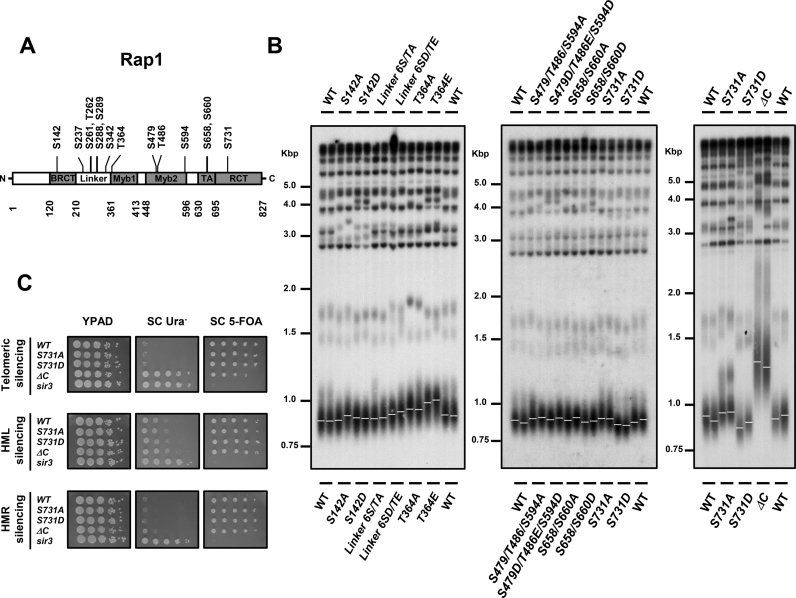
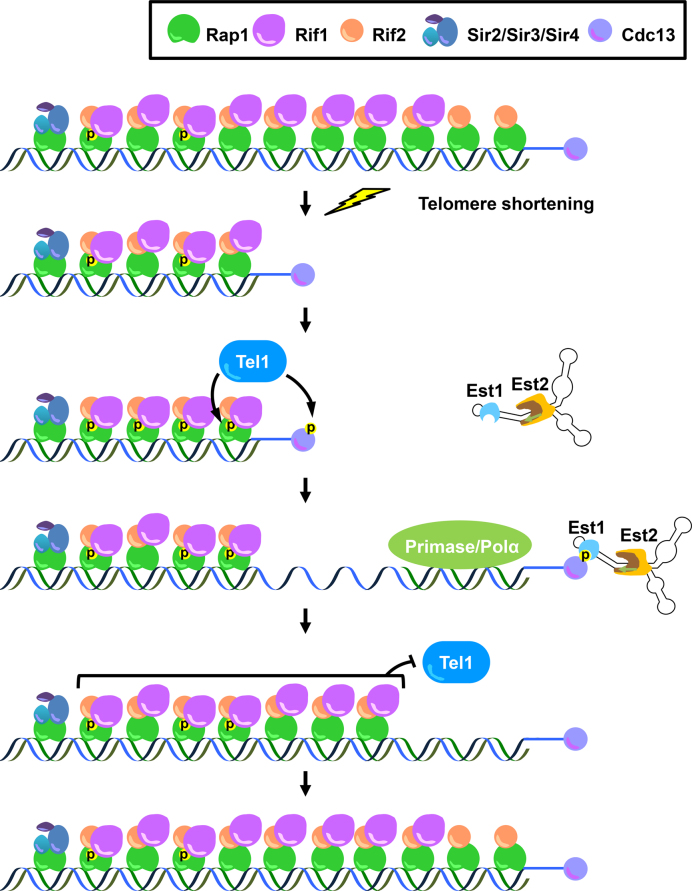
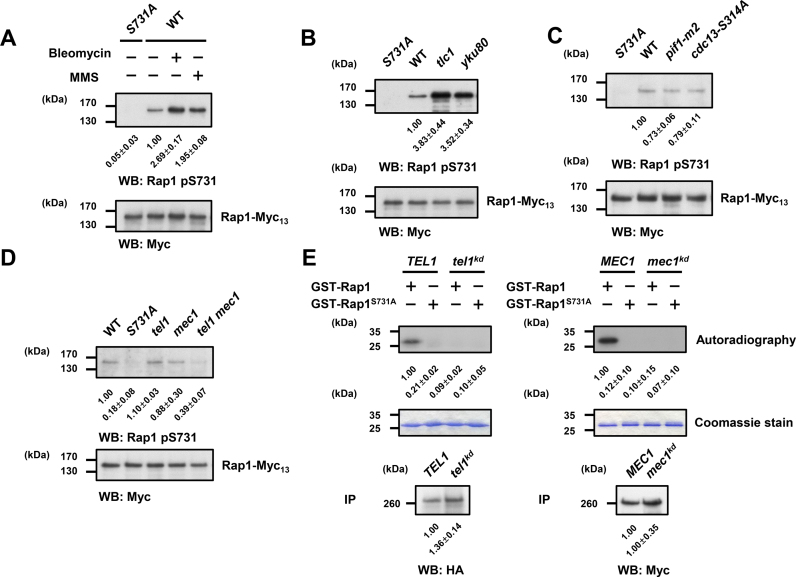
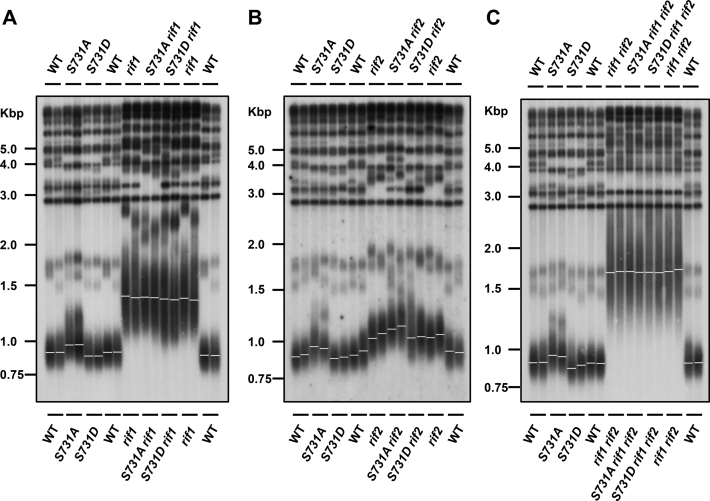
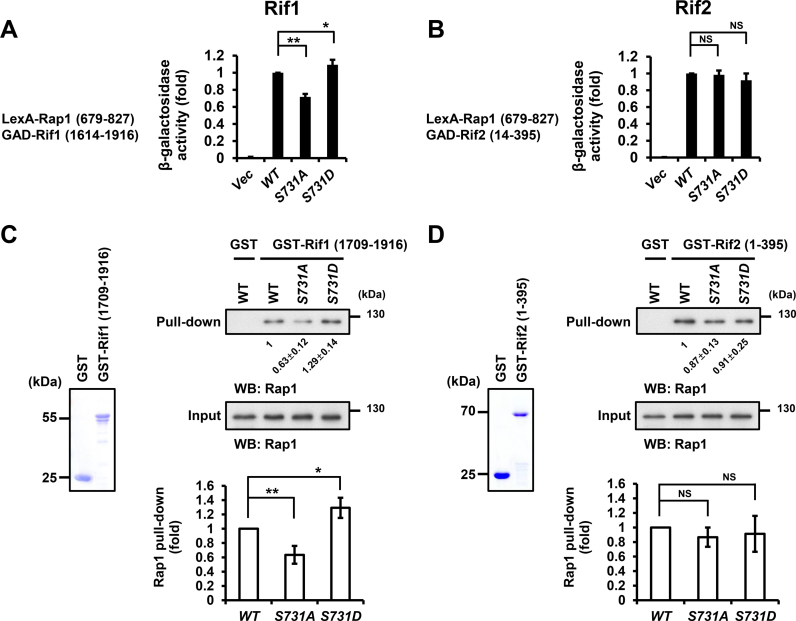
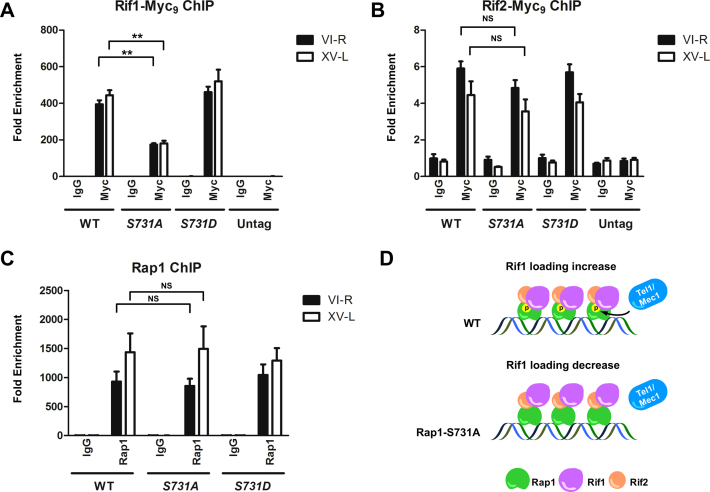
Telomere homeostasis is controlled by both telomerase machinery and end protection. Telomere shortening induces DNA damage sensing kinases ATM/ATR for telomerase recruitment. Yet, whether telomere shortening also governs end protection is poorly understood. Here we discover that yeast ATM/ATR controls end protection. Rap1 is phosphorylated by Tel1 and Mec1 kinases at serine 731, and this regulation is stimulated by DNA damage and telomere shortening. Compromised Rap1 phosphorylation hampers the interaction between Rap1 and its interacting partner Rif1, which thereby disturbs the end protection. As expected, reduction of Rap1-Rif1 association impairs telomere length regulation and increases telomere-telomere recombination. These results indicate that ATM/ATR DNA damage checkpoint signal contributes to telomere protection by strengthening the Rap1-Rif1 interaction at short telomeres, and the checkpoint signal oversees both telomerase recruitment and end capping pathways to maintain telomere homeostasis.
端粒稳态由端粒酶机制和末端保护共同控制。端粒缩短会诱导DNA损伤感应激酶ATM/ATR,以招募端粒酶。然而,端粒缩短是否也控制末端保护,目前尚不清楚。在这里,我们发现酵母ATM/ATR控制末端保护。Rap1在丝氨酸731处被Tel1和Mec1激酶磷酸化,这种调节受到DNA损伤和端粒缩短的刺激。Rap1磷酸化受损会阻碍Rap1与其相互作用伙伴Rif1之间的相互作用,从而干扰末端保护。正如预期的那样,Rap1-Rif1结合的减少会损害端粒长度调节,并增加端粒-端粒重组。这些结果表明,ATM/ATR DNA损伤检查点信号通过加强短端粒处的Rap1-Rif1相互作用,有助于端粒保护,并且该检查点信号监督端粒酶招募和末端封端途径,以维持端粒稳态。